Categories
A Church in Four Months Baptist Belief God New Testament The Bible, KJV The Bible, NIV

The Vineyard Workers (2 September 2018)

The Parable of the Workers in the Vineyard (Matthew 20:1-16)
“For the kingdom of heaven is like a landowner who went out early in the morning to hire workers for his vineyard. 2 He agreed to pay them a denarius for the day and sent them into his vineyard.

3 “About nine in the morning he went out and saw others standing in the marketplace doing nothing. 4 He told them, ‘You also go and work in my vineyard, and I will pay you whatever is right.’ 5 So they went.

“He went out again about noon and about three in the afternoon and did the same thing. 6 About five in the afternoon he went out and found still others standing around. He asked them, ‘Why have you been standing here all day long doing nothing?’

7 “‘Because no one has hired us,’ they answered.

“He said to them, ‘You also go and work in my vineyard.’

8 “When evening came, the owner of the vineyard said to his foreman, ‘Call the workers and pay them their wages, beginning with the last ones hired and going on to the first.’

9 “The workers who were hired about five in the afternoon came and each received a denarius. 10 So when those came who were hired first, they expected to receive more. But each one of them also received a denarius. 11 When they received it, they began to grumble against the landowner. 12 ‘These who were hired last worked only one hour,’ they said, ‘and you have made them equal to us who have borne the burden of the work and the heat of the day.’

13 “But he answered one of them, ‘I am not being unfair to you, friend. Didn’t you agree to work for a denarius? 14 Take your pay and go. I want to give the one who was hired last the same as I gave you. 15 Don’t I have the right to do what I want with my own money? Or are you envious because I am generous?’

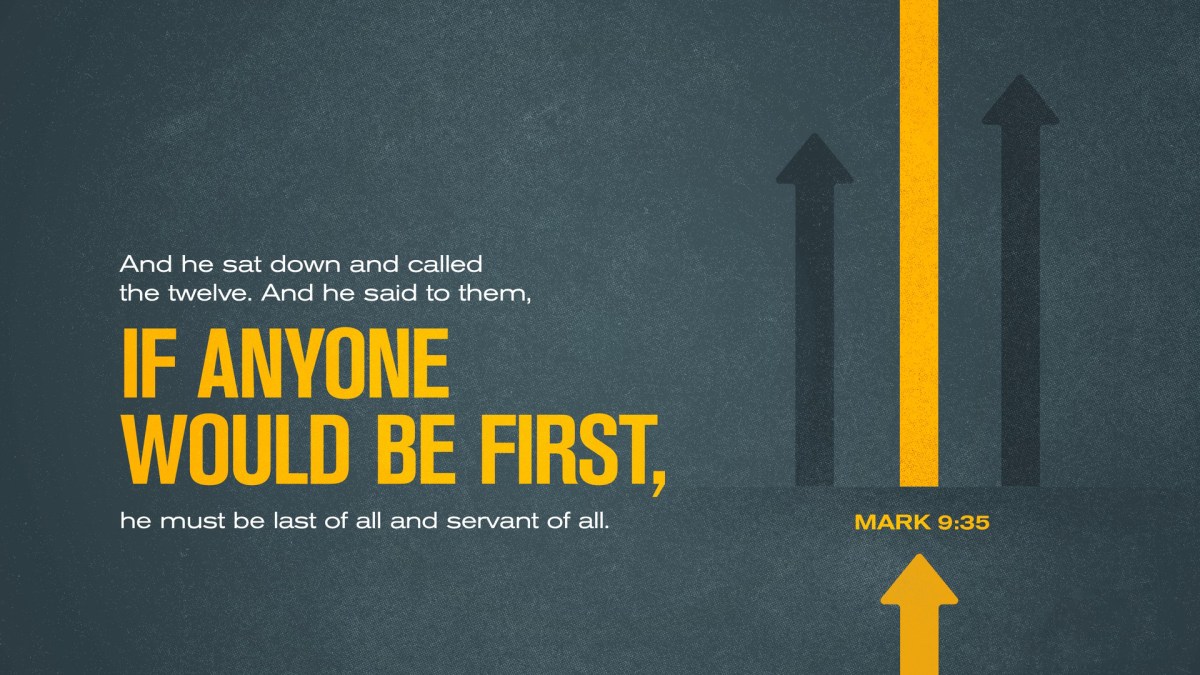
16 “So the last will be first, and the first will be last.”

Matthew is the only one who tells this story. There aren’t enough demons in it for Mark; Luke, the tax collector, could never wrap his head around the message; and if anyone ever figures out what John is saying every moment that he says it please never tell me my heart thrills for mystery.

* * * * *

This Parable of the Vineyard Workers invites us to imagine being paid the same wage for one hour’s worth of work as someone working eight hours. (It also invites us to really pay attention to contracts.) Matthew’s radical message, delivered by Jesus, is that the reward is the same for the person who has made a life-long profession of love for God as it is for the person who has only made an hour’s worth of profession. It is radical communism. And it’s upsetting.

(Pastor Jill brought the parable up to modern times, relating about an early job experience where, as a young professional with no family and no calls on her time, she was able to work long hours. She learned, however, that a colleague performing the same job function as Pastor Jill, who was also a single mother, with two kids who needed ferrying to school and then to whatever kids do after school, was paid the same amount for fewer hours. And what never occurred to Pastor Jill, or even to the people who promoted her for her performed extra work, is that unaccounted labor a single parent has to provide. All labor should be compensated.)

I think the parable wants us to get comfortable with the fact that Jesus spends most of his limited time on earth concerned — and getting others to be as concerned — with how we love our neighbor, rather than with, “Am I getting into heaven? Have I done enough? Is there a chance I could be found wanting?”

You cannot be found wanting. Heaven is already guaranteed. If we wipe all that accounting off the recknoning board, we’re left wondering, “Then why do any good works? Why should I care about what happens to anyone else within my sphere of even limited influence?” And you do it because not doing good (never mind if you are good) will cause you suffering. You can say, “Mike.” You don’t have to believe what I believe. “You do not have to walk on your knees for a hundred miles through the desert repenting.” But you should do goodness and give lovingkindness because it is good for your soul. Because not only is it decreasing your own suffering, it is decreasing the suffering of another human being. Because Jesus tells us to love our neighbor as he has loved us.

* * * * *

053_edit
Peter Singer

The utilitarian philosopher Peter Singer argues that $30k a year is actually sufficient for anyone to live on; we just happen to be in a paradigm where millionaires control a lot of our well-being. Everything over $30k should be donated to social service networks and given directly to the poor.

This is a terrifying prospect for many to grasp. It puts us all at the same risk for needing assistance from time to time. But why is that seen as a weakness? Why isn’t our need a gift for those who have? Why are we unwilling to be humble and accept grace and charity? Why do we only feel as if we can give if we have extra, when what is expected is that we’ll give because it is needed. Think of any canned food drive you’ve ever participated in and consider what you donated. It was likely food you yourself weren’t all that crazy about eating. Was that an act of charity? They’ve likely been hungry longer than you’ve been hungry. How will you work out this moral calculus?

* * * * *

Whirling_Dervishes_courtesy_The_Dialog_Institute_web_t670
Whirling Dervishes

There’s a poem, attributed to Rumi, who is the Abraham Lincoln of Sufi mystics in that too many things get tagged with his name when he may or may not have actually said it. (He’s like Jesus and Paul in that way, too.)

Come, come
whoerver you are
wanderer
worshippper
lover of leaving
it doesn’t matter!
Ours is not a caravan of despair.
Come, even if you have broken your vows a thousand times.
Come.
Come yet again.
Come.

That’s what the Parable of the Vineyard Workers is teaching us: even if we have broken our vows a thousand times, we are as worthy and deserving of God’s love the thousand-and-first time as we were at the beginning. Even yet again.
Categories
Baptist Belief Finding God New Testament Old Testament Seeking

Universal Salvation, Universal Love

I asked my pastor last night, an amazing woman named Jill McCrory of Twinbrook Baptist, what her most radical belief was w/r/t God and the Bible. She said, “Universal Salvation. We’re all saved. All of us.”

I said something similar a couple of days ago — that I don’t believe in sin, or I don’t believe in sin used as a weight against which we’re measured. And I wanted to write a bit more about that, because so often I better understand my own thinking when I’m ironing it out in print. So.

* * * * *

We are all saved. We were actually born already saved. All of us. Even the worst person you can imagine. Even that worst person. (Where I’m still working is: how necessary was Christ’s crucifixion? Is that the mechanism of salvation? Or can I rely fully on the idea of a loving God not hating any of his creation so much that he would send them to a place of permanent and utter torment? I mean, as I’m further and further into this parenthetical, I think I’m leaning more towards the “Loving God” side of the equation over the “Christ Died for Me” version.)

M.-Scott-Peck

Sin isn’t something God keeps an account of; it’s something we commit against ourselves and each other. In M. Scott Peck’s People of the Lie, he shares a shattering anecdote about a patient he was treating in private practice.

“What did you get for Christmas?”

“Nothing much.”

“Your parents must have given you something. What did they give you?”

“A gun.”

“A gun?” I repeated stupidly.

“Yes.”

“What kind of gun?”

“A twenty-two.”

“A twenty-two pistol?”

“No, a twenty-two rifle.”

There was a moment of silence. I felt as if I had lost my bearings. I wanted to stop the interview. I wanted to go home. Finally I pushed myself to say what had to be said. “I understand that it was with a twenty-two rifle that your brother killed himself.”

“Yes.”

“Was that what you asked for for Christmas?”

“No.”

“What did you ask for?”

“A tennis racket.”

“But you got the gun instead?”

“Yes.”

“How did you feel, getting the same kind of gun that your brother had?”

“It wasn’t the same kind of gun.”

I began to feel better. Maybe I was just confused. “I’m sorry,” I said. “I thought they were the same kind of gun.”

“It wasn’t the same kind of gun,” Bobby replied. “It was the gun.”

“The gun?”

“Yes.”

“You mean it was your brother’s gun?” I wanted to go home very badly now.

“Yes.”

“You mean your parents gave you your brother’s gun for Christmas, the one he shot himself with?”

“Yes.”

* * * * *

hyperliteratura-flannery-o-connor-headerSin and evil are human creations. They break our spirit, break our heart, break our will  — but they do not deny us any of the love of God. My belief is, God is utterly incomprehensible except for two things: he only wants to give love, and he only wants to receive love in return. I think, when we meet God in Heaven, wherever Heaven happens to be, some of us are going to be overjoyed, and some of us are going to be embarrassed or even hurt a little, at first, that people whom we were awful to, because we thought we were better Christians than they were, or better people than they were, are there, in God’s glory. We’re all a little like Mrs Turpin in Flannery O’Connor’s short story, “Revelation”:

At last she lifted her head. There was only a purple streak in the sky, cutting through a field of crimson and leading, like an extension of the highway, into the descending dusk. She raised her hands from the side of the pen in a gesture hieratic and profound. A visionary light settled in her eyes. She saw the streak as a vast swinging bridge extending upward from the earth through a field of living fire. Upon it a vast horde of souls were tumbling toward heaven. There were whole companies of white trash, clean for the first time in their lives, and bands of black niggers in white robes, and battalions of freaks and lunatics shouting and clapping and leaping like frogs. And bringing up the end of the procession was a tribe of people whom she recognized at once as those who , like herself and Claud, had always had a little of everything and the given wit to use it right. She leaned forward to observe them closer. They were marching behind the others with great dignity, accountable as they had always been for good order and common sense and respectable behavior. They, alone were on key. Yet she could see by their shocked and altered faces even their virtues were being burned away. She lowered hands and gripped the rail of the hog pen, her eyes small but fixed unblinkingly on what lay ahead. In a moment the vision faded but she remained where she was.

Ruby Turpin’s revelation is what Hell is, but it’s not forever. It lasts as long as we fight against loving everyone, against lovingkindness. So, Universal Love and Universal Salvation are where I feel God’s presence the most.

* * * * *

icm_fullxfull.170191212_fo7g5gimg7c4gw8o8wso

A woman named Susan is binding a Bible for me, with my favorite quote about grace from Flannery O’Connor: “All human nature vigorously resists grace because grace changes us and the change is painful.” I asked her what her most radical theological belief is, and she says, “Oh boy, I’m not sure I even have a radical theological belief. Perhaps it is more of a hope. I sure do hope that all of the babies that have been aborted are with Jesus. My belief is that they are – same for those who have miscarried. I’m believing my grandchild who never saw the light of day on this earth is in heaven with Jesus. That gives me comfort.”

I want to say to Susan, “Your grandchild is with Jesus. And all the babies, too. And all the women who died from botched abortions because they weren’t legal and safe. And all the fathers who couldn’t get it together to be present. And all the children who ignored their parents. And all the parents who hurt their children. Everyone gets to be in the Kindgom of Heaven. The last, first; the first, last.”

All of us.

Categories
Mental Health New Testament Old Testament Tanakh The Bible, KJV The Bible, NIV

The Book I’m Not Reading

I own a not insignificant number of copies of Wolf Hall by Hilary Mantel, the best novel ever written in the English language. As a Christian who is saved in Christ (I think?), this fact, and God’s eternal love, are the two things I can depend on.

Wolves Hall, Personal Collection

It’s also an example of how I act out some of my mania / treat my depression. If I’m feeling overwhelmed, or just, you know awake at any given moment, and I’m in a bookstore and there’s a copy of Wolf Hall to be had for the having, I’ll have it. (I’m also aided and abetted by my dear friend and platonic plural husband, Jeffrey, who buys used copies everywhere he sees them and then sends them to me. Compare this to another friend who sent me a pack of allegedly “funny” coasters with ’50s housewives saying dirty things and then imagine a yawn that becomes eternity and that’s about how tired that gift made me.) It’s not that I need it. It’s not like I clearly don’t already have [counts under his breath] 1-2-3-4-…-14-15 copies. But there’s something comforting about each book, and I can no more make sense of it than I can the argument that Jesus was both wholly human and wholly divine. (Which I believe, but based only on faith, not on empirical knowledge.)

I also now own three Bibles:

  1. An NIV translation
  2. A KJV translation
  3. A third one that I’m getting more details on, but it’s gorgeously bound and has snaps, I mean, CAN YOU EVEN BELIEVE THAT? SNAPS?! (Shout-out to Kindra, who should reach out to me because I found the UNFINDABLE and she may be interested.)

il_570xN.1632956735_p2va

The NIV doesn’t get a lot of respect. Purists* feel it is too dumbed down, and that it isn’t translated as carefully as it could be. (This is an argument leveled against Constance Garnett, a Tolstoy translator from the 19th century: we’re told that she was too Victorian, bowdlerized the dirty parts, and haphazardly translated the Russian to make it readable for her English-speaking audience. And to that I say feh. You lay Connie’s translation of War & Peace next to that husband and wife team who are better at Dostoevsky than they are Tolstoy and you’ll see that Garnett got more than enough right.) Uber-purists will want to direct new Bible readers to the KJV, and they’ll go on and on about the majesty of the language and wax rhapsodic over each verilythee, and thou**.

[* Purists can be frustrating, with their belief that there is anything approaching the platonic ideal of perfection. Some of your more dogmatic Christians will try to tell you that the closer in time we get to Christ, the purer the Christianity, but there were schisms and battles that started almost immediately after his crucifixion so ::shrug-emoji::.]

[** Some modern Quakers still practice both plain speech and plain dress and here’s what I want to say about that: it’s entirely none of my business and I love them for their pursuit of/relationship with God. HOWEVER. In the Year of Our Lord 2000 and 18, thees and thines and thous sound anything but plain. They sound affected and draw attention rather than allow the parishioner to not get in the way of the experience. Same for plain dress, which, as it’s practiced today, sometimes veers very closely to Ren Faire attire. I asked one Quaker woman — and you’ll have to trust that I asked this politely — “Why are you dressed like an observant orthodox Jewish woman?” She said, “I get that all the time.” And if you’re being questioned about your dress all the time then IT’S NOT VERY WELL PLAIN IS IT.]

For daily reading — both just to be literate in the Bible and for devotional experiences — I use the New International Version. I agree that the language in the King James Version is beautiful — “Therefore I have uttered what I did not understand” is a gorgeous piece of apology — but I’m not able to focus on the thinking behind the verse. Instead, I’m untangling syntax that isn’t as common today, and muddling through words that don’t tripe easily off the page into my brain.

I read the NIV because I want to understand what the Bible is saying. And, once I feel comfortable with what it’s saying, then I can move on to how to say it in beautifully antiquated English.

If you’re up for some sharing, I’d love to hear how you rank Bibles. What’s your preference for devotional reading? What’s your preference for study? What’s your preference for quoting?


Title Source: “The Book I’m Not Reading” by Patty Larkin

Categories
Baptist Finding God New Testament Seeking Twinbrook Baptist

Mustard Seeds (26 August 2018)

Again he said, “What shall we say the kingdom of God is like, or what parable shall we use to describe it? It is like a mustard seed, which is the smallest of all seeds on earth. Yet when planted, it grows and becomes the largest of all garden plants, with such big branches that the birds can perch in its shade.”

— Mark 4:30-32

Zach is the one who found the Baptist church for me. I wanted more religion in my religion than the Quakers were able to offer, though I respect them greatly (but quietly). “The pastor is a woman,” he said, and that alone would maybe have been enough for me to give it a go — but she’s a queer(ish) woman who preaches a radical theology of unfettered acceptance. I didn’t want a quiet room echoing only our own good will. I wanted a loud roar of agreement.

God isn’t in the wind, or the earthquake, the fire, or the loud roar of agreement — I know that. But I know where God is, and I know what my heart needs, and these can be in agreement, and anyway it’s mine own, mine own, mine own.

* * * * *

The day before I visited Twinbrook Baptist, I talked to my mom on the phone. She is 73 years old, thick in the muddle of Alzheimer’s. She mostly knows who I am; it’s the when I am that gives her trouble. Sometimes my brother and I are little kids to her, but actual, not in the way all parents always see this own offspring as children. Sometimes I’ve died. She was rarely kind to me, not necessarily out of any sense of malice; instead, out of a sense of just not knowing how. Her life provided few, if any, clear models of lovingkindness.

So the day before I visited Twinbrook Baptist, I talked to my mom, about how much my brother and I sound alike. About how some cat treats a friend sent gave Little Baby Fosco horrible diarrhea. (She laughed hard and long at that.) How beautiful the weather had been — so nice that for two days I was able to keep the windows open in the house. “Which helped,” I explained, “with the cat having diarrhea everywhere.” She laughed even harder. My mom, now in the dimness of her memory, has the sense of humor of a 14-year-old boy.

At the end of the call, when we were saying goodbye, she said, “I wish you’d come out and visit soon.” And then she said, “I hope you have a beautiful life.” And it wrecked me.

* * * * *

Mustard seeds are small, stubborn, and selfish — which are also words one could use to describe me, as long as you also whisper “petty” under your breath, too. In the Parable of the Mustard Seed, we’re told that faith as small as this can, if tended, if noticed and cared for, can provide shelter. My mother, saying, “Have a beautiful life,” when that isn’t the story I have ever told myself, or others, about my mother’s love for me, was a shattering and obliterating piece of love and forgiveness — given and asked for — when I wasn’t sure I deserved it at all.

Depending on how you work your faith — if you have it, if you don’t, if you believe in Divine Guidance, or if you’re happy with the serendipity of chance — I’ve room for all of it. But I do think I was meant to be at that church on that day for that sermon. My own faith is easily as small as a mustard seed.

* * * * *

I began this current iteration of a Spiritual Journey back in late October/early November of 2017, when I reached out to a Catholic church near me, because I thought I was being called to that form of worship. (I was not.) I flirted, briefly (and embarrassingly), with Santeria, because I wanted form and ritual without having to also swallow a lot of what felt like popish nonsense to me. (I am sorry, Catholics who are fellow travelers on this journey, too. I don’t feel it’s as much nonsense now as it is just Not for Me.) I tried Quakers, which felt, if not entirely right, right enough at the time to get me used to the idea of regular church attendance. And then, in a Baptist church not 10 minutes from my house by bike, Pastor Jill shared the Parable of the Mustard Seed, and I felt my own mustard seed crack in my soul.

Pastor Jill connected mustard seeds and faith to the news that Twinbrook Baptist would be closing for good at the end of the year. (Try as hard as she could, the Old Guard parishioners were not interested in growing and developing within Christ; but, instead, wanted what was comfortable and affirming to what they already believed.) And then she shared that the proceeds from the sale of the church/land — some $1.3 million — would all be distributed to other affirming and like-minded churches, as well as social service endeavors. None would be kept by the church. In its dying, the church sends seeds and runners out into the world to grow goodness and wholeness as much as it can.

* * * * *

My faith isn’t large enough yet to harbor birds (but our house does, and it brings me joy and the cats something to look at that isn’t each other or the ghost that I am sure haunts the upstairs); but it’s growing.

Categories
Belief Finding God Mental Health New Testament Old Testament Seeking Seeking, Finding

“I battled the Holy Ghost once on the laundry porch”

Truth is a Gentlemen’s Agreement between two people, neither of whom are gentlemen, neither interested in honesty. Instead, these people are simply polite fictions dressed up in spats and a pince-nez, only half-listening because the other half of their attention is focused on how much damage can be caused by what is being shared.

My mom is 73 this year, pocked with Alzheimer’s, haunted by ghosts and it can be tough to suss out from her various descriptions how many are phantoms of the mind, how many are figments of her imagination, and how many, if any, are visitors from some past Other Side. If they have a message for her, it must be frustrating. She won’t remember it. “Well, your brother Michael’s dead,” she explained to me. This was after she and I had talked on the phone earlier that day.

I’m going to tell a story about her, and it’s a Gentlemen’s Agreement story where we’re going to agree, thee and me, that I am telling you the truth.

Deal?

* * * * *

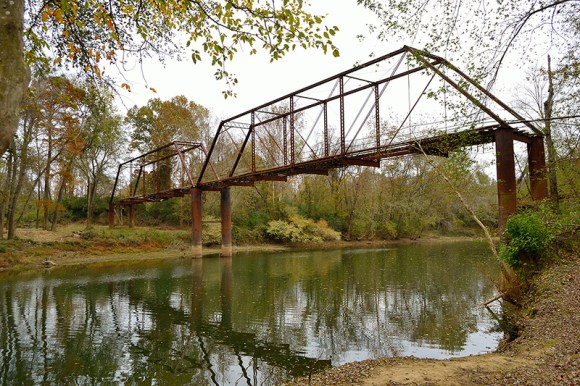
My mom was born in 1945 in Leola, Arkansas, and you’re right, you probably have never heard of it. As of 2010 it had a population of 501. It’s known, if it’s known, and it’s not known, so I’m only using an idiom, for Cox Creek Lake, created in 1964 by damming a tributary of the Saline River. According to my mom, an uncle molested her in that river, holding her afloat with one hand and threatening to drown her.

Haskell

That sounds terrible, I remember telling her, and she said, “Eventually. I didn’t know how to understand it.” She was six.

* * * * *

My maternal grandparents were (are?) (no, were, they’re both dead) a man named Edward Clinton Kelly and a woman named Flossie Laverne Badgett. He was Irish, with seven sisters who lived in a rundown house on the outskirts of Leola, which is already on the outskirts of Malvern, itself an outskirt of Little Rock. It’s like sinking into the Saline River. The sisters refused both indoor plumbing (“not safe”) and electricity, even when the electric company came through to wire every house with incandescence. They lived simply, by candlelight and oil, firelight and the sun. Come evening, the house would curl itself catlike into the darker undergrowth that surrounded it.

I asked my mom once why the sisters didn’t have electricity. “It’s so the Devil wouldn’t be able to see them at night,” she explained. “But what if he brought his own light?” I asked. “He doesn’t have his own light. He lost that when he fell to earth.” Now he preys on us here, in this world, she continued, always looking into windows to see who had a light, like we did. “That’s how he finds you. The sooner you turn the light off at night, the sooner you won’t be visited by the Devil in your bedroom.” I was six.

article-2416873-1BBDBB94000005DC-907_634x361

* * * * *

My mom grew up Southern Baptist because it was Arkansas and everyone in Arkansas was either Southern Baptist or dead. Her grandmother was a Pentecostal named Chloe Badgett. Her church didn’t meet always in a building. It met by the Saline River often throughout the summer, baptising members and non-members, each dunk as sweet as the one that came right before. It was as if they were aspersoria, hoping to fill themselves to the cap with duckweed and Christ’s power.

(My Uncle Thurston told me, when I was 11, about a dam built on the Saline River, in 1964, the one that ultimately created Cox Creek Lake. I was too young to notice any wink in an adult’s eye; never knew lies could be funny. “There are catfish at the bottom of that dam big enough to swaller a man,” he said, gravely, and I have been terrified of water ever since and yet one must be baptized, I guess, if one is to be truly saved. Washed clean of sin, held down by enormous catfish until I drown.)

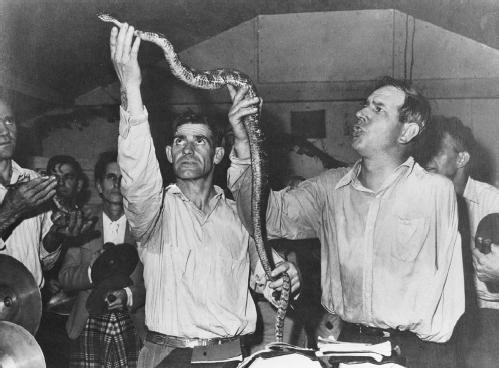
These Pentecostals also handled serpents and drank — or, rather, sipped — poison, based on the Good News revealed in Mark 16:17-18,

And these signs will accompany those who believe: in my name they will cast out demons; they will speak in new tongues; they will pick up serpents with their hands; and if they drink any deadly poison, it will not hurt them; they will lay their hands on the sick, and they will recover.

geuu_01_img0158

I asked my mom if she ever saw Great Grandma Badgett cast out a demon. I was fascinated with the idea. Would you see it ricochet out of the soul of the possessed? Would some furry, cloven-hoofed monster crawl out of the throat and scuttle crablike across the floor? “No,” mama said, “she never cast out demons.” Grandma Laverne, who was still alive then, nodded. “She could have, but she ain’t.” I think Grandma Laverne was in her own kitchen at the time, grinding up ice for iced tea. “I did battle the Holy Ghost on the laundry porch once,” she said. Mama looked at me and then past.

* * * * *

When my mom was born, my grandma was 29 and my grandfather was 70. This’ll be more important in a second only just now I’m going to correct the record.

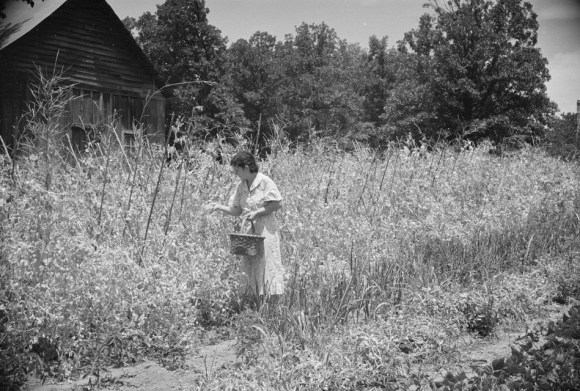
For years, when I’ve told this story, about my mom, and religion, and why my brother and I didn’t have much of it growing up, in my version of this Gentlemen’s Agreement my grandpa was in his mid-80s when my mom was born, and my grandma was in her mid-20s. While doing only the barest of research for this piece, I learned a bunch of other dates, like that Grandma Laverne was born in 1916, that her husband, Edward, with the weird sisters, was born in 1875. I had thought he came here from Ireland, but according to Ancestry.com he was from Arkansas. His father, however, was Irish, and those Kellys became farmers here, or sharecroppers, rather, and carpenter assistants. I also learned that my grandfather was married before, to a woman named Lizzie, who died the year after Laverne and Edward had their first child, a son named Hubert.

Rehabilitation-client-picking-English-peas-on-farm-near-Batesville-Arkansas-e1409454179239

Family stories aren’t ever for true. They’re for instruction, or comfort, or explanation. What does it mean to know anything anyway? There’s what’s true, and what works, and we aim for the middle, or we don’t aim at all.

* * * * *

Because my grandfather was 70 when my mom was born, and because Great Grandma Badgett had been ordered by God to handle serpents, drink poison, cast out demons (even though she ain’t’ed yet), and heal the sick, she decided that my mom must be a product of the Devil, that it wasn’t the Holy Ghost her daughter battled on the laundry porch. In her heart, 70 was too old for a natural child to be born. There was something unnatural about my mom.

Laying-on-of-Hands

“Did you ever feel unnatural?” I remember asking her. Most stories about her past were slurred to me late on school nights, when she’d have too many cans of Coors and no one else to talk to. That’s how I learned about the river molestation. Or the first of her three marriages. I learned that I wasn’t a wanted child, and that she had tried a bunch of ways to abort me without, you know, aborting me. She would tell me, “Michael, when you boys are out of the house I will kill myself. I won’t be needed any more.” And I believed her, because we’re supposed to believe our parents. And now, mid-70s, she doesn’t remember this plan at all because she doesn’t remember anything. A little girl cries sometimes in the bushes, she says, outside her bedroom.

“Did you ever feel unnatural?” I ask, and she says, “No. I knew I was, but I never felt I was.” How did you know? I asked her. “Because Grandma Badgett told me,” mama said. “She talks directly to God.” Isn’t she dead now, though, I ask? “It would take more than death to keep her quiet,” mama said, and she shuddered.

* * * * *

My Great Grandma Badgett tried to kill my mom the summer my mom was three. There was a large cauldron for boiling blood when the hogs were slaughtered, I’m told for puddings and sausage and if it turns out that none of the Ireland stuff is true then I will have dodged a bullet because Irish food sounds terrible. Great Grandma Badgett filled it with water, built up a fire, and read from the Book of Acts and the Book of Revelations. (This part is the Gentlemen’s Agreement; I don’t know what she read from the Bible or if she read from the Bible. The rest is true, if also gentlemanly agreeable.)

Great Grandma Badgett’s plan was to boil the Devil out of mama. He could not be cast out or frightened by snakes. Poison and the laying on of hands was no good, either. The smell of meat, mama would say, is pleasing to the Lord. “That must be where she got it.” Sometimes when she talks about it, she is talking about it to explain forgiveness: What if the Devil had been responsible for her birth? What if Great Grandma Badgett was all that stood between the righteous and unrighteous. The Bible itself is filled with iron-willed women; couldn’t there be room for one named Chloe?

l_pl1_37653_fnt_tr_t87-12

Other times, though — and, actually, most times — what I’m hearing is a survivor who didn’t make it. Jean-Paul Sartre wrote a short story, “The Wall,” in 1939. Several men are condemned to death, to be killed by firing squad. What Sartre wants to explore is when do we die? There is an easy answer: when something kills us. And then there’s the uncomfortable answer, which is: any time at all.

I believe mama died in that pot. I believed any sense of care and safety and protection and love were plunged out of her. I think she was three, and afraid, and in thrall to a woman who was also far too young for the task she assigned herself, and also, too, afraid.

* * * * *

What happens next changes. She’s never told me the same story twice. So I’ll tell my Gentleman’s version, and that will have to do.

* * * * *

The mailman, on his daily route, passed by and saw a woman in her early 50s struggling with a child not yet not a toddler. He saw the older woman pick the child up, and saw that woman carry that child, kicking and crying, to a pot, suspended over a fire, by chains. He saw all this and he…did nothing. He tipped his cap towards Great Grandma Badgett, and my mom watched him leave.

Where Grandma Laverne was in all of this is never clear. Sometimes mama says she had gone to town for supplies. Sometimes, she’s just sort of not there, until she is, until she comes home and sees her own mother trying to boil her own granddaughter to death.

I want to the story to end heroically — Grandma Laverne tells Great Grandma Badgett, in no uncertain terms, that she’s to take her hands off of her daughter, and to leave that house, and to never return. I want this to resurrect my mom from the death I imagined for her at age three. I want my mom to only feel love and know safety after this.

* * * * *

I want.