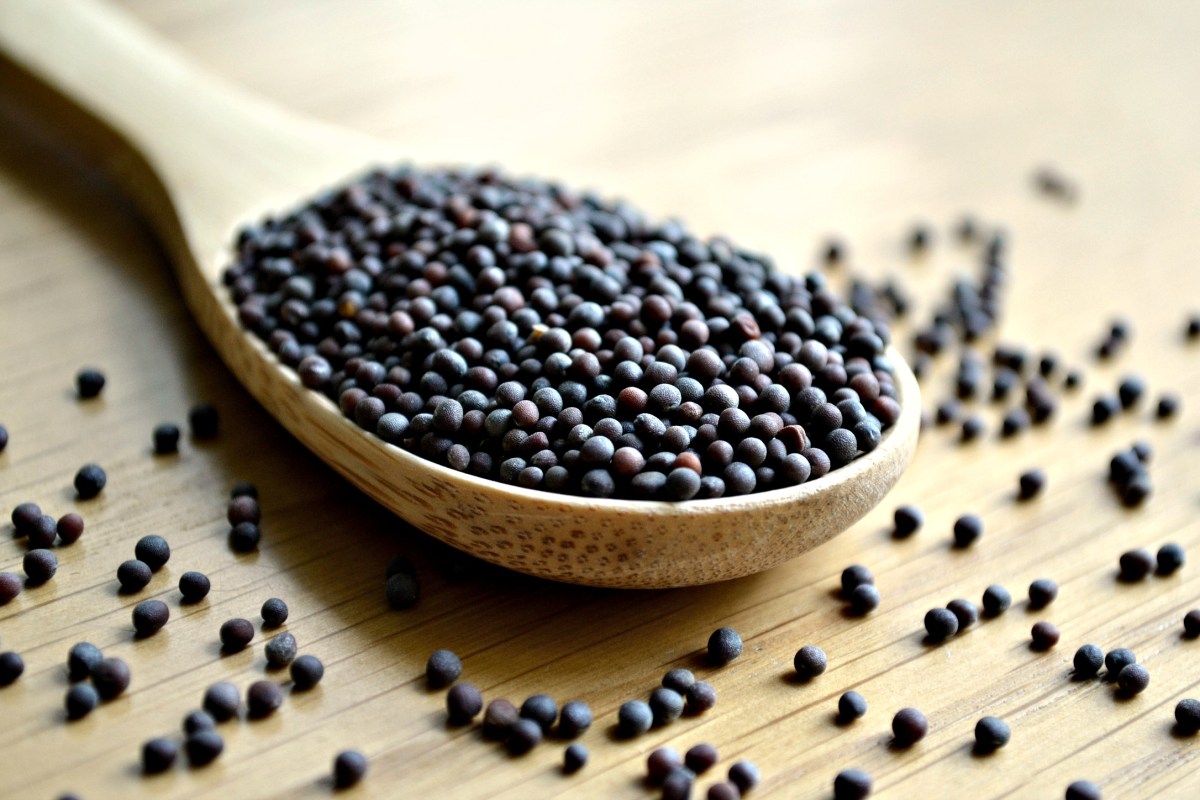
Again he said, “What shall we say the kingdom of God is like, or what parable shall we use to describe it? It is like a mustard seed, which is the smallest of all seeds on earth. Yet when planted, it grows and becomes the largest of all garden plants, with such big branches that the birds can perch in its shade.”
— Mark 4:30-32
Zach is the one who found the Baptist church for me. I wanted more religion in my religion than the Quakers were able to offer, though I respect them greatly (but quietly). “The pastor is a woman,” he said, and that alone would maybe have been enough for me to give it a go — but she’s a queer(ish) woman who preaches a radical theology of unfettered acceptance. I didn’t want a quiet room echoing only our own good will. I wanted a loud roar of agreement.
God isn’t in the wind, or the earthquake, the fire, or the loud roar of agreement — I know that. But I know where God is, and I know what my heart needs, and these can be in agreement, and anyway it’s mine own, mine own, mine own.
* * * * *
The day before I visited Twinbrook Baptist, I talked to my mom on the phone. She is 73 years old, thick in the muddle of Alzheimer’s. She mostly knows who I am; it’s the when I am that gives her trouble. Sometimes my brother and I are little kids to her, but actual, not in the way all parents always see this own offspring as children. Sometimes I’ve died. She was rarely kind to me, not necessarily out of any sense of malice; instead, out of a sense of just not knowing how. Her life provided few, if any, clear models of lovingkindness.
So the day before I visited Twinbrook Baptist, I talked to my mom, about how much my brother and I sound alike. About how some cat treats a friend sent gave Little Baby Fosco horrible diarrhea. (She laughed hard and long at that.) How beautiful the weather had been — so nice that for two days I was able to keep the windows open in the house. “Which helped,” I explained, “with the cat having diarrhea everywhere.” She laughed even harder. My mom, now in the dimness of her memory, has the sense of humor of a 14-year-old boy.
At the end of the call, when we were saying goodbye, she said, “I wish you’d come out and visit soon.” And then she said, “I hope you have a beautiful life.” And it wrecked me.
* * * * *
Mustard seeds are small, stubborn, and selfish — which are also words one could use to describe me, as long as you also whisper “petty” under your breath, too. In the Parable of the Mustard Seed, we’re told that faith as small as this can, if tended, if noticed and cared for, can provide shelter. My mother, saying, “Have a beautiful life,” when that isn’t the story I have ever told myself, or others, about my mother’s love for me, was a shattering and obliterating piece of love and forgiveness — given and asked for — when I wasn’t sure I deserved it at all.
Depending on how you work your faith — if you have it, if you don’t, if you believe in Divine Guidance, or if you’re happy with the serendipity of chance — I’ve room for all of it. But I do think I was meant to be at that church on that day for that sermon. My own faith is easily as small as a mustard seed.
* * * * *
I began this current iteration of a Spiritual Journey back in late October/early November of 2017, when I reached out to a Catholic church near me, because I thought I was being called to that form of worship. (I was not.) I flirted, briefly (and embarrassingly), with Santeria, because I wanted form and ritual without having to also swallow a lot of what felt like popish nonsense to me. (I am sorry, Catholics who are fellow travelers on this journey, too. I don’t feel it’s as much nonsense now as it is just Not for Me.) I tried Quakers, which felt, if not entirely right, right enough at the time to get me used to the idea of regular church attendance. And then, in a Baptist church not 10 minutes from my house by bike, Pastor Jill shared the Parable of the Mustard Seed, and I felt my own mustard seed crack in my soul.
Pastor Jill connected mustard seeds and faith to the news that Twinbrook Baptist would be closing for good at the end of the year. (Try as hard as she could, the Old Guard parishioners were not interested in growing and developing within Christ; but, instead, wanted what was comfortable and affirming to what they already believed.) And then she shared that the proceeds from the sale of the church/land — some $1.3 million — would all be distributed to other affirming and like-minded churches, as well as social service endeavors. None would be kept by the church. In its dying, the church sends seeds and runners out into the world to grow goodness and wholeness as much as it can.
* * * * *
My faith isn’t large enough yet to harbor birds (but our house does, and it brings me joy and the cats something to look at that isn’t each other or the ghost that I am sure haunts the upstairs); but it’s growing.
This is what happens when someone tries to lead me through a guided meditation. They’ll want to start in a field — not physically, though; I’m not an Outdoorsy Kinda Guy — and they’ll say something like, “Breathe in the clean air of this meadow,” and I’ll breathe in but I’m not sure what “clean air of this meadow” means, or how to pretend it so it makes sense to my body, and while I’m struggling with what that might feel like, how the air would smell, what I might be hearing around me– unless it’s a terrifyingly silent meadow, and what might cause all the birds to be silent? Is something stalking them? Has there been some sort of environmental disaster? What would I do if there were an environmental disaster? I’d immediately get Zach, of course, and the cats, but we only have one cat carrier and three cats. Is this meadow I’m in near a store, maybe? God, if my therapist heard me musing about stores he’d be very frustrated because I just sent him an email a couple of days ago that said, “I’d rather not talk any more about shopping — what I can buy, where I can buy it, why it’s good to know where buyable things are. It takes me out of the appointment. And you may see this as an Issue to Be Solved — but I’m asking permission to maybe leave that problem, if it even really is a problem, until a much later time. There is so much else I’d like help with, so many other wonderful things wrong with me; and I’m sure there are complementary things within my set of traumas that could be used to get at the kernel of the problem without also making me frustrated.” And I wrote an email that said that because at our first session I said, “Sometimes being in a store can trigger an anxiety attack for me.” And then — this is an actual sentence he said aloud to me — he said, “You might be in a store, like Costco, and you’ll see a lot of people with appliances, but you won’t be in the market for an appliance, so you’ll file that away, and then later, maybe you need an appliance, and because you were at Costco, you’ll think, ‘I saw a lot of people at that Costco with appliances. I bet they sell appliances. I bet they have good deals on appliances because so many people had appliances in their carts.'” And by that time, dear reader, I was ready to Girl,Interrupt myself and I am now as far away from the idea of meditation, literally, as I am, metaphorically, and this is what it’s like when I try to meditate, and it’s suffering.
There are two kinds of suffering: useful and unuseful; momentary, and ongoing. There is some suffering we can learn from. And there is some suffering that is merely performative, done in some misguided sense of purpose. The suffering Margaret puts herself through is what I would call Stupid Suffering.
I love Margaret with my entire heart and soul. I love her love of God. I would lay down my life for her. I think she is wrong about what Christ wants from us. He tells his disciples to do two things in memory of him: eat, and drink. He doesn’t say, “Oh, and also, I need you to suffer.”
Suffering is something we do to ourselves, but it’s not something we should do for God — except I’m about to go back to that “two kinds of suffering” argument and play it out for you.
Sitting mindfully, in quiet, so that you close out the noise and thrum of not just the physical world, but of your own self, is useful. It’s restorative. It allows you to be in touch not only with your Very Self, but with the Still Small Voice of God, too, if that is what you are listening for. (You don’t have to listen for it. “You do not have to be good. You do not have to walk on your knees for a hundred miles through the desert repenting.” — Mary Oliver.) But there is some suffering, initially. Sitting quietly is alien to us. Actively trying to silence everything inside and outside of us goes against everything this chattering world has been built on. But the suffering one goes through to reach peace is a Good Suffering. It is building callouses. It is working metaphysical muscles. It is suffering in the pursuit of eventual peace and comfort. Even if it only lasts 15 minutes. Even if it only lasts 15 seconds. Especially if it’s just for one brief, glowing moment.
Margaret’s suffering — her discomfort in the heat, the pain she feels in her body — these she wants to offer up to Christ as if that will somehow lessen his own suffering. She may think her suffering is in pursuit of peace, and it would be hurtful and wrong for me to take that from her; it’s not my place. But that thinking is so deeply misguided to me as to be alien. It’s the Parable of the Hole done wrong. Once there was a man, and he fell into a deep well. His calls for help were answered by a woman, passing, who lept immediately into the hole with him. “I am here with you, and now we are both in this hole.” And nothing changed except for the math.
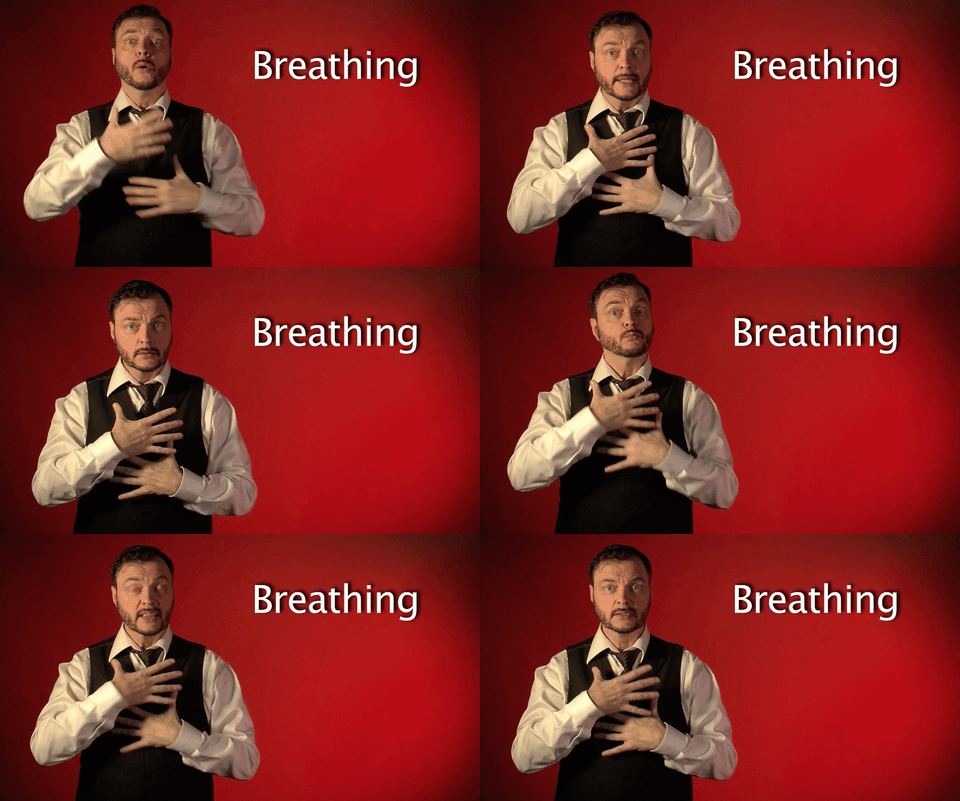
A few weeks ago, at the Meeting House, Zach was breathing too loudly while he was sitting in quiet contemplation for the still small voice of God. A woman in front of us, panicked but also terrible, kept turning around. Zach’s eyes were closed, because, again, as I said, he was sitting in quiet contemplation for the still small voice of God that comes from within. His breathing shouldn’t have been a prob– I’m getting ahead of myself, or at least away from the story I want to tell.
So, a few weeks ago, at the Meeting House, Zach was breathing too loudly and this woman was losing her mind. Zach finally opened his eyes for a moment — I think someone was giving a testimony — and the woman began to artlessly sign at him not because she was deaf or hard of hearing, or even that she thought Zach was, but because the strict letter of the law in a Quaker Meeting House is silence, unless you’re moved to speak. She was following the letter by silently, yet animatedly, gesturing for him to not exhale.
Zach didn’t know what she was going on about.
“What’s she going on about?” he asked me. I maintained eye contact with the woman in front of him, our itinerant signer, and said, in a normal speaking voice not whispered for a Meeting: “She hates that you’re breathing.”
My religious background — what little there is — and my social background — what even littler — are sort of Southern Baptist. My mom is from Arkansas and has, even in the dark thick of Alzheimer’s, the full recipe for the best fried chicken you’ll ever eat, as well as a passive-aggressive spin for everything. She once said a baby was as cute as it could be — and that wasn’t a compliment. Another time, describing a relative’s two-year-old: “I could love her more if I saw less of her.” Visiting my house — actually, the first time she visited a house I was living in — she walked in, looked at the clutter (that looked tidy to me), ran her finger across the top of a dusty bookcase, and said, “Y’all must be so busy.”
I paint this picture because what I desperately wanted to do during the time of the meeting where we hold people who need healing in the light, is to stand and say, “I’d like to hold Laura, sitting in front of me, in the light. Her ears are giving her fits like to ruin her life. Sensitive to breathing, you see.”
But I didn’t. Because I was raised right*.
[* I was not.]
Earlier this week, after Meeting, I went up to that day’s Friendly Ear. (It all gets sort of Gileadish, what with its Friendly Ear and Gilead’s Under His Eye, but may the Lord open, they are totally different.) I wanted to find out if there was a group of local Quakers who read the Bible together. And then it all got sort of escalated?
I’ll quote from some email exchanges, but leave names out.
First, I’ll try to describe the in-person interaction:
Mike: I was wondering if there was some sort of group that meets together to read the Bible here?
Ear: Oh. I. Erm. I.
Mike: I have a directory — should I just look there?
She decides I need to speak with this other person, who is on the Religious Education Committee. It takes some time to find her. Some said she had already left. Some said she was by the punch. She did turn up, but from where remains an ineffable mystery unless you ask her directly, then you’d know.
Ineffable Mystery: Hi, I hear I’m being looked for!
Ear: Yes. This young man is interested in Bible study.
Ineffable Mystery: Oh. I. Erm.
Ear: That’s what I said!
Ineffable Mystery: That’s not really something we have. We have a lovely library, and a book group. Is that what you mean?
Mike: No, I mean, those are great, but I’m interested in a weekly group of some number of people who get together and read the Bible.
IneffableMystery: So you have experience teaching the Bible?
Mike: No — and that’s not what I am looking for. This is really more like a book group, but for the Bible.
Ear: Oh, we have a book group! Maybe you didn’t know about that?
Mike: I don’t want to read The Kite Runner is the thing. I just want to read the Bible. With other Quakers. Together.
Ineffable Mystery: Well, I don’t know if that’s something I would be into or not.
Ear: Yeah, it’s not something we do. We have a different relationship with the Bible.
Ineffable Mystery: Yeah.
Mike: [channeling his mother, Patricia Kelly] Okay. Well, it sounds like my church isn’t the place to read the Bible and I’ll figure something else out.
— FIN —
So, to the emails. First, the Ear wrote me:
I have been thinking about your question of having a reading group on the Bible partly because I think Ineffable Mystery and I gave you a pretty inadequate response. [Several] things have occurred to me since:
1. Although many Quakers are extremely knowledgeable about the Bible and would appreciate having the opportunity to reflect on passages together, there may not be many of them [here]. On the other hand, there may be some who would be delighted to know of your interest and a new group may form. To that end, if you would send me a brief description of what you have in mind, I would be happy to forward it to everyone…asking them to be in touch with you.*
[* This is literally all I wanted from the very beginning. Just that. Ask others! Some may, some may not!]
2. I mentioned the Spiritual Formation program at the rise of Meeting and this is a program in which small groups within the Meeting get together twice a month to share reflections on spiritual readings, which certainly could include the Bible.* You may wish to become a part of that program.
[* My heart sank here, dear reader, when I thought, “Fuck. I bet they read The Alchemist.”]
I replied with my bona fides and a bit more about what I was interested in accomplishing.
Friendly Ear! This email was so wonderful! Thank you. I felt bewildered (through my own fault) when I left our conversation last Sunday. This email really helped. I’m also just generally socially awkward; however, I’m also stunningly handsome. God doesn’t give with both hands. (I KID.)
A bit about me: I have been coming to Meetings for about 2 months now. I am new to Quakerism, and new, really, to religion. But everyone has been so warm and welcoming; I really feel I made the right choice.
My day job is in Regulatory Financial Compliance: I make sure banks and creditors and collection agencies stay on the right side of the law. I love it because it involves knowing the rules and explaining them — two things of which I am inordinately fond.
My passion, though, is in literature. I read an upsetting amount. I have been lucky enough to have run the library’s Classics in Context program for the past 12 years. It is one of the more popular reading groups offered by the library, and I get to read with some incredibly intelligent people. I have never left a book discussion with any of my assumptions about the book intact.
I have also been privileged to be invited to lecture to a variety of audiences, primarily on 19th century history, culture, and literature. I have lectured to the Victorian Society of North American, Washington D.C. chapter; The Gay & Lesbian Alliance; Oasis Lifelong Learning; and for Bethesda Live & Learn. Where I am most interested is in how people perform certain actions. I call it performative morality and actual morality when I’m talking about how the Victorians acted towards, say, the poor.
What I am hoping for is one of these two options:
1) An already-existing Bible group who read the Bible from a Quaker perspective, but with room for personal readings people may come with. (It sounds like this doesn’t exist.)
2) A need for one, and I could facilitate it.
My interest is not at all in saying, “This is what this passage means,” or posing in any way like an expert. I’m as confused by the Bible as anyone else — and that’s what is so intriguing to me about this project. It’s a chance for me to hear many other interpretations, among people, other Quakers, whom I love and respect.
This can all be done entirely free. And it would mean a lot to me as a new member to use the Quaker space as a spiritual home.
I’m available for any questions or follow-ups you may have.
This didn’t get me any closer to where I wanted to be.
Dear Mike,
I just found this excellent bibliography of Quaker-oriented Bible study books and courses:
I would be glad to talk further with you about your thoughts about this.
I replied:
Thank you so much! I will read through these.
In case this wasn’t clear: it’s not that I’m confused about the Bible and looking for experts. I thought that a group of like-minded people, reading a book like the Bible and other texts*, might enrich each other with their personal thoughts and reactions.
[* I’ll be honest here: I threw in that “other texts” nonsense because I thought they’d be more interested/receptive if they thought I’d bring in some Eckankar, a religion I know about only because a straight boy I was obsessed with named Johnny was an Eckist so I’d like my Comparative Religions doctorate now please and thank you.]
If a Bible reading group doesn’t feel at all like a good fit, that is fine! I don’t need special accommodations; I just like reading and sharing ideas and the Bible has some common currency among us.
I wasn’t supposed to send the above email. I had met with my therapist yesterday (Tift Pelias, if you’re in the market; tell him Mike sent you!), and talked about how my go-to strategy is to react, rather than respond, when I’m feeling aggrieved. React is sort of following your body’s lead, which isn’t a problem necessarily when your mind and your body are functioning as a team. My brain and body function as a buddy cop movie with none of the fun stuff included and the cops hate each other. When I react, it’s almost always based on bad, biased information. Responding, however, is taking your reaction, and a moment, and sitting with both. Ask if what you’re feeling is true, or if it’s just convenient. (Sometimes anger is a convenient feeling or me because it justifies my bad mood and terrible behavior.)
So, I was going to start practicing responding over reacting and I was going to write out my email response, quoted above, put it aside, read it to Zach (this is key; he keeps me in check), and then discuss how I’m feeling and if the message I’m sending is the message I meant. I was going to start that; but then I hit send rather than close and I’ve been saying, “It was by mistake,” and I may even say that that is the truth — but I’m new to not being an asshole so it very well may have been that it was That Mike who said, “Fuck it.”
So, it was perfect when the last email I received before I decided to disengage until a later date, said this:
Hi, Mike – here is an article that describes “A Quaker Approach to the Bible.” You might find it interesting.
I DO NOT WANT A QUAKER APPROACH TO THE BIBLE. I DO NOT WANT ANY APPROACH TO THE BIBLE. I ONLY WANTED A GROUP OF PEOPLE WITH A COMMON SPIRITUAL BELIEF TO COME TOGETHER ON THE REGULAR AND SAY, “Hey, guys, that story about the binding of Isaac. Man. What do you make of that?”
THAT’S WHAT I WANTED.
When I was reading a biography of Gerard Manley Hopkins (bonus poem by that guy at the end of all this), the biographer mentioned, several times, that Hopkins could not be an Anglican at all — he hungered, too much, for the actual body and blood of Christ. (“Food for the journey,” I read, once. A woman’s husband was in hospice and she made sure he received the Host every day and I find that such a beautiful and profoundly transforming story.) In Anglicanism, it’s all metaphorical. For Catholicism, which Hopkins was inexorably drawn towards, it’s literal. (Flannery O’Connor on Mary McCarthy and the Eucharist: “Mrs. Broadwater [Mary McCarthy’s married name] said when she was a child and received the Host, she thought of it as the Holy Ghost, He being the ‘most portable’ person of the Trinity; now she thought of it as a symbol and implied that it was a pretty good one. I then said, in a very shaky voice, ‘Well, if it’s a symbol, to hell with it.’ That was all the defense I was capable of but I realize now that this is all I will ever be able to say about it, outside of a story, except that it is the center of existence for me; all the rest of life is expendable.”)
My hunger isn’t for the Host at all. Catholicism is, for me, best understood as a mystery that I am glad exists, but have no interest in engaging. But my hunger is for the Bible, and the Quakers are VERY weird about it.
Some of that might be where the Bible sits within Quakerism, which is shakily, and off to the side. Quakers see the Bible as an interesting document of God’s revelations from a specific time and place; they do not see it at all as an item that bears any more weight than today’s revelations experienced during a Quaker Meeting. In fact, primacy of the Bible can be seen to undermine today’s revelations from God.
But I have yet to hear, at a Quaker Meeting, anything so lovely as “Therefore I have uttered what I did not understand, things too wonderful for me, which I did not know” (Job 42:3). It’s mostly well-meaning white people wanting to perform responsibility. Several meetings, someone will stand up and either announce their intention of going to the border to help with the family issue, or someone will stand up and say, “My heart is breaking because I know I can do good at the border for those families, but I do not have the resources to get there.” This all smacks a little of Mrs Jellyby, obsessed with an obscure African tribe, rather than proferring help to those in London or even, God forbid, her own children. The help we want to give — the showy, busy, selfless work — is rarely the help that is needed. And the help that is needed is often boring, with no glamour to it.
“Mrs Jellyby was looking far away into Africa.” — C. Dickens
So, what is to be done? I don’t know. I want to continue my spiritual journey towards/with God; however, I am worried that maybe the Quakers aren’t the home for me that I want. Which puts me in the wonderfully awkward position of visiting a local Baptist church this Sunday. I know they read the Bible there.
Pied Beauty — Gerard Manley Hopkins
Glory be to God for dappled things—
   For skies of couple-colour as a brinded cow;
       For rose-moles all in stipple upon trout that swim;
Fresh-firecoal chestnut-falls; finches’ wings;
   Landscape plotted and pieced—fold, fallow, and plough;
       And all trades, their gear and tackle and trim.

All things counter, original, spare, strange;
   Whatever is fickle, freckled (who knows how?)
      With swift, slow; sweet, sour; adazzle, dim;
He fathers-forth whose beauty is past change:
                                     Praise Him.


 I love Margaret with my entire heart and soul. I love her love of God. I would lay down my life for her. I think she is wrong about what Christ wants from us. He tells his disciples to do two things in memory of him: eat, and drink. He doesn’t say, “Oh, and also, I need you to suffer.”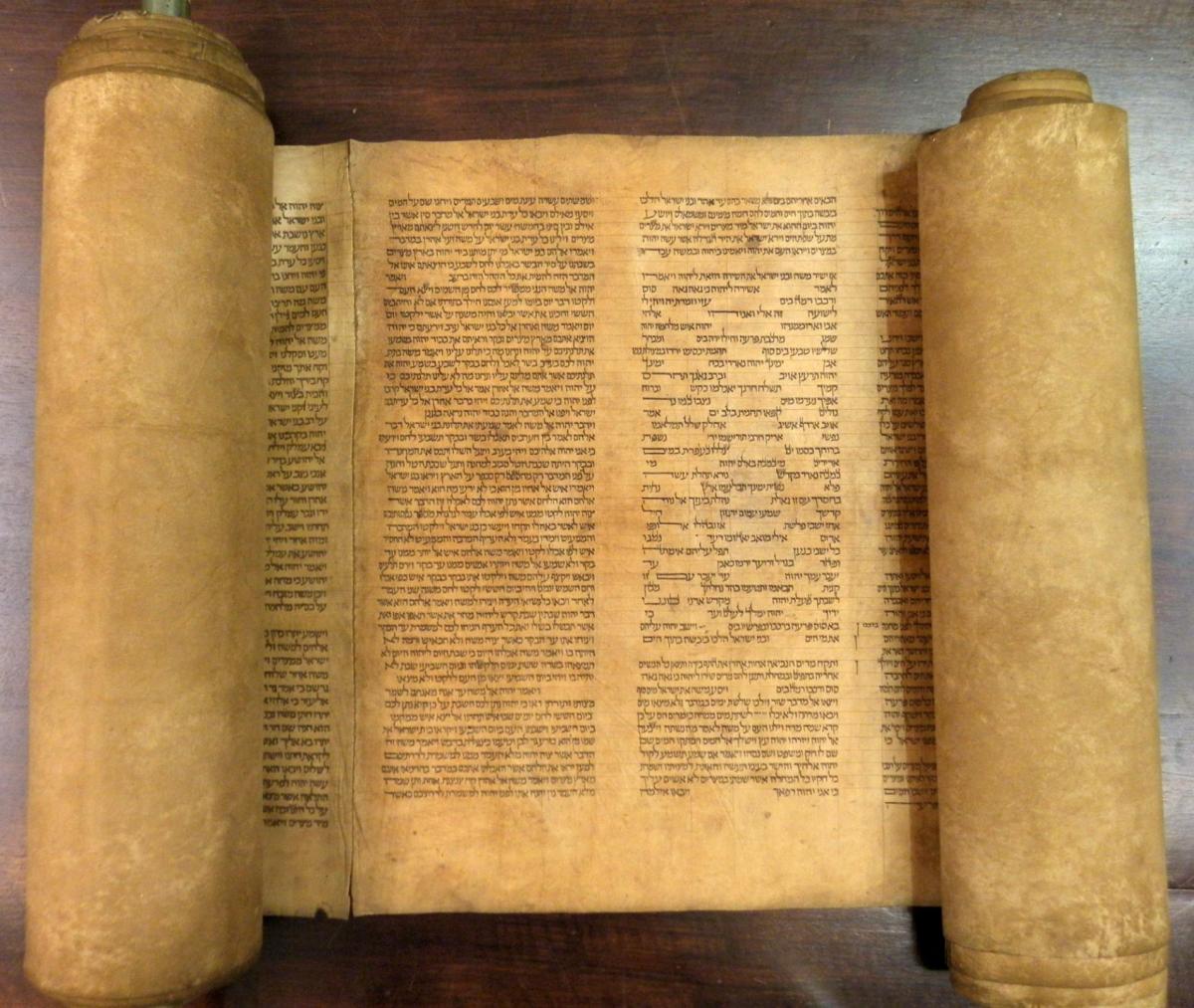







 How to Read: with Mike Bevel