Categories
Belief Bible Study Finding God Jesus Paul

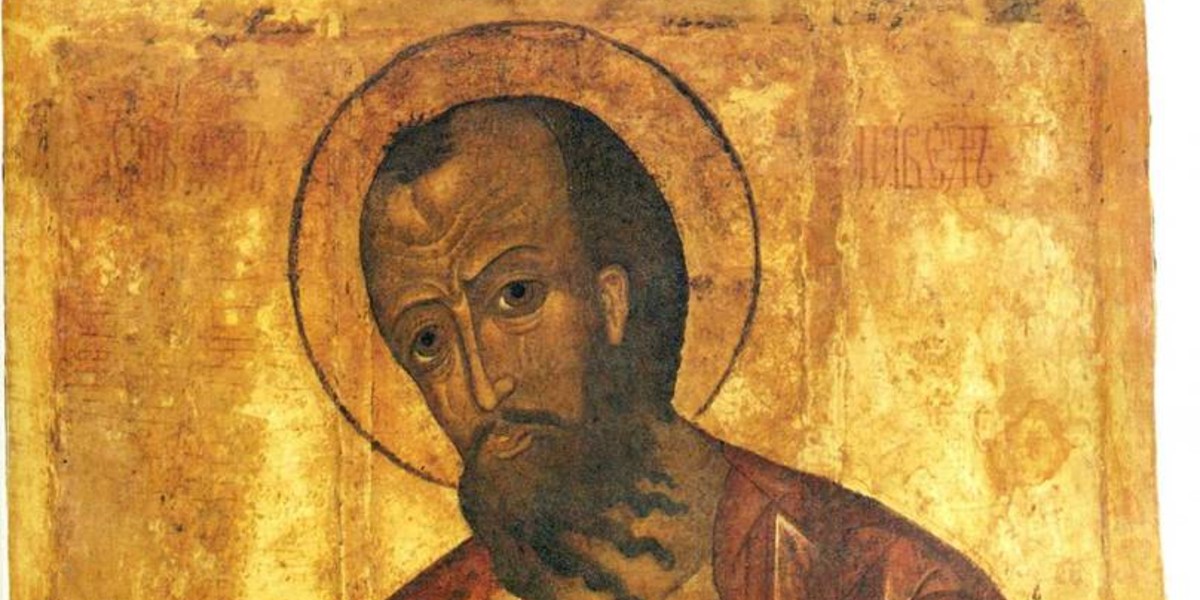
This Far, But No Farther: Paul’s Radical Ecumenism in Galatians 3:28

There is neither Jew nor Greek, there is neither slave nor free, there is neither male nor female; for you are all one in Christ Jesus. (Galatians 3:28)

Temple worship in Paul’s time was highly segregated, but in a complicated way. Everyone was encouraged to worship at Temple (and there’s only the one Temple at this time; cities do not have their own synagogues), but not everyone was allowed to participate fully in worship. There is full segregation based on gender — men to one side, women to the other — and then within this main system of segregation you would have your Greek gentiles apart, and your slaves apart, on either side of that male/female literal and spiritual dividing line. (I have ::frequent:: stress nightmares about being the logistics manager at the Temple in Jerusalem. I’m great at my job of course; but at what price?) And then the Jesus movement happens (we can’t really call them Christians yet), everything gets thrown off balance. The Jesus movement — sometimes called The Way or Nazarenes in the 1st century CE — can’t compete with Judaism’s exclusivity, so it becomes almost radically ecumenical. Women are recognized as disciples, and even do some teaching. (This doesn’t last super long; a movement that is too egalitarian becomes challenging to harness.) And these early gentile followers (which just means “non-Jew” in this case) of Jesus would want to worship in the way Jesus did, at the Temple, because there are absolutely no other places for ritual worship. (There are house churches, but that’s an entirely different form of worship.)

Imagine falling in love, and wanting to spend your days in full communion with your love. You want to almost transubstantiate yourself into your love, and your love into you. Now imagine that the place where you can be closest to your love tells you, “This spot, but no further.” Imagine being denied full participation in the worship of your love. That’s the tension we see between Jews and gentiles. Gentiles want this immediate experience of the Divine — because ::it recently happened within memory::. Paul has an experience of the resurrected Jesus and it utterly shatters his life and blinds him. On the day of Pentecost, extraordinary things happened to the apostles. After years of divine silence, ::something:: was happening, something that included any who wanted to become a part of it. And the Temple is saying, “Okay. But: here. And no further.

“Jesus is a figurehead, in the very first days of his ministry, for an eschatological gospel: the good news of the end of the world. Not how we’re ending the world today, by killing and destroying it. This is an end of temporality: the wicked days are coming to an end, and a new era of righteousness is coming. This is what John the Baptist, likely an Essene, preached. Whether or not you believe the messianic claims made on Jesus’s behalf, he does pick up John’s cross and also preaches a gospel of repentance. Cast off what is harming you, care for those who need caring for, because all of this is going away and you won’t need your hurt any more. “Repent” literally means “turn back” or “turn away from.” (That this ended up ::not:: happening becomes a problem for the Jesus movement, but that’s for another parenthesis.) And this message resonated with Jews and gentiles alike. When Paul is writing his letters to various churches (“no, you’re doing it wrong” or “no, YOU’RE doing it wrong” or “NO, your doing it wrong” or “STOP STOP STOP STOP STOP STOP STOP”) he wants to challenge Jewish hegemony and insists on an almost-egalitarian ideology for these followers of Jesus. (Does he hate women? When have we ever ::not:: hated women? Is he homophobic? Aren’t we all, aren’t we all.) Insisting that categories like “slave,” and “women,” and “Greek” are meaningless within the community of believers, he tells the Galatians, as early as the late 40s CE, that anyone is welcome in worship.


Paul as Pride Grand Marshall is a fun joke. Others have spent useful time trying to either redeem Paul’s homophobia (an anachronistic term that may or may not be fair to Paul), or reify his position. In letters to the Romans, to the Church in Corinth, and to his fellow evangelizer, Timothy, Paul seems pretty clear on his stance about queer identity. Except it isn’t very clear at all. There’s an ocean of time and distance and references separating us from the mind of Paul.

In the ’90s, I worked at an HIV Day Center in Portland, Oregon. Our intake form was invasive, because we want to know the everything of the mistakes a person makes before we help them. We would ask men if they were homosexual.

Some men were! Some men outly and proudly identified as gay. Some men were not! Sometimes angrily not. Sometimes confusedly not. But our form required an additional question, which was: “Have you had sex with other men?” And a what-shouldn’t-be-all-that shocking number of men who did not identify as homosexual answered yes to the “have you had sex with other men” question. Capitalism was only just formulating bisexuality as a means of selling hair-care products to men, and no one could understand how (a) someone could not be a homosexual; and (b) have sex with men.

Is Paul homophobic? It actually doesn’t matter. We don’t need to listen to Paul’s Grand Theory of Moral Sexuality in order to listen closely to what he writes to the Galatians about radical openness. Inconsistency doesn’t affect our rightness, just like rightness doesn’t keep us from doing wrong. If Paul is wrong about women; if Paul is wrong about women and gay people and sodomy and what the church is doing in Thessalonica and even about his own transfiguring experience of the risen Jesus on his way to Damascus; even if he is wrong about all of that, we can still trust fully that whatever the ineffably divine experience of the universe is, it is open to all: to Greeks and to slaves, to queer people and sinners, to people in all their messy splendor, to every piece of creation sidelined as Other.

Categories
Belief Gnostics God Gospels Jesus John Luke Mark Matthew New Testament

The Bad Seed

“verily thou hast done unwisely…vex me not”

The Bible we have is a book in one volume, and so we read it as if it’s a book in one volume. But it’s really a whole bunch of books, and gospels, and pieces of poems, like a Lutheran hot dish, which is why we have Protestantism.

There are more Christian gospels in the world than appear in the New Testament.

Thomas the Israelite1 wrote an infancy gospel, probably in the 2nd century CE. (Or, at least, that’s the guess, and the dating of the earliest primary document.) It’s important to know that something not being written down doesn’t make it illegitimate, any more than something written down is legitimate. No one, from the late 100s to now, has been keen on including Thomas the Israelite’s infancy gospel, or any other infancy gospel, and the excuses are largely about its timing: it wasn’t written down soon enough. It’s almost 200 years after the birth/death of Jesus, and isn’t written by Someone Who Was There. (A gospel being written by Someone Who Was There became a main measuring stick still used today when judging whether something is Bible-worthy or not. Unless it’s by a woman who was there and then we immediately jettison it, so its part of the ecosystem that the species Dans brown live on.) But even today we have books about people written by other people who Were Not There. They’re called history books and biographies.

Infancy gospels would be very important, and a lot of early Christian apologists would have loved to find a legitimate infancy gospel to fill in those missing years where Jesus appears to not do much. (This leads to everything from “Jesus traveled to India and became a Buddhist master” to “he traveled to Arabia in order to become a magus.” As inconsistent as Christian apologists are — and they are very inconsistent — they do grant that they are check-mated here and have no documentation to support their idea that Jesus didn’t do these things. I’ve got more to say about this, but it’s in that footnote you passed.)

Apologists’ inability to believe in infancy gospels doesn’t mean they don’t exist. They do. And the reason apologists might stay away is often insufferably unpleasant.

In the Infancy Gospel of Thomas2, Thomas tells us that Jesus killed the following people:

– The son an Annas, who mucks up a pretty pool Jesus created on the Sabbath, by withering him either like or literally into a fig tree. (You may remember Annas from Jesus Christ Superstar and the song “This Jesus Must Die.” One of the reasons might be because Jesus killed his kid.)

– A kid who bumped into him. (When the kid’s parents complained to Joseph — “What if he blessed people instead of cursing them?” — Joseph had a talk with Jesus, who carefully explained that he was Very Right to kill that kid, and then Jesus blinded his accusers. Joseph tried again to parent Jesus, and Jesus said, “You’re working my last nerve, Joe. Pray you don’t finish.”)

– Probably this other kid named Zeno, who “fell off the roof.” When that kid’s parents told Joseph, Jesus immediately ran to the corpse and brought it to life so it could exonerate him.

In an infancy gospel from the late 600s/early 700s, “Pseudo-Matthew,” Jesus doesn’t kill anyone. Instead, no one can eat unless Jesus is at the table, and when Jesus isn’t at the table no one eats. Also, Jesus is surrounded by “the brightness of God” day and night which would make him impossible to share a room with.

The Syrian Infancy Gospel (c. late 400s) shows that people keep dumping dirty Jesus water on sick kids, with miraculous results. No little amount of time is spent cataloging attempts by people trying to steal the bathwater to throw on lepers. (There’s also a dragon in this gospel which is defeated with some of Jesus’s soiled laundry.)

Later, Jesus becomes angry with some boys who are too good at hide-and-seek so he turns them into goats. Oh, and one time Jesus dressed himself up as a king and made his friends drag people from the road to honor him.

The Divinity of Jesus

There are competing theories in the gospel about the Divinity of Jesus. You may not know that there are competing theories, because the New Testament is presented as unified and inerrant. But you’ve got your Incarnationists over here, and your Adoptionists over there, and here’s how they differ.

Incarnationists believe that God was incarnated on Earth in Jesus, who also existed with God from one moment before the beginning of everything. So actually, there’s a schism right there with the Incarnationsts. Some believe that Jesus only existed from the beginning in the way that your ability to pull off a convincing English accent existed from birth: something you could do, but not something you were always doing. Jesus is a unique experience God has on earth. And then some, like, for instance, the writer of the Gospel of John, believe that Jesus and God are the same, and have always existed, but are separate, but not different, and God has always been God and Jesus, and Jesus has always been Jesus and God. For this narrative, btw, you need to fix a bunch of plot holes; but because the plot holes are terminal plot holes, fixing them only makes everything hole-ier. For instance, if Jesus is divine from the very beginning, he needs a pristine and spotless womb. And a pristine and spotless womb cannot even have caught a flashing glimpse of a penis let it be awashed in schiaparelli sin and that’s absolutely no house for a savior. But we also have Original Sin to contend with. How spotless and pristine can a womb be if its bearer is tainted? So now we have to remember that Mary was conceived without original sin. But she can’t be supernatural — that doesn’t exist. She’s not divine, or demi-divine. Except when she is. She’s a human woman, because Jesus has to be born of a human woman. But she has to be so extraordinary as to almost negate her humanity. And then if this were a sonata, I’d put one of those repeat signs so you would know to go back and repeat this again, every 50 years, until you die.

It’s bonkers.

Adoptionists believe that Jesus was born entirely human. Mary is human, Jesus is human, God is God, and doesn’t notice Jesus until (a) his baptism in the Jordan by John; (b) his crucifixion; or (c) his resurrection. In this case, God notices how great Jesus has been and gives him Employee of the Year. The Gospel of Mark in the New Testament is an Adoptionist gospel. (People will argue with me and I just won’t listen.) Mark knows nothing about Jesus’s birth, the angels, the annunciation, the magi, the stars. Mary, his mother, is mentioned only once and she has no speaking lines. Jesus becomes divine at the moment of baptism, when the “heavens [are] torn apart,” the Spirit descends (who is this “spirit”? Another time, my ducks), and a voice comes from haven, saying, “You are my Son, the Beloved; with you I am well pleased.” (All quotations from Mark 1:9-11 in the NRSV.)

Matthew and Luke are also sometimes viewed as Adoptionist. Jesus does not become divine until Mary conceives. Matthew and Luke do not say anything about Jesus’s eternalness. So we’ll add a (pre-a) to the above list and say “until his conception.”

John is the only wholly Incarnationist gospel we have in the New Testament.

This is a little bit of an issue for the gap we have when we take all gospels together. Combined, here is what we know:

pre-birth to birth: check
1ish to 12: absolutely nothing
12: check (he’s a rabbi now)
12 to 29: absolutely nothing
30 to 33: busy

We have nothing in the New Testament that fills those gaps. If Jesus was an incarnation of God — God made Flesh — you’d think that would be remarked on. Initially some very excited shepherds visit. We get some Persian magician-spies. And that’s it. This extraordinary event — a magical star, angels everywhere, prophecies — is forgotten. Kinda like the One Ring, I guess? But not really. Here’s a kid, born of a young woman, who might or might be a virgin depending on how you translate, and he’s not lying at the bottom of a river covered in silt. He’s around! He’s in his community! And unlike the way we’ve pubertized magic in popular culture, where wizardy kids don’t have control over their sexua– sorry, magic, until pubert– sorry, until they learn to control their orgas. Shit. Unlike that, there’s no sense that Jesus has to “control his powers” because Jesus is God and God is not a horny teen witch. (Unless he is!)

So if we’re to understand Jesus in an Incarnationist context, this knowledge gap is puzzling. However, if we are rational Markan Adoptionists, then that gap is explained by an entire Portnoise of all the very boring same things that all teens do. He’s not the Christ yet. He hasn’t been adopted by God down by the river.

Infancy gospels are an Incarnationist genre. They’re wild, and I love them. They’re also necessary for belief, but not convenient for it. They sit uneasily next to stories of Jesus’s meekness and humility, and run counter to his own ambivalence about his divinity. They’re flawed portraits by flawed people, looking for a savior who might look like them.


Footnotes

1 Some of you may know about the gnostic Secret Gospel of Thomas. Thomas the Israelite, to whom this infancy gospel is attributed, is not that Thomas. Unless he is. But mostly probably not.]

2 None of the gospels we have — both in the New Testament and those left out — came with titles. They didn’t have chapters or verses, either. All of that stuff is added later, and titles like Pseudo-Matthew were/are used primarily to scare people away and reaffirm that they’re Not Really Gospels. But they are.

Categories
Belief Christ Finding God Jesus

What Happens When the Wire Snaps?

What kept nagging at me — after the rush of religion and feeling like I had found a church and a faith I could work into my own belief system — was the ultimate question of the Divinity of Jesus.

I want to be very clear: A man named Jesus — or Yeshua, or Immanuel — lived. He was a Jew, likely with an affinity for the Essenes* (through his cousin John the Baptist**), who preached a gospel of social justice***. He was seen more as a political irritant and agitator than an important religious figure during his lifetime, and he was ultimately found guilty and executed by the state.

[* There are some scholars who doubt the existence of the Essenes entirely, believing they were actually renegade Zadokides — sons of a Jewish priest named Zadok. I’m agnostic on this.]

[** It’s unclear what the relationship was between Mary, the mother of Jesus, and Elizabeth, the mother of John the Baptist. A blood relationship of some kind is hinted at; however, ideas of family and allegiances were sorted and settled in ways that are not common to us. Cousin seems to fit; but it just as easily could not.]

[*** He’s not consistent about social justice all the way through — or, his biographers and recounters, at least, were not consistent. Jesus, after his death and with no way to counter or correct, became the necessary catalyst for a variety of faith understandings that continue up through today.]

How can a religion that tries to emphasize love and caring be based on the violent death of a single man? Why does our religion require that violence? Why did ::God:: require that violence? I have not yet been able to reconcile these ideas in a way that makes Christianity loving and welcoming. “Please come to our murder cult! We wear the object our savior was killed on; you can get one bedazzled if you want.”

As with all religions, there are schisms, and Judaism is no different. By the time of Jesus, there was a desperation for the Messiah to come as a warrior and right all the wrongs committed against God’s chosen people. Followers of Jesus, especially those writing some years after his execution, used Jewish writings to point out how Jesus himself was the Messiah.

(This proved to be hard to sell to the Jews of the time, who had their own myths and accounts of what the messiah would be and do, and Jesus fulfilled none of those things.)

And this is, I think, a key point to keep in mind: The Jewish Bible and the Christian Bible are two ::entirely:: separate collection of documents — but in a curious way. Judaism has no interest in, or need of, Christianity. It stands on its own*. The Christian Bible is reliant on the Jewish Bible because it is what underpins and proves the Divinity of Jesus as the Christ. For those curious about or fascinated with the evolution of religious belief, the Book of Mormon shares the same reliance on the Jewish Bible that Christianity does. It also needs the Christian Bible, too. These are appeals to authority. Neither holy book needs the Book of Mormon.

[* That’s actually a bit of an oversell: Judaism comes out of the crucible of other ANE (Ancient Near East) cultures and religions. In some ways, the Tanakh — the Jewish Scriptures — is attempting to correct the beliefs of the other cultures around it.]

So, the more I thought about Christianity — and especially the way it has evolved (or, less charitably, metastasized*) — I began to really put my whole heart into working out what, exactly, Jesus’s role is in salvation.

[* When Europeans began stealing land from Native Americans, they brought with them their most holy dictum: The earth was made for man to subdue. So the wilderness of North America symbolized the chaos out of which God brought order and goodness. Christianity was used extensively to justify and encourage slavery. And it is used now to attack more than it is used to comfort the afflicted and afflict the comfortable. #NotAllChristians]

I remain a theist. I continue to believe that what we are all participating in is some sort of Great Divine Mystery, one that we’ll either never solve, or we’ll solve, but not in our current existence. I don’t believe there is a place where people are punished for whatever we want to believe sin is. I also don’t believe in some limitless field of perfect with streets of gold and everyone somehow living eternity in perfection*.

[* Reading the Bible through a lens of poverty, the ridiculousness of heaven starts to make more sense. Streets paved in gold; everyone wearing a crown; jewels everywhere: heaven is filled with the things denied to you in this life.]

But I believe we do go on. I just don’t know how. Or what it looks like. And I will either die, and know the answer; or I’ll die, and stop asking.

Jesus said extraordinary things about caring for the poor and the “least among us.” But I do not believe he was the Son of God. I’m more squishy about some of the miracles — a good miracle is a good miracle — but I absolutely do not believe his arrest, torture, and execution by the state was the mechanism of salvation. I think it was just the murder of a man who caused too many problems.

So where I find myself now is uninterested in Christianity, but very much a believer in God. I think Christianity is an attempt — I think ALL religions and philosophies are an attempt — to explain various experiences of the Divine. I just don’t know what form God takes, and I don’t pretend to understand God’s likes and dislikes. I think God is simply delighted by everything. “Do it again,” G.K. Chesterton imagines God saying.

(“It may not be automatic necessity that makes all daisies alike; it may be that God makes every daisy separately, but has never got tired of making them.”)

I’m less worried about how to label myself. That seems a waste of time. But I don’t think I can, with good conscience, say I am a Christian any longer.

Categories
Belief God Parables Seeking Souls

Some Unorganized Thoughts About Riots and Race

The Wikipedia page for the Boston Tea Party has an entire section solely about the destruction of the tea. White men, some disguised as Native Americans (not out of respect for the Native Americans, btw; scapegoats are made, not born), looted a ship and destroyed some tea. I don’t mean to teasplain the Boston Tea Party to you. For years, it was one of the “fun” sections of U.S. history classes because it occurs in the middle of terrible trade negotiations with Britain and everything was the Stamp Act.

I want to go back to something real quick: I said “white men” above and while all lives matter (hashtag “nonsense”), in the case of 18th century America, it’s the white men who matter because women and black people were property. And they weren’t members of the coterie of rioters who took two seconds to brainstorm a political act of dumping tea into the harbor. (If anyone tries to explain to me that the Boston Tea Party was a plan long in the making I will open my mouth to laugh and never stop laughing until I die, mouth still wide open with a rictus smile.) Benjamin Rush, one of the original signers of the Declaration of Independence (no, not that white guy; the other white guy), ironically argued that the tea itself carried within it “the seeds of slavery” to Britain. Tea-drinking became unpatriotic in this country until the South discovered sweet tea. We like to think on the Founding Fathers as these mythological and ideological giants with wooden teeth and ragged wigs but they were just dumb men in boats. There’s that painting of George Washington crossing the Hudson (that’s a river, right?) or maybe it’s the Delaware look: all you need to know is he’s in a boat on some water. You’ve seen this picture I know you have and he’s sort of standing and pointing the way forward with his nose but gurl, there are only two directions in which one can cross a river and it’s either forward or backward. “Go that way!” George points. “WE KNOW,” say the rowers.

Our country, America, was literally built because white looters looted an entire continent of its black people to do the work of assembling this nation (i.e., everything except worrying about how much cash the master was rolling in). And before that, white Englishmen and French dudes and sure, Germans, why not, and absolutely some Vikings — a rainbow of white people; a rich tapestry in shades of vanilla — looted land away from the tribes already living there. Remember how Olde Timey colonists argued that the land was better tended under colonial hands because the locals weren’t doing anything with it (even though it was Native Americans who taught agriculture to the invaders)? And yet I’ve had a hole in my downstairs ceiling for approximately 14 years and no one has come to fix it and colonize our house. It’s probably because we’re white.

Our country was also built on riots and protests — specifically, the American Revolution, which is just a protest with a better tech-savvy teen as the spin-doctor, but also that Tea Party business which is the sweet spot of both rioting and looting.

By white people. White men.

(Oh, but real quick, and because maybe one of you has read this far and is about to scroll to the comments to teach me history: Women colonists were politically active in their way, too. There’s a fantastic cartoon, published in Britain in 1775, titled A Society of Patriotic Ladies at Edenton in North Carolina. See right below this parenthetical.)

White people love two things: Owning people (black people, children, Asians, women) and taking things that aren’t theirs (this country, that country, a whole bunch of other countries, and Hawai’i). Wait, we also love making black boys gladiate for scholarship money. Oh, and we LOVE eating outdoors, where the bugs are. There’s always that nightmare moment, when meeting friends for brunch, where the server says, “Would you like to eat indoors or out on our patio?” Because everyone wants to eat in the fresh air so common in cities where restaurants are built on streets that cars exhaust their way to and fro on. (“Up and down, up and down/I will lead them up and down/I am feared in field in town/Goblin, lead them up and down.”) Oh, we also love making rules, saying they are for everyone, and then only employing them against some ones. All lives matter, yes, but some lives matter more, or differently, or we’re more willing to give those lives — white lives — more of the benefit of the doubt than, say, a black man birdwatching.

“He had drugs in his system,” someone solemnly told me about George Floyd. Okay. I have drugs in my system, too. I break my nightly fast with some Zoloft, some Klonopin, and something I can’t remember the name of for my manic depression. I also smoke weed, which I think I’m not supposed to say anymore, so this will be the last time. Not because of the legality or illegality of cannabis, but because there are racial overtones to the way we describe a plant that has sacred and medicinal power for the Native Americans who were already here. I am privileged to even have psychiatric care, but my doc is younger than I am and active, so he prescribes a lot of things like “exercise” and “activities” and what I want is a brain that slows down for just half a moment. “So I can breathe,” I almost wrote, until I thought better of it.

White men made things like atom bombs and concentration camps and, ironically, very tall cans of iced tea. Black people brought us Dr Shirley Jackson, a theoretical physicist; and pacemakers (invented by Otis Boykin); and added a richness to our music — color, texture, tone, and true ache.

We are rioting and we are protesting because for too long in this country White Men have made it impossible for those who are not White Men to live full lives with the full complements of safety, security, respect, and love. Imagine being a large black man for 15 seconds: whether you actually are or not, in your mind you know that you make other people very afraid. And it happens when you’re a large black boy. And it happens when you’re just plain black.

Another thing white people love to do is re-translate the past so as to assuage some of the guilt that is rightfully white people’s own, their own, their own (“because it is bitter, and because it is my heart”). So, back to the Boston Tea Party and the American Revolution: that looting and those riots were justified. When Colin Kaepernick simply took a knee, that was the highest disrespect to ever happen in the history of this country that practiced a cruel form of slavery (“There are uncruel forms?”) for far longer than was cute and kept Japanese American citizens in concentration camps. White rules weigh differently than others’ rules, it would seem.

OH. And. Another thing we love (we’re busy little bees, aren’t we? Take a break, white people! You’ve earned it) is starting fires in black neighborhoods and then try to say that black people are starting those fires because it’s not a riot without a fire and a broken window and those protesting in Minneapolis weren’t burning and breaking enough so some enterprising white police officers said, “We’ll help!” And they did. And they blamed it on those rioting and protesting the murder of a man who fine, had drugs in his system; and who fine, maybe did some not great things in his life. I regularly embezzled money from the Skippers Fish n Chips I worked at in Medford, Oregon, in my early 20s. I thought VERY hostile thoughts about a person taking too long to descend the stairs at the Metro only to discover they were blind. Each of us is the most beautiful thing in the universe, and each of us has done something we either deeply regret or someone else judges to be very wrong. Up until homosexuality was finally made legal and all students had to take Gay not as an elective, but as a required course, my very existense was illegal. And like I said, I’ve had my fair share of drugs in my system, too.

Two final anecdotes:

1) When Joe Bevel and I were driving cross-country (btw, I don’t have a driver’s license), I got stopped by TWO separate police officers within 15 minutes because I was on a road that I didn’t know I wasn’t supposed to be on yet. It was very early morning, so essentially dead night, and not only did I get out of my car to approach the second officer who stopped me (I had to ask him where the turnaround was to get me to the exit to get off the highway), the first cop just called me an idiot (in a delightfully grating Midwest accent) and didn’t even ask to see my license (which, again, I do not have) or registration (which I think we had? It was my dead mom’s truck and she had dementia so who the fuck knows). I got to drive the rest of the way home with my brother, illegal the whole way, and I was safe. (I’ll also never drive cross-country again or travel anywhere farther than 1 hour away.)

2) Zach has his Old Complaint, a gastrointestinal issue that remains an Unsolved Mystery to this very day. Last month, Zach had his worst attack yet, and he had been moaning and crying out in pain so loudly that someone called the police to do a wellness check on us. (I want to break in here because you might be thinking, “Mike, why was Zach crying and moaning and screaming–” did I mention screaming? “–for so long; how could you sit through that and read The Portrait of a Lady you monster?” and I’ll tell you: Zach actively doesn’t want help at those times; he wants to be left alone. And it’s been going on for several years now and I am sort of used to it. One of the first mornings Joe Bevel lived with us here in Maryland, Zach was having an attack but it was more of a moaning/groaning sound and Joe thought, “Um.” Because to Joe Bevel, it sounded like Zach was having some Private Alone Time with some adult-style documentaries, and not that Zach was experiencing waves of discomfort and nausea.) The police came, and once they saw we were two just-past-middle-age white men, we were fine. They left. They asked if we wanted an ambulance, which we politely declined because I ran the numbers real quick and we were not then, nor are we now, millionaires.

All lives actually do matter. It’s not nonsense, like I said earlier. And that’s why we’re protesting and rioting: we can’t say that all lives matter until we start treating all lives as if they all mattered. As if each was the most precious resource we have. As if losing one of us is losing all of us. “Oh,” a professor says in the play W;t, “it’s an allegory of the soul!” And it is.

Categories
Belief Bible Study Finding Ghosts God Purgatory Seeking Souls

Souls, Purgatory, and Ghosts (with an explanation of Plumber Porn as a chaser)

SOULS

Do you have a soul?

We have to start with what a soul is, which should be easy, it’s only four letters, but the thing is, it’s not easy, even if it were three letters. We don’t have a unilateral definition of the soul.

We don’t know where the soul “lives” in the body. We don’t know if the soul is separate from our earthly experiences. All we have is a hopeful maybe.

In the Bible, the first mention of a soul actually comes right at the beginning: “In the beginning when God created the heavens and the earth, the earth was a formless void and darkness covered the face of the deep, while a wind from God swept over the face of the waters.” (Gen 1:1-2)

(I love this passage from Anne Sexton’s poem, “The Earth”:

God loafs around heaven,
without a shape
but He would like to smoke His cigar
or bite His fingernails
and so forth.)

The Bible is a translated work. The Hebrew Bible is written in Hebrew; the New Testament in Greek. Sometimes we know pretty exactly what a phrase means; the translation is easy. But In Gen 1:2, we have this phrase, “formless and void” — tohu wabohu/תֹ֙הוּ֙ וָבֹ֔הוּ in transliterated Hebrew. Only that’s not quite the right phrase. It’s one of those untranslatable terms that we get the sense of, but not the meaning of. Tohu, for instance, can mean “desert, emptiness, nothing.” But it can also mean “vanity” (which is how the prophet Isaiah uses it) — similar to how we use the term “shallow” as both a measurement of physical depth and personal/intellectual depth. The Hebrew Bible and the New Testament are already complicated enough in their original languages; what we’re getting, as modern English readers, is just a lot of fingers-crossed guesses. It’s one of the reasons why my personal theology is not very Bible-based.

That “wind from God” — or “Ruach Elohim” in the Orthodox Jewish Bible, or “the Spirit of God” in King James — is God’s soul, per your good friend Mike Bevel. Or God’s breath. It depends on how you conceive of God. For a lot of Christians, God is wholly spirit, and without a soul, so it’s his spirit that hovers over the waters. I’m okay with a God with a soul, and like this imagery more. The Bible was made for people, not people for the Bible.

(I also prefer the verb “brooding” rather than “hovering,” which might be a better translation of the Hebrew verb rachaph/מְרַחֶ֖פֶת anyway. It gets at the genderfulness of God, who is all genders and no genders and all sexualities and no sexualities. Here God is, brooding over the waters, like a hen with her chicks.)

In Genesis 2, we get an account of a soul entering a body when God breaths the breath of life into adam — the name of the first man, yes, but also the Hebrew word for earth. God has fashioned a man — Adam — out of the earth — adam — and he then breathes his ruach — his Divine Breath — into that earth. And the earth becomes flesh. And the earth was flesh.

I think we have souls. I think we call it consciousness when we’re not interested in/compelled by any sort of spiritual direction. We might call it memory. But I think there is something — some awareness, some sense of “me”-ness — that exists in, well, everything. Which makes me a Shinto Baptist, I guess, so let’s go wake up some books and bid goodbye to those that do not bring us joy oh look we can start with these books on the Vietnam war I was sure I was going to read but then that manic phase passed and they do not bring me joy.

I think we all have souls. Something of this experience that we’re all having on this planet is immortal and mutable and keeps going. In our current physical bodies? We’ll get to that, but my sneak-peek answer for you is no, it won’t be in physical bodies.

The question of a soul, and its use, has been a religious irritation for as long as we have conceived of an afterlife. Especially if your conception of the afterlife has a Good Section and a Bad Section. We know our literal physical bodies age, and fail, and die, and decompose. So the physical body can’t be what is judged. (Except, of course, for those sects who believe in a full-on full-body resurrection where we are all returned to the bodies we’ve always had and there are some questions about that that’ll get to later in this piece.) We also became pretty aware that people have personalities, and ways of doing things that sometimes accord with the status quo, and sometimes do not, and what causes that other than our souls? So souls become the metaphor of our holiness (or lack of holiness), and some souls are judged to be good souls, and go to Heaven (everyone is going to Heaven, by the way); and some souls are bad souls and they are sent to Hell. (I don’t believe in Hell and I barely believe in Heaven.)

More than anything, I am ego-bound to my experiences. I have a great deal of earthly attachment. And I desperately want to keep going. I do not want death to be the end of me, and my experiences. I am working on calming my mind to the idea that these years given to me to see and feel and love and hurt and dream and fail and succeed and just be alive to all of the mystery are finite. And that once I die, that is it. And maybe in death that purpose will become clear, why I had to be here, and why my life had to go the way it went. (I am not complaining about my life, to be clear. It is my own, my own, my own; and, like, say, a novel by Dickens or Tolstoy, could it use some editing? Absolutely; but I have no idea what to cut.) But truthfully, even in the very moment of typing this sentence — in every letter — there is this mini-hope that everything doesn’t end forever with my death. That it will be something akin to falling asleep and then, waking. And some period of time has passed, maybe just a few minutes or a few millennia, but to me it would be only a blink.

I want Zach to be there, when I…what? Resurrect? Yes, because I love him, and he makes sense of the world for me when I am not always able. I want all the people I love to be near me. I just don’t know where that “here” is. Christianity, as an example, has this concept of heaven which sounds interminable. As Mark Twain describes it in “Letters from the Earth,” in which Satan travels the planet and sends dispatches back to the other angels:

“In man’s heaven everybody sings! The man who did not sing on earth sings there; the man who could not sing on earth is able to do it there. The universal singing is not casual, not occasional, not relieved by intervals of quiet; it goes on, all day long, and every day, during a stretch of twelve hours. And everybody stays; whereas in the earth the place would be empty in two hours. The singing is of hymns alone. Nay, it is of one hymn alone. The words are always the same, in number they are only about a dozen, there is no rhyme, there is no poetry: ‘Hosannah, hosannah, hosannah, Lord God of Sabaoth, ‘rah! ‘rah! ‘rah! siss! — boom! … a-a-ah!’

“Meantime, every person is playing on a harp — those millions and millions! — whereas not more than twenty in the thousand of them could play an instrument in the earth, or ever wanted to.

“Consider the deafening hurricane of sound — millions and millions of voices screaming at once and millions and millions of harps gritting their teeth at the same time! I ask you: is it hideous, is it odious, is it horrible?

“Consider further: it is a praise service; a service of compliment, of flattery, of adulation! Do you ask who it is that is willing to endure this strange compliment, this insane compliment; and who not only endures it, but likes it, enjoys it, requires if, commands it? Hold your breath!

“It is God! This race’s god, I mean. He sits on his throne, attended by his four and twenty elders and some other dignitaries pertaining to his court, and looks out over his miles and miles of tempestuous worshipers, and smiles, and purrs, and nods his satisfaction northward, eastward, southward; as quaint and nave a spectacle as has yet been imagined in this universe, I take it.”

For those who believe in a bodily resurrection — and it’s a popular bit of theology — there are a host of uncomfortable questions that really highlight our society’s centering of abelism and whatever “normal” means. Bodily resurrection means you, in your body, with your soul, are resurrected to live with God in wherever heaven is. It’s boring to focus too much on the possibility of this — through God, anything is possible — but it’s useful to think about the mechanics of bodily resurrection.

I watched a YouTube video from the “Sex Stories with Wyoh Lee” channel about a young man named Carson Tueller who is (a) gay; (b) former Mormon; and (c) a quadrapalegic due to an accident on a trampoline and when will we finally realize that trampolines are dangerous death-traps and the only reason every person hasn’t broken their neck on one is that there are two reasons: (1) not everyone has access to a trampoline, Baruch Hashem; and (2) each person has been assigned an angel to catch you when you fuck up a flip, but sometimes that angel isn’t good at its job, like when I’m asked to change the toner in the printer.

Carson Tueller speaks about relearning his body and his life and his sexuality post-Mormonism and post-neck trauma. His experience of the erotic and the sensual is mapped differently than someone who is not either/both of those things. He has had to re-learn the world. And, because of the nature of his accident, he has had to make peace with accepting that this is his life: in a wheelchair, essentially paralyzed from the chest down.

How is he resurrected, if we’re going to believe in resurrection? Is he resurrected “whole”? Then what does that say about the time he has spent becoming comfortable in his current body? Would everyone wheelchair bound be resurrected in whole bodies? Doesn’t that just value only a certain type of experience? Don’t we miss out, in our collective consciousness, this unique perspective? And we can ask this about blind people, and the deaf community, and autistic folks, and those of us on that spectrum.

Would my mental illness be “cured” in my resurrected body? I actually hope not. The Mike Bevel you interact with — either here, online, or in person — is a Mike Bevel entirely informed by my mental illness. And it’s uncomfortable, sometimes, and scary, and lonely, and utterly baffling. But it is also all me. Mike Bevel without mental illness is not Mike Bevel. He’s some other Mike, who may or may not be just as lovely as I am. Maybe lovelier. But that Mike Bevel is not ::this:: Mike Bevel.

“If your eye gets poked out in this life, will it be waiting up in heaven with your wife?” — Crash Test Dummies, “God Shuffled His Feet.”

This idea of heaven isn’t super appealing to me as a Christian.

But I do believe there is a “next” after this life. It just won’t be anything we can understand now. If we are disintegrated down to a pile of atoms, each of those atoms (the average body, by the way, has seven billion billion billion atoms in it) could go on to become a part of something else, and each one of those “something elses” will carry the entirety of our experiences with it. Maybe. We will die and we will know, or we will die and cease asking.

There are many kinds of Christians out there. My kind is the kind that doesn’t know what happens next, doesn’t necessarily believe in the blood atonement of Christ, but thinks we’re here to help each other get to the end with as much grace, dignity, and love as we can.

PURGATORY

Purgatory was invented by late-12th-century Christians. You won’t find a mention of the word “purgatory” in either the Hebrew Bible or the Christian Bible. It doesn’t show up in any extra-Biblical texts, nor do the Gnostics write about it.

Purgatory is this liminal space between Hell and Heaven where some Christians — primarily Catholics, but also some Anglicans, Lutherans, and Methodists — believe that souls go to, in a sense, finish getting it right. Yeats tells us that faeries are “fallen angels who were not good enough to be saved, nor bad enough to be lost.”

Anne Sexton uses this bit of country folklore as the heading to her poem, “The Fallen Angels”:

“Who are they?”
“Fallen angels who were not good enough to be saved,
nor bad enough to be lost” say the peasantry.

They come on to my clean
sheet of paper and leave a Rorschach blot.
They do not do this to be mean,
they do it to give me a sign
they want me, as Aubrey Beardsley once said,
to shove it around till something comes.
Clumsy as I am,
I do it.
For I am like them –
both saved and lost,
tumbling downward like Humpty Dumpty
off the alphabet.

Each morning I push them off my bed
and when they get in the salad
rolling in it like a dog,
I pick each one out
just the way my daughter
picks out the anchovies.
In May they dance on the jonquils,
wearing out their toes,
laughing like fish.
In November, the dread month,
they suck the childhood out of the berries
and turn them sour and inedible.

Yet they keep me company.
They wiggle up life.
They pass out their magic
like Assorted Lifesavers.
They go with me to the dentist
and protect me form the drill.
At the same time,
they go to class with me
and lie to my students.

O fallen angel,
the companion within me,
whisper something holy
before you pinch me
into the grave.

I write a lot about the Bible(s), and scripture, and what things might or might not mean, but I do not think that the Bible is infallible (and I especially do not think I am infallible — take everything I write to you with the largest salt-lick you can find). And I do not think a relationship with scripture is required at all to be worthwhile or needed in the Family of God. So much of the Bible seems to be an explanation for an explanation that has mopped a believer into a corner. Purgatory is one of those explanations.

We have a Christian theology that says Heaven is a reward for good behavior on earth, and Hell is the punishment for bad behavior. And then, like Job, someone says, “Why?” And this why is, “Why isn’t there sort of a middle place, like Arizona, where you go if you weren’t super bad, but could have been a little more gooder?” And voila, we get this concept of Purgatory, where souls go to improve their test scores.

But Purgatory is dependent on the idea of Heaven and Hell being actual places that actually exist. It’s an explanation to make reason and logic out of ineffable things. We see this a lot in the writings of the early Church Fathers, and, I would argue, in some of the gospels. Specifically, I’m thinking about the Gospel of John and how he alone of the evangelists argues that Christ was present at the very beginning of everything. And this argument is necessary because the question “Why?” came up again: “Why would the patriarchs — Abraham, Isaac, Jacob — be saved if they did not have an encounter with Christ, pre- or post-crucifixion?” And the answer is: they did, because “In the beginning was the Word, and the Word was with God, and the Word was God.” (John 1:1)

Matthew and Luke do a little bit of ret-conning, too; they both start their gospels with genealogies proving a continuous line from Adam through the Patriarchs and King David. Matthew and Luke also both contain a version of the Divine Birth Narrative. Mark, the oldest of the gospels, doesn’t start with Christ’s genealogy at all. Mark just starts with, “The beginning of the good news of Jesus Christ, the Son of God.” It’s as if Matthew and Luke felt like they need to fill in some of the gaps Mark, in his enthusiasm to rant on and on about demons, left out. Why is Jesus called the Son of God in Mark? Because his birth was foretold by God, which Matthew and Luke include. And John, the last of the gospels in the New Testament to be written*, decides he needs to answer the question of ::when:: exactly Christ came into being. (An argument that continues to this day in many churches and denominations is: was Jesus a man who became divine, was he a divine who became man, or was he both? Did Jesus exist before his birth in some form or other, or was the Jesus Event (which the writer Jack Miles calls “a crisis in the life of God”) the first time the idea of Jesus is made manifest?)

(* I’ll make this point a lot in my writings about the Bible: there are more books of the Bible, and more gospels, and books of wisdom, and psalms, and prayers, than are contained in the Bible we currently use. The New Testament we have is ::entirely:: a political document that is interested in establishing and maintaining orthodoxy and the power structure to protect that orthodoxy. Books of the Bible that did not seem to follow the idea of Peter being the “rock” upon which Christ’s church was to be built/maintained/governed were sidelined as heresies. The strength of your testimony about Christ was based on your proximity to the actual Christ Event itself.)

The Bible is weakest when it seeks to reaffirm orthodox thinking and moves away from the mysterious and ineffable.

(I recorded some of my thoughts about this topic while I was cleaning the kitchen and I had a section about the relative smartness of the Israelites putting their god in Heaven, a non-tangible place, as opposed to the Greeks, who put their gods on Mount Olympus, because, “People can climb Mount Olympus, can’t they? That exists? (You should probably make sure that exists.)” And it does exist, and it’s 9,573 feet tall.)

Purgatory is also a challenging concept because no one agrees on when Heaven happens. Do we die and immediately go to Heaven? (Or Purgatory, or Hell?) Or do we die, there’s a period where we’re just dead, and then we’re resurrected in some form or other, to await a judgment of some kind that sends us to Heaven, Purgatory, or Hell? The more we try to make human sense of Whatever Happens Next, the more we muddy the water, and find ourselves tired and disgusted with the whole process. We maybe aren’t meant to figure any of this out.

What I know for sure is that, if there is a heaven, even if you’re a little bit Hitler, you are going to go there. Universal Salvation. There is no unredeemable sin in my theology. We do cause suffering, and we suffer in turn, and that could be what Hell or Purgatory is: knowing that we were never as kind as we could have been, as loving as was necessary, or as giving as is expected of us, and we spend our time coming to some sort of peace with that — fully loving our fully human selves but also recognizing and accepting responsibility for the suffering we have caused.

(I also don’t believe that the crucifixion was necessary as a mechanism for Christ’s divine grace. I frankly find it repugnant that we empower political murder with salvation. And I think it’s ::especially:: suspect how much meaning white people get from a brown-skinned Middle Eastern man being murdered by the state. It empowers capital punishment and violence. There is a LOT we need to consider if we are going to profess a Theology of Crucifixion.)

Related to Purgatory, we also have Limbo, brought to us by the Catholic Church, and it is bonkers. Hell has four quadrants — or, rather, had, but I’m getting ahead of myself — Hell of the Damned, Purgatory, Limbo of the Fathers or Patriarchs, and Limbo of the Infants. Limbo of Infants was set aside for babies who died before they could be baptized. Limbo was a part of Catholic doctrine for several hundred — if not a couple thousand — years. Until 2007 when Pope John Paul II said, “[shrug]” about Limbo and wrote, “The Hope of Salvation for Infants Who Die without Being Baptized.” Infants prior to 2007, who were assumed to be in Limbo, could be prayed out of Limbo by the prayers of the faithful. After 2007, John Paul II said, “Well, we sure hope those babies are saved, but we are no longer preaching that babies are sent to Limbo, which no longer exists.” Popes can do these kinds of things.

What happened to the babies who were in Limbo, the day after John Paul II published “The Hope of Salvation for Infants Who Die without Being Baptized.” Better yet, what happened to those parents who were offered the comfort of Limbo for their child; and a mechanism, prayer, for getting their child out of Limbo? In a sense, where did their babies go? Where did that faith and fear and belief and hope go, the paltry hope though it was, that is in Limbo? I think this would only cause me deep despair.

Religion is weakest when it offers answers, rather than comfort. It is useless to us because those answers can, and do, become obsolete. They can also lead us to dogmatic practices that minimize the human in favor of the ritual. In Mark 3:4, Jesus asks, “Is it lawful to do good or to do harm on the sabbath, to save life or to kill?” The point of the Sabbath is to reacquaint ourselves with God. Do we do this by following the rules of Shabbat or do we do this by being God in the world?

(And we’re leaning dangerously close to anti-Semitism here. Much of the New Testament is an answer or a counter to Judaism, and positions itself as the continuation of God’s word. But the Jews, rightfully, believe they have the complete word and they will follow the rules prescribed by the Torah. We, as Christians, have to be careful in how we make assertions about our theology, because theology is not a one-size-fits-all philosophy and our religion stands on the back of another religion.)

The reason I do not necessarily believe at least in Hell and Purgatory is that it goes against my conception of God as all-loving. And if we look at Crucifixion Theology and Resurrection Theology, we have to ask ourselves: if Jesus was willing to offer his body and his blood, in the form of bread and wine, to Peter, who would deny him three times, and to Judas, who had ::already betrayed him::, then what need do we have of Hell? Why Purgatory? If Christ is a Salvation Event in our history, he is a salvation event for all. (And the reason he’s even seen as a Salvation Event is because some nutter came up with this idea of Original Sin that we need to be purged of, so we take this Christ Event, attached Blood Atonement to it, and Bob’s your uncle. Only I don’t believe in Original Sin. I don’t think I, or you, or the worst person you know needs to justify themselves to God, needs to prove that they washed off Original Sin, are ever not invited and included at the Table of God. Original Sin was an early attempt to explain the existence of Evil in the world. And it’s not a good explanation at that.)

GHOSTS

[from the recording, in an embarrassed tone] “Oh, man, I believe in them.

I know I probably shouldn’t, and it drives my husband crazy that I do. (Except he has also Seen Things — or, rather, ::not:: seen things, but seen doors open or close and once he felt a cat jump up on his bed when there were no cats to jump so what about ::that::, Science?) I don’t know what they are. They might be the souls of people who are hanging around earth for some reason. They were initially understood as a kind of supernatural creature that could take the shape of someone. So, in Hamlet, the ghost of Hamlet’s father isn’t Hamlet’s father’s soul returned as a ghost; it’s a shape-shifting entity called a ghost that is now in the shape of Hamlet’s father.

I think I saw a ghost at the beach, but she wasn’t aware of me at all. It was almost as if I were watching a memory happen. Ghosts seem metaphysical, and supernatural, now, only because we can’t explain the “why” of them. “Why do they wear clothes?” Zach asks. “With what are they making footstep noises?” Maybe in the future, a less-rapey Neil deGrasse Tyson-type will figure the “why” out about ghosts and then they’ll just be something else scientific we now know. Maybe science is just magic that we know the rules to.

(Bonus Content from the Tapes: Mike on Plumber Porn: “I have a theory that there is probably more Plumber Porn for heterosexuals than for homosexuals because Plumber Porn is for men who look like pudgy dads and just want to be able to stay in the industry for a little while longer, and also too for the men watching who want to see someone who has lived their fitness journey.” This whole thing came about because I find it weird in fantasy novels where something magical happens and people are amazed — like a wizard does a wizardy thing and people lose their minds and I wonder, “But why? They’re wizards. They do magic.” Like, if I called a plumber to fix my pipes I’m not going to be amazed that a plumber fixed my pipes. That’s what plumbers do. At least, plumbers not in porn. Which brings me to my Theory of Plumbers in Porn.)

A quick wrap-up:

Souls: Yes
Purgatory: No
Ghosts: Yes