Categories
Belief Bible Study Finding God Jesus Paul

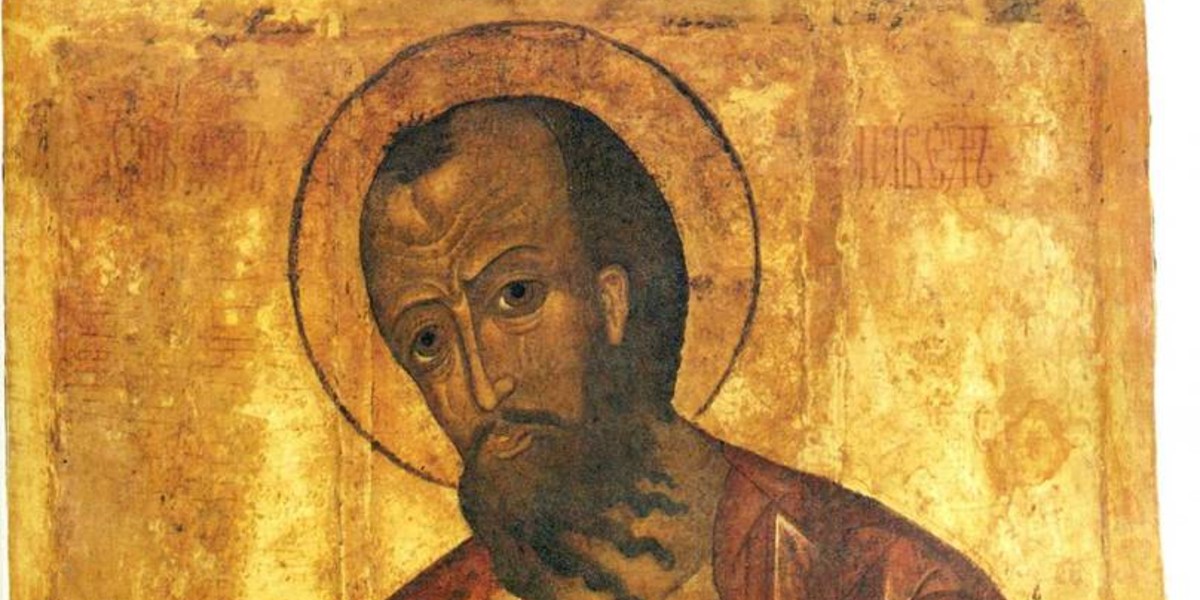
This Far, But No Farther: Paul’s Radical Ecumenism in Galatians 3:28

There is neither Jew nor Greek, there is neither slave nor free, there is neither male nor female; for you are all one in Christ Jesus. (Galatians 3:28)

Temple worship in Paul’s time was highly segregated, but in a complicated way. Everyone was encouraged to worship at Temple (and there’s only the one Temple at this time; cities do not have their own synagogues), but not everyone was allowed to participate fully in worship. There is full segregation based on gender — men to one side, women to the other — and then within this main system of segregation you would have your Greek gentiles apart, and your slaves apart, on either side of that male/female literal and spiritual dividing line. (I have ::frequent:: stress nightmares about being the logistics manager at the Temple in Jerusalem. I’m great at my job of course; but at what price?) And then the Jesus movement happens (we can’t really call them Christians yet), everything gets thrown off balance. The Jesus movement — sometimes called The Way or Nazarenes in the 1st century CE — can’t compete with Judaism’s exclusivity, so it becomes almost radically ecumenical. Women are recognized as disciples, and even do some teaching. (This doesn’t last super long; a movement that is too egalitarian becomes challenging to harness.) And these early gentile followers (which just means “non-Jew” in this case) of Jesus would want to worship in the way Jesus did, at the Temple, because there are absolutely no other places for ritual worship. (There are house churches, but that’s an entirely different form of worship.)

Imagine falling in love, and wanting to spend your days in full communion with your love. You want to almost transubstantiate yourself into your love, and your love into you. Now imagine that the place where you can be closest to your love tells you, “This spot, but no further.” Imagine being denied full participation in the worship of your love. That’s the tension we see between Jews and gentiles. Gentiles want this immediate experience of the Divine — because ::it recently happened within memory::. Paul has an experience of the resurrected Jesus and it utterly shatters his life and blinds him. On the day of Pentecost, extraordinary things happened to the apostles. After years of divine silence, ::something:: was happening, something that included any who wanted to become a part of it. And the Temple is saying, “Okay. But: here. And no further.

“Jesus is a figurehead, in the very first days of his ministry, for an eschatological gospel: the good news of the end of the world. Not how we’re ending the world today, by killing and destroying it. This is an end of temporality: the wicked days are coming to an end, and a new era of righteousness is coming. This is what John the Baptist, likely an Essene, preached. Whether or not you believe the messianic claims made on Jesus’s behalf, he does pick up John’s cross and also preaches a gospel of repentance. Cast off what is harming you, care for those who need caring for, because all of this is going away and you won’t need your hurt any more. “Repent” literally means “turn back” or “turn away from.” (That this ended up ::not:: happening becomes a problem for the Jesus movement, but that’s for another parenthesis.) And this message resonated with Jews and gentiles alike. When Paul is writing his letters to various churches (“no, you’re doing it wrong” or “no, YOU’RE doing it wrong” or “NO, your doing it wrong” or “STOP STOP STOP STOP STOP STOP STOP”) he wants to challenge Jewish hegemony and insists on an almost-egalitarian ideology for these followers of Jesus. (Does he hate women? When have we ever ::not:: hated women? Is he homophobic? Aren’t we all, aren’t we all.) Insisting that categories like “slave,” and “women,” and “Greek” are meaningless within the community of believers, he tells the Galatians, as early as the late 40s CE, that anyone is welcome in worship.


Paul as Pride Grand Marshall is a fun joke. Others have spent useful time trying to either redeem Paul’s homophobia (an anachronistic term that may or may not be fair to Paul), or reify his position. In letters to the Romans, to the Church in Corinth, and to his fellow evangelizer, Timothy, Paul seems pretty clear on his stance about queer identity. Except it isn’t very clear at all. There’s an ocean of time and distance and references separating us from the mind of Paul.

In the ’90s, I worked at an HIV Day Center in Portland, Oregon. Our intake form was invasive, because we want to know the everything of the mistakes a person makes before we help them. We would ask men if they were homosexual.

Some men were! Some men outly and proudly identified as gay. Some men were not! Sometimes angrily not. Sometimes confusedly not. But our form required an additional question, which was: “Have you had sex with other men?” And a what-shouldn’t-be-all-that shocking number of men who did not identify as homosexual answered yes to the “have you had sex with other men” question. Capitalism was only just formulating bisexuality as a means of selling hair-care products to men, and no one could understand how (a) someone could not be a homosexual; and (b) have sex with men.

Is Paul homophobic? It actually doesn’t matter. We don’t need to listen to Paul’s Grand Theory of Moral Sexuality in order to listen closely to what he writes to the Galatians about radical openness. Inconsistency doesn’t affect our rightness, just like rightness doesn’t keep us from doing wrong. If Paul is wrong about women; if Paul is wrong about women and gay people and sodomy and what the church is doing in Thessalonica and even about his own transfiguring experience of the risen Jesus on his way to Damascus; even if he is wrong about all of that, we can still trust fully that whatever the ineffably divine experience of the universe is, it is open to all: to Greeks and to slaves, to queer people and sinners, to people in all their messy splendor, to every piece of creation sidelined as Other.


Categories
Belief Gnostics God Gospels Jesus John Luke Mark Matthew New Testament

The Bad Seed

“verily thou hast done unwisely…vex me not”

The Bible we have is a book in one volume, and so we read it as if it’s a book in one volume. But it’s really a whole bunch of books, and gospels, and pieces of poems, like a Lutheran hot dish, which is why we have Protestantism.

There are more Christian gospels in the world than appear in the New Testament.

Thomas the Israelite1 wrote an infancy gospel, probably in the 2nd century CE. (Or, at least, that’s the guess, and the dating of the earliest primary document.) It’s important to know that something not being written down doesn’t make it illegitimate, any more than something written down is legitimate. No one, from the late 100s to now, has been keen on including Thomas the Israelite’s infancy gospel, or any other infancy gospel, and the excuses are largely about its timing: it wasn’t written down soon enough. It’s almost 200 years after the birth/death of Jesus, and isn’t written by Someone Who Was There. (A gospel being written by Someone Who Was There became a main measuring stick still used today when judging whether something is Bible-worthy or not. Unless it’s by a woman who was there and then we immediately jettison it, so its part of the ecosystem that the species Dans brown live on.) But even today we have books about people written by other people who Were Not There. They’re called history books and biographies.

Infancy gospels would be very important, and a lot of early Christian apologists would have loved to find a legitimate infancy gospel to fill in those missing years where Jesus appears to not do much. (This leads to everything from “Jesus traveled to India and became a Buddhist master” to “he traveled to Arabia in order to become a magus.” As inconsistent as Christian apologists are — and they are very inconsistent — they do grant that they are check-mated here and have no documentation to support their idea that Jesus didn’t do these things. I’ve got more to say about this, but it’s in that footnote you passed.)

Apologists’ inability to believe in infancy gospels doesn’t mean they don’t exist. They do. And the reason apologists might stay away is often insufferably unpleasant.

In the Infancy Gospel of Thomas2, Thomas tells us that Jesus killed the following people:

– The son an Annas, who mucks up a pretty pool Jesus created on the Sabbath, by withering him either like or literally into a fig tree. (You may remember Annas from Jesus Christ Superstar and the song “This Jesus Must Die.” One of the reasons might be because Jesus killed his kid.)

– A kid who bumped into him. (When the kid’s parents complained to Joseph — “What if he blessed people instead of cursing them?” — Joseph had a talk with Jesus, who carefully explained that he was Very Right to kill that kid, and then Jesus blinded his accusers. Joseph tried again to parent Jesus, and Jesus said, “You’re working my last nerve, Joe. Pray you don’t finish.”)

– Probably this other kid named Zeno, who “fell off the roof.” When that kid’s parents told Joseph, Jesus immediately ran to the corpse and brought it to life so it could exonerate him.

In an infancy gospel from the late 600s/early 700s, “Pseudo-Matthew,” Jesus doesn’t kill anyone. Instead, no one can eat unless Jesus is at the table, and when Jesus isn’t at the table no one eats. Also, Jesus is surrounded by “the brightness of God” day and night which would make him impossible to share a room with.

The Syrian Infancy Gospel (c. late 400s) shows that people keep dumping dirty Jesus water on sick kids, with miraculous results. No little amount of time is spent cataloging attempts by people trying to steal the bathwater to throw on lepers. (There’s also a dragon in this gospel which is defeated with some of Jesus’s soiled laundry.)

Later, Jesus becomes angry with some boys who are too good at hide-and-seek so he turns them into goats. Oh, and one time Jesus dressed himself up as a king and made his friends drag people from the road to honor him.

The Divinity of Jesus

There are competing theories in the gospel about the Divinity of Jesus. You may not know that there are competing theories, because the New Testament is presented as unified and inerrant. But you’ve got your Incarnationists over here, and your Adoptionists over there, and here’s how they differ.

Incarnationists believe that God was incarnated on Earth in Jesus, who also existed with God from one moment before the beginning of everything. So actually, there’s a schism right there with the Incarnationsts. Some believe that Jesus only existed from the beginning in the way that your ability to pull off a convincing English accent existed from birth: something you could do, but not something you were always doing. Jesus is a unique experience God has on earth. And then some, like, for instance, the writer of the Gospel of John, believe that Jesus and God are the same, and have always existed, but are separate, but not different, and God has always been God and Jesus, and Jesus has always been Jesus and God. For this narrative, btw, you need to fix a bunch of plot holes; but because the plot holes are terminal plot holes, fixing them only makes everything hole-ier. For instance, if Jesus is divine from the very beginning, he needs a pristine and spotless womb. And a pristine and spotless womb cannot even have caught a flashing glimpse of a penis let it be awashed in schiaparelli sin and that’s absolutely no house for a savior. But we also have Original Sin to contend with. How spotless and pristine can a womb be if its bearer is tainted? So now we have to remember that Mary was conceived without original sin. But she can’t be supernatural — that doesn’t exist. She’s not divine, or demi-divine. Except when she is. She’s a human woman, because Jesus has to be born of a human woman. But she has to be so extraordinary as to almost negate her humanity. And then if this were a sonata, I’d put one of those repeat signs so you would know to go back and repeat this again, every 50 years, until you die.

It’s bonkers.

Adoptionists believe that Jesus was born entirely human. Mary is human, Jesus is human, God is God, and doesn’t notice Jesus until (a) his baptism in the Jordan by John; (b) his crucifixion; or (c) his resurrection. In this case, God notices how great Jesus has been and gives him Employee of the Year. The Gospel of Mark in the New Testament is an Adoptionist gospel. (People will argue with me and I just won’t listen.) Mark knows nothing about Jesus’s birth, the angels, the annunciation, the magi, the stars. Mary, his mother, is mentioned only once and she has no speaking lines. Jesus becomes divine at the moment of baptism, when the “heavens [are] torn apart,” the Spirit descends (who is this “spirit”? Another time, my ducks), and a voice comes from haven, saying, “You are my Son, the Beloved; with you I am well pleased.” (All quotations from Mark 1:9-11 in the NRSV.)

Matthew and Luke are also sometimes viewed as Adoptionist. Jesus does not become divine until Mary conceives. Matthew and Luke do not say anything about Jesus’s eternalness. So we’ll add a (pre-a) to the above list and say “until his conception.”

John is the only wholly Incarnationist gospel we have in the New Testament.

This is a little bit of an issue for the gap we have when we take all gospels together. Combined, here is what we know:

pre-birth to birth: check
1ish to 12: absolutely nothing
12: check (he’s a rabbi now)
12 to 29: absolutely nothing
30 to 33: busy

We have nothing in the New Testament that fills those gaps. If Jesus was an incarnation of God — God made Flesh — you’d think that would be remarked on. Initially some very excited shepherds visit. We get some Persian magician-spies. And that’s it. This extraordinary event — a magical star, angels everywhere, prophecies — is forgotten. Kinda like the One Ring, I guess? But not really. Here’s a kid, born of a young woman, who might or might be a virgin depending on how you translate, and he’s not lying at the bottom of a river covered in silt. He’s around! He’s in his community! And unlike the way we’ve pubertized magic in popular culture, where wizardy kids don’t have control over their sexua– sorry, magic, until pubert– sorry, until they learn to control their orgas. Shit. Unlike that, there’s no sense that Jesus has to “control his powers” because Jesus is God and God is not a horny teen witch. (Unless he is!)

So if we’re to understand Jesus in an Incarnationist context, this knowledge gap is puzzling. However, if we are rational Markan Adoptionists, then that gap is explained by an entire Portnoise of all the very boring same things that all teens do. He’s not the Christ yet. He hasn’t been adopted by God down by the river.

Infancy gospels are an Incarnationist genre. They’re wild, and I love them. They’re also necessary for belief, but not convenient for it. They sit uneasily next to stories of Jesus’s meekness and humility, and run counter to his own ambivalence about his divinity. They’re flawed portraits by flawed people, looking for a savior who might look like them.


Footnotes

1 Some of you may know about the gnostic Secret Gospel of Thomas. Thomas the Israelite, to whom this infancy gospel is attributed, is not that Thomas. Unless he is. But mostly probably not.]

2 None of the gospels we have — both in the New Testament and those left out — came with titles. They didn’t have chapters or verses, either. All of that stuff is added later, and titles like Pseudo-Matthew were/are used primarily to scare people away and reaffirm that they’re Not Really Gospels. But they are.

Categories
Belief Christ Finding God Jesus

What Happens When the Wire Snaps?

What kept nagging at me — after the rush of religion and feeling like I had found a church and a faith I could work into my own belief system — was the ultimate question of the Divinity of Jesus.

I want to be very clear: A man named Jesus — or Yeshua, or Immanuel — lived. He was a Jew, likely with an affinity for the Essenes* (through his cousin John the Baptist**), who preached a gospel of social justice***. He was seen more as a political irritant and agitator than an important religious figure during his lifetime, and he was ultimately found guilty and executed by the state.

[* There are some scholars who doubt the existence of the Essenes entirely, believing they were actually renegade Zadokides — sons of a Jewish priest named Zadok. I’m agnostic on this.]

[** It’s unclear what the relationship was between Mary, the mother of Jesus, and Elizabeth, the mother of John the Baptist. A blood relationship of some kind is hinted at; however, ideas of family and allegiances were sorted and settled in ways that are not common to us. Cousin seems to fit; but it just as easily could not.]

[*** He’s not consistent about social justice all the way through — or, his biographers and recounters, at least, were not consistent. Jesus, after his death and with no way to counter or correct, became the necessary catalyst for a variety of faith understandings that continue up through today.]

How can a religion that tries to emphasize love and caring be based on the violent death of a single man? Why does our religion require that violence? Why did ::God:: require that violence? I have not yet been able to reconcile these ideas in a way that makes Christianity loving and welcoming. “Please come to our murder cult! We wear the object our savior was killed on; you can get one bedazzled if you want.”

As with all religions, there are schisms, and Judaism is no different. By the time of Jesus, there was a desperation for the Messiah to come as a warrior and right all the wrongs committed against God’s chosen people. Followers of Jesus, especially those writing some years after his execution, used Jewish writings to point out how Jesus himself was the Messiah.

(This proved to be hard to sell to the Jews of the time, who had their own myths and accounts of what the messiah would be and do, and Jesus fulfilled none of those things.)

And this is, I think, a key point to keep in mind: The Jewish Bible and the Christian Bible are two ::entirely:: separate collection of documents — but in a curious way. Judaism has no interest in, or need of, Christianity. It stands on its own*. The Christian Bible is reliant on the Jewish Bible because it is what underpins and proves the Divinity of Jesus as the Christ. For those curious about or fascinated with the evolution of religious belief, the Book of Mormon shares the same reliance on the Jewish Bible that Christianity does. It also needs the Christian Bible, too. These are appeals to authority. Neither holy book needs the Book of Mormon.

[* That’s actually a bit of an oversell: Judaism comes out of the crucible of other ANE (Ancient Near East) cultures and religions. In some ways, the Tanakh — the Jewish Scriptures — is attempting to correct the beliefs of the other cultures around it.]

So, the more I thought about Christianity — and especially the way it has evolved (or, less charitably, metastasized*) — I began to really put my whole heart into working out what, exactly, Jesus’s role is in salvation.

[* When Europeans began stealing land from Native Americans, they brought with them their most holy dictum: The earth was made for man to subdue. So the wilderness of North America symbolized the chaos out of which God brought order and goodness. Christianity was used extensively to justify and encourage slavery. And it is used now to attack more than it is used to comfort the afflicted and afflict the comfortable. #NotAllChristians]

I remain a theist. I continue to believe that what we are all participating in is some sort of Great Divine Mystery, one that we’ll either never solve, or we’ll solve, but not in our current existence. I don’t believe there is a place where people are punished for whatever we want to believe sin is. I also don’t believe in some limitless field of perfect with streets of gold and everyone somehow living eternity in perfection*.

[* Reading the Bible through a lens of poverty, the ridiculousness of heaven starts to make more sense. Streets paved in gold; everyone wearing a crown; jewels everywhere: heaven is filled with the things denied to you in this life.]

But I believe we do go on. I just don’t know how. Or what it looks like. And I will either die, and know the answer; or I’ll die, and stop asking.

Jesus said extraordinary things about caring for the poor and the “least among us.” But I do not believe he was the Son of God. I’m more squishy about some of the miracles — a good miracle is a good miracle — but I absolutely do not believe his arrest, torture, and execution by the state was the mechanism of salvation. I think it was just the murder of a man who caused too many problems.

So where I find myself now is uninterested in Christianity, but very much a believer in God. I think Christianity is an attempt — I think ALL religions and philosophies are an attempt — to explain various experiences of the Divine. I just don’t know what form God takes, and I don’t pretend to understand God’s likes and dislikes. I think God is simply delighted by everything. “Do it again,” G.K. Chesterton imagines God saying.

(“It may not be automatic necessity that makes all daisies alike; it may be that God makes every daisy separately, but has never got tired of making them.”)

I’m less worried about how to label myself. That seems a waste of time. But I don’t think I can, with good conscience, say I am a Christian any longer.

Categories
Bible Study Christ Jesus John Luke Mark Matthew New Testament Old Testament Tanakh

Are Jesus and Christ the Same Person?

Maybe! But also maybe not! Let’s dig into the differences. (They definitely are two distinct things.)

We’ll get the easier one out of the way first: Jesus was a first century Jewish apocalyptic preacher/prophet. Some will also include “religious leader,” but Christianity as a religious movement doesn’t really happen until after the crucifixion.

And now all of a sudden I realize that it’s going to be as difficult to explain Jesus as it is going to be to explain Christ.

If we take religion/theology entirely out of the picture (by which I mean, let’s set aside all the supernatural claims of/about Jesus), Jesus is a man born in Bethlehem, a city in the Kingdom of Judah. He is Jewish, both culturally and religiously. We believe he was born roughly around 4 BCE and not much is known of his life in the Canonical Gospels* (the ones that made it into the Bible) until he is baptized by John the Baptist, an Essene.

[* We have something called The Infancy Gospel of Thomas, a Gnostic text from the 2nd century CE. We also have something called the Syriac Infancy Gospel, which borrows a lot of its elements from Thomas’s Infancy Gospel. Stories you’ll read in the Infancy Gospel that don’t show up at all in the New Testament: Jesus bringing a flock of clay birds to life; Jesus raising a boy from the dead who had fallen from a roof to be a witness on Infant Jesus’s behalf, since suspicion had fallen on Jesus as the shover; Infant Jesus killing a man who scolds Jesus and his friends while fishing, only to have to bring the man back to life when the kids tattle to Jesus’s parents.]

Ugh. Wait. We now need to talk about the Essenes. I promise this all fits together, but I thought it was going to turn out differently than this.

The Essenes were a Jewish sect from around the 2nd century BCE up through the 1st century CE. They lived in communes dedicated to poverty, daily immersion, and asceticism. The Dead Sea Scrolls that you’ve maybe heard something about are attributed to the Essenes. Unless they weren’t. There are some scholars — Dr Rachel Elior, Dr Lawrence Schiffman, Moshe Goshen-Gottstein, Chaim Menachem Rabin, to name those I’m familiar with — who don’t believe the Essenes really existed; that they were instead cast-offs from the Zadokites; and that these Zadokites are the ones who wrote the documents collected in the Dead Sea Scrolls. Whether or not John the Baptist was an Essene is a little beside the point; it’s accepted that he existed, and that he did baptise Jesus, and that John, too, was an apocalyptic figure. John preached an end-times theology that included the practice of baptising for the cleansing away of sin.

So, again, we’re going to set the religious stuff aside — or, rather, whether or not the religious stuff is “true” — and just hope to agree to agree that (a) Jesus as a man (not a supernatural figure) existed, (b) he was baptised by John the Baptist, and (c) both were apocalyptic proclaimers who believed that they were living in the final moments before God’s judgment.

Our best sources for biographical information on Jesus as a person come to us from the gospels, though other ancient historians of the time mention him, too. As far as the writer of Mark is concerned, Jesus had no especially supernatural birth, and Mark doesn’t include a genealogy. For Mark, the story of Jesus begins with his baptism in the River Jordan. Mark can also be read as a gospel of adoptionism: Jesus did not become the son of God until he was adopted by God after the baptism* (Mk 1:9-11). Matthew and Luke both give us genealogies, and both have elements of what we call the Christmas Story: the Annunciation, the manger, the Virgin Birth, the star, the shepherds, the wise men. John…is doing his own thing and we’ll talk about him another time.

[* The Gospel of Matthew also has an element of adoptionism to it, where Matthew suggests that Jesus doesn’t become the Son of God until the resurrection*.]

[* The gospels don’t agree on many details. And for a lot of theologians, this is actually of some comfort. If all four gospels aligned cleanly, then we might think that there is some coaching going on. But the fact that there are discrepancies within the gospel narratives actually suggests realistic “testimony.” It’s often discussed in terms of “No one describes an auto* accident the same way.”]

[* There are bumper stickers that say, “My Boss is a Jewish Carpenter,” and I challenge anyone who believes that, or has that sticker, to show me in the Bible anywhere where Jesus does any carpentry. And no, being nailed to a cross does not count as “doing carpentry” so much as it counts as “having carpentry done to you.]

What is true among all the gospels is that Jesus is referred to as The Christ. Or Jesus Christ, which makes it sound like Christ is a surname. But Jesus is a person, and Christ is a title that has been attributed to Jesus. (Is he the Christ? No! say the Jews. Yes! say the Christians. It probably doesn’t matter! says Mike Bevel.)

So, what is Christ?

Christ is the anglicized version of the Greek khristos (χριστός). And khristos is the Hellenized version of the Hebrew word māšîaḥ. Messianism as a concept originated in Judaism, and it essentially means either anointed or covered with oil. In Jewish eschatology, the final messiah — the Very Important One, who will bring about the Messianic Age — would be an anointed king from the line of David. (The term “messiah” has been used for others, by the way, even in the Bible. King David was considered a messiah. So was Cyrus the Great and Alexander the Great. These minor messiahs — men anointed with oil in a ritual ceremony — were never considered to be the Avenging Messiah. This messiah, whom the Jews were waiting for around the time of Jesus and John the Baptist, would come both to rebuild the Jerusalem Temple and to lay low all of the Israelites’ enemies.)

Claims of Jesus’s messiahship start with John the Baptist. It’s likely Jesus had been either a follower, or at least a close adherent, of John. In Mark, our oldest gospel, we hear John say, “The one who is more powerful than I is coming after me; I am not worthy to stoop down and untie the thong of his sandals. I have baptized you with water; but he will baptize you with the Holy Spirit.” (Mk 1:7-8) Matthew adds to Mark’s story: “Then Jesus came from Galilee to John at the Jordan, to be baptized by him. John would have prevented him, saying, ‘I need to be baptized by you, and do you come to me?’ But Jesus answered him, ‘Let it be so now; for it is proper for us in this way to fulfill all righteousness.’ Then he consented.” (Matt 3:13-15)

And it’s at this point that the schism within Judaism starts. There are Jews who do not believe any claims of Jesus’s Christ status, and there are those who do believe Jesus is the prophesied Christ. On either side of that dividing line, however, both sets of Jews believe in The Messiah; one side just picked Jesus as that avatar, and the other said, “We’ll see what comes around on the next dim sum cart.”

Jews had a lot of reasons to deny Jesus the title of Christ. While the gospels, and The Book of Acts, and even the letters of Paul, try to paint a picture of Jesus as Messiah (mostly by just calling him Jesus Christ or Son of God), the Hebrew Bible describes the final messiah as a king sent to do battle and liberate the Jews. In fact, the Jewish messiah has no salvific mission at all. Which is what made Jesus such an alien figure to his own people: there was a claim of messiahship, but it was from a lowly carpenter and itinerant street-preacher who had no power to overturn Rome, rebuild the Temple, or deliver the Jews to the Messianic Age. The messiah that these separatist Jews (and Gentiles) were championing came almost as the Still Small Voice mentioned in 1 Kings. He heals the unclean. He eats with sinners. He performs work on the Sabbath. There is nothing about Jesus as a warrior or an organizer or even a political figure (though he is a political victim) in the New Testament gospels. And there wasn’t at the time, and there isn’t now, a lot of agreement as to how many Hebrew Bible prophecies the birth, life, death, and resurrection of Jesus fulfilled. I mean, for one thing, immediately: THE MESSIAH WAS NOT SUPPOSED TO DIE*. This one did. He got better, of course, but he only hangs around for a little while longer before disappearing pretty much ever since. He appears on the odd piece of toast, or in a mildew stain on a ceiling, but Jesus incarnate isn’t walking amongst us. (Unless, like me, you subscribe to large segments of Gnosticism where the Christ part of Jesus exists in all of us; we’re all Jesus, or at least have the ability to be.)

[* He is also supposed to be named Immanuel, as the Book of Isaiah tells us: “Therefore the Lord himself shall give you a sign; Behold, a virgin shall conceive, and bear a son, and shall call his name Immanuel.” (Is 7:14). The Gospel of Matthew is the only other place that mentions Immanuel, but instead uses Emanuel*, in Matt 1:22-23: “Now all this was done, that it might be fulfilled which was spoken of the Lord by the prophet, saying, Behold, a virgin shall be with child, and shall bring forth a son, and they shall call his name Emmanuel, which being interpreted is, God with us.”]

[* There’s a 1992 book called Out of the Blue by Patrick McManus and I don’t remember almost anything at all except there’s this delightful exchange among children in a preschool. One child asks for an “unraser.” A girl corrects him: “Eraser. E. My name is not Unlizabeth you know.”]

So: Christians believe that Jesus either became or was born the Christ. Jews believe the Christ hasn’t arrived yet. So, in a sense, Jesus and The Christ are not necessarily the same person, but also aren’t necessarily not, but it’s the way Christians worship, recognize, and understand the man from Nazareth.