Categories
God Mental Health Seeking

Suffering, Part 2: Good Suffering

This is what happens when someone tries to lead me through a guided meditation. They’ll want to start in a field — not physically, though; I’m not an Outdoorsy Kinda Guy — and they’ll say something like, “Breathe in the clean air of this meadow,” and I’ll breathe in but I’m not sure what “clean air of this meadow” means, or how to pretend it so it makes sense to my body, and while I’m struggling with what that might feel like, how the air would smell, what I might be hearing around me– unless it’s a terrifyingly silent meadow, and what might cause all the birds to be silent? Is something stalking them? Has there been some sort of environmental disaster? What would I do if there were an environmental disaster? I’d immediately get Zach, of course, and the cats, but we only have one cat carrier and three cats. Is this meadow I’m in near a store, maybe? God, if my therapist heard me musing about stores he’d be very frustrated because I just sent him an email a couple of days ago that said, “I’d rather not talk any more about shopping — what I can buy, where I can buy it, why it’s good to know where buyable things are. It takes me out of the appointment. And you may see this as an Issue to Be Solved — but I’m asking permission to maybe leave that problem, if it even really is a problem, until a much later time. There is so much else I’d like help with, so many other wonderful things wrong with me; and I’m sure there are complementary things within my set of traumas that could be used to get at the kernel of the problem without also making me frustrated.” And I wrote an email that said that because at our first session I said, “Sometimes being in a store can trigger an anxiety attack for me.” And then — this is an actual sentence he said aloud to me — he said, “You might be in a store, like Costco, and you’ll see a lot of people with appliances, but you won’t be in the market for an appliance, so you’ll file that away, and then later, maybe you need an appliance, and because you were at Costco, you’ll think, ‘I saw a lot of people at that Costco with appliances. I bet they sell appliances. I bet they have good deals on appliances because so many people had appliances in their carts.'” And by that time, dear reader, I was ready to Girl,Interrupt myself and I am now as far away from the idea of meditation, literally, as I am, metaphorically, and this is what it’s like when I try to meditate, and it’s suffering.

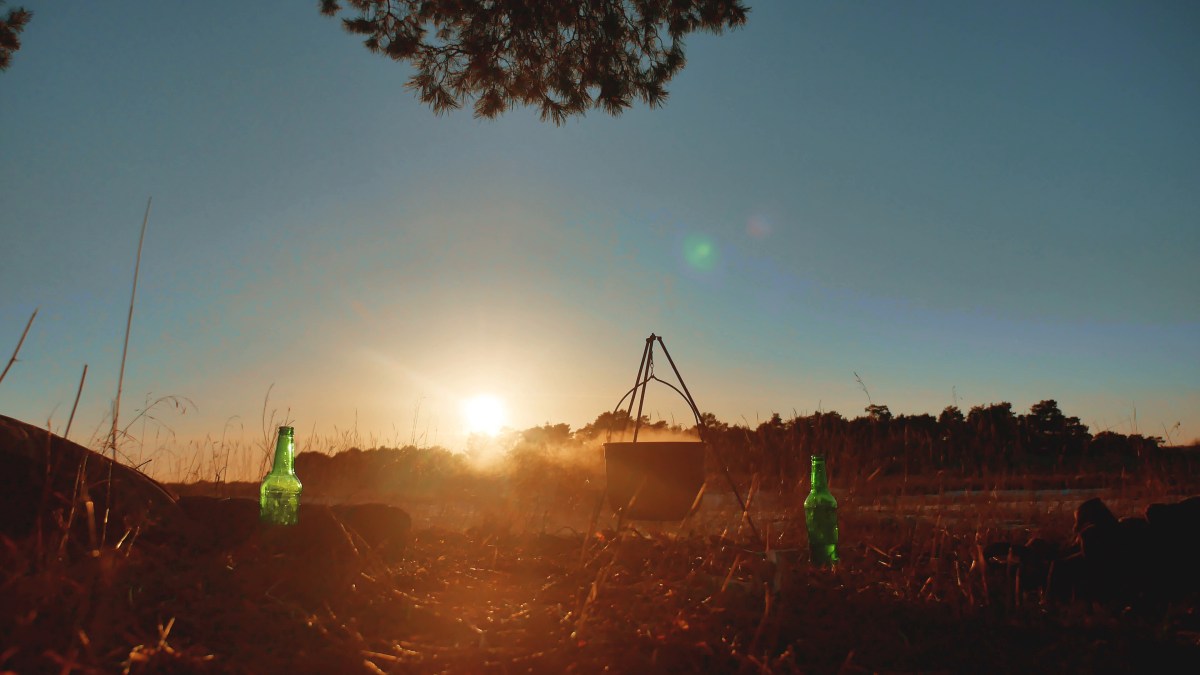
beautiful meadow during sunset

There are two kinds of suffering: useful and unuseful; momentary, and ongoing. There is some suffering we can learn from. And there is some suffering that is merely performative, done in some misguided sense of purpose. The suffering Margaret puts herself through is what I would call Stupid Suffering.

Communion_BreadWineI love Margaret with my entire heart and soul. I love her love of God. I would lay down my life for her. I think she is wrong about what Christ wants from us. He tells his disciples to do two things in memory of him: eat, and drink. He doesn’t say, “Oh, and also, I need you to suffer.”

Suffering is something we do to ourselves, but it’s not something we should do for God — except I’m about to go back to that “two kinds of suffering” argument and play it out for you.

Sitting mindfully, in quiet, so that you close out the noise and thrum of not just the physical world, but of your own self, is useful. It’s restorative. It allows you to be in touch not only with your Very Self, but with the Still Small Voice of God, too, if that is what you are listening for. (You don’t have to listen for it. “You do not have to be good. You do not have to walk on your knees for a hundred miles through the desert repenting.” — Mary Oliver.) But there is some suffering, initially. Sitting quietly is alien to us. Actively trying to silence everything inside and outside of us goes against everything this chattering world has been built on. But the suffering one goes through to reach peace is a Good Suffering. It is building callouses. It is working metaphysical muscles. It is suffering in the pursuit of eventual peace and comfort. Even if it only lasts 15 minutes. Even if it only lasts 15 seconds. Especially if it’s just for one brief, glowing moment.

Margaret’s suffering — her discomfort in the heat, the pain she feels in her body — these she wants to offer up to Christ as if that will somehow lessen his own suffering. She may think her suffering is in pursuit of peace, and it would be hurtful and wrong for me to take that from her; it’s not my place. But that thinking is so deeply misguided to me as to be alien. It’s the Parable of the Hole done wrong. Once there was a man, and he fell into a deep well. His calls for help were answered by a woman, passing, who lept immediately into the hole with him. “I am here with you, and now we are both in this hole.” And nothing changed except for the math.

Categories
Belief Finding God Seeking Seeking, Finding The Bible, KJV The Bible, NIV

Suffering, Part 1: Margaret

Who were the homestead wives?
Who were the gold rush brides?
Does anybody know?
Do their works survive their yellow fever lives in the pages they wrote?
The land was free, yet it cost their lives.

— “Gold Rush Brides,” 10,000 Maniacs

A lovely woman whom I don’t remember meeting emails me periodically to check in on my faith. She’s Catholic, and named Margaret, so I probably met her at the one (1) catechism class I attended before I realized with the deep sweetness of unerring certainty that I was Not a Catholic.

We started emailing because I asked her not to email me any more. She organizes Dorothy Day Dinners (I imagine I’ll write about Day at some point in the future. I find her fetishization of the poor to be…worth writing about) and had sent an email to a group asking for people to contribute ingredients. It’s stone-soupy, if you will, if stone soup is a reference you’re familiar with.

I wrote to Margaret in early August, saying, “Please take me off your email list. I am so glad of the work you’re doing, and admire everyone. But after a lot of searching, I feel that my spiritual home is with the Quakers.”

So, as it turns out, my spiritual home is not with the Quakers, but that’s not the point of this story.

Margaret wrote back, “I have a sense of loss in reading that you are leaving our Communion and wonder if you would honor me with some details about what we are missing that you find attractive with the Quakers.”

So I did.

Margaret:

When I came to the Church, it was at a time where I finally was able to stay out of my own way about faith and God. Before, I worried that I was being intellectually disingenuous; I had always identified as an atheist, and thought that made me smarter than everyone who was a believer.

Of course, then God comes along and quietly reminds me that I’m not smarter than anyone at all. I’m just loud. 🙂

I knew I needed a spiritual home. I really thought it was going to be Catholicism. But I think there is so much culture there — being Catholic is more than just going to Mass. And I didn’t feel Catholicism in my heart at all.

Growing up in a faith tradition is easier than converting; and I feel maybe one should convert only if one cannot find what she needs in her own “home.” And I was starting out too late in the evening, as it was, to be an effective Catholic; I would have felt very behind all the time, and my disbelief would be heavy.

I found the Quakers because my husband said, “What about that?” He’s a Won Buddhist, a Korean-form of belief. (He’s not Korean, by the way.) His conversion was also circuitous. He had gone to a Quaker school in North Carolina (Guilford), which, by virtue of being a contemplative religion, made stretching into Eastern traditions less jarring, I’d guess. I went to my first meeting, and was sort of overwhelmed with peace and love. I could start there, from the beginning; whereas, while everyone was lovely and welcoming to me when I came to my one (and only) catechism class, I didn’t feel like I was starting from a place of love. I felt like I was starting only from a place of struggle.

I now identify as a Quaker with a sense of Flannery O’Connor about myself, and an appreciation of Gerard Manley Hopkins. So I’m not completely hidden from Catholicism.

Again, I can’t stress enough how much I now do not identify as a Quaker, though I admire them greatly. Our breakup was not the never-speak-to-me-or-my-good-strong-sons-again type. I just need more religion in my religion than unprogrammed Quakerism provides. I need the Bible. I need God and Jesus. I need pews and awkward hymns and a sermon because, as it turns out, I really need structure. I didn’t grow up feeling necessarily safe and secure; when I feel like things are too come-what-come-may my anxiety spikes and I’m left chewing the skin around my fingers and counting my steps to soothe myself.

My friend Steve, through a teacher he had, explained to me once that one is probably best served within the religious tradition in which they were raised. Those cultural groundings are important. It’s not a necessity — clearly, as Zach is incredibly content and thriving in Buddhism. But, as I learn more about myself and my relationship to faith, it is a necessity to me.

I later sent Margaret an email with a link to an essay I wrote. I titled it “of possible interest” and she very graciously said, “I probably will not be able to check in on your web site but things change and I may find time to do so in the future.” I love Margaret very much, and her honesty. I probably wouldn’t have time to read my own writing, too, but would lie to me and say, “I can’t wait to read this tonight.” But I’m trying not to be like that. Margaret went on to write, “My ex-husband’s health is declining and very soon I am going to need to give more of my time to him.” She also said, “Today, I am going to try and get through the heat, cook and can spaghetti sauce and make an offering of my day to God.” And she closed by asking for prayers for her and her family.

(The thesis of this post, by the way — suffering — we’re getting to it. I promise.)

A few weeks ago I completed hospice training. As part of my religious focus, on myself and the world, this felt like something I could give that also needed giving. Right now, it makes me feel useful. My hope is that it will make me humble. There’s something self-serving in announcing, “I PROVIDE HOSPICE CARE.” And it’s there because we’re humans, with human feelings and emotions. Even Christ let slip he was the Son of God every now and again, and he was both wholly human and wholly divine.

“You sound dead-set on turning your stove on today, so I won’t counsel against it. I baked cookies on Sunday and thanked God for air conditioning,” I wrote her back, among a bunch of other things, including how now, at 40, I’m better able to hear the Still Small Voice of God. When I was younger — in my 20s — I expected, or, rather, demanded, that God speak to me in a Giant Booming Voice. And when He didn’t, I told myself, ‘Well, that proves it. He doesn’t exist.’ But none of us are smart in our 20s. Now, in my 40s, I hear God in the still small voice from 1 Kings. I think about the Parable of the Mustard Seed, and how a very small faith, if well-tended, can provide safety and shelter. It is incredibly humbling. And such a great rejoinder to Twenty-Year-Old Mike, who didn’t know how to listen.

Margaret explained the stove thing to me:

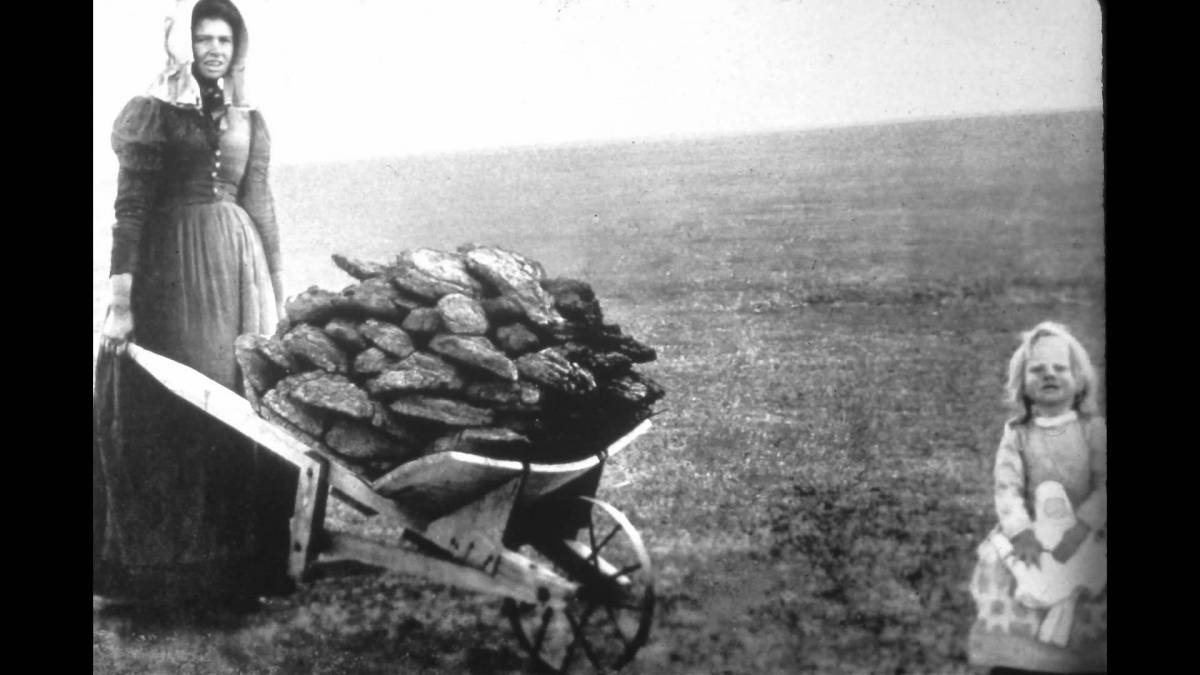
The stove thing is because my garden had produced a nice crop of tomatoes and I must “do” something with them and not let them spoil. I often think, at this moment each year, about the pioneer women, or even early 20th c. women who slaved over a wood heat stove to can. They died young but at least I have made it to 70 and have fans. If I make the heat today a prayer, it is called the prayer of the body. What I mean is this: I pray aloud or silently and this is pleasing to God. If I offer my whole day to God, my prayers, works, joys and suffering, and I unite myself to His passion and death, then suffering the heat of the day IS a prayer.

And we’re where I need us to be, now. Thee and me, we are all caught up. Because I want to think about religious suffering for a few more words.

I want to make this clear at the start: my religious beliefs and practices are very much mine. They’re influenced by what I’ve read, what I’ve heard, whom I’ve met, and what feels right to me, which is ever changing as I’m influenced by the aforementioned three other things. (“I’m new in town…” — John Mulaney) I’m sure this is true for a lot of my brothers and sisters in Christ. The idea of God requiring suffering from me is so foreign, so unutterably alien, that I am actively compelled away from the idea of lovingkindness when considering it. Faith that values suffering is a faith that I don’t wish to have. It is a faith that is alien to me. It’s a faith, nonetheless; it’s just not mine own, mine own, mine own.

Within my faith practice, suffering is something I commit against myself. When I push against the mystery of God, when I give in to harmful/uncaring thoughts against my self (cf Cheri Huber, e.g.), I cause suffering. I can also cause others to suffer, too, which is reflected back on to me like rubber and glue. There is no good in suffering, as far as I can see. And Christ, of all people, certainly does not need my suffering to weigh the love I have for Him.

But it’s Margaret’s, and not mine to take from her, or disavow to her.

“Ok, I begin,” she ends.

Categories
Belief God Seeking

“Advice” by Ruth Stone

My hazard wouldn’t be yours, not ever;
But every doom, like a hazelnut, comes down
To its own worm. So I am rocking here
Like any granny with her apron over her head
Saying, lordy me. It’s my trouble.
There’s nothing to be learned this way.
If I heard a girl crying help
I would go to save her;
But you hardly ever hear those words.
Dear children, you must try to say
Something when you are in need.
Don’t confuse hunger with greed;
And don’t wait until you are dead.

–Ruth Stone, Topography and Other Poems

Categories
Belief Seeking Seeking, Finding

Mystery

“I was here and this house was here, you and I and this evening were here, and they had always been here.”

— John Fowles, The Magus

I am halfway through my second try at The Magus. Assume that until I tell you otherwise I’m still in media res, and do not spoil the end. I’m halfway through The Magus; I’m technically nel mezzo del cammin di nostra vita; but I’m at the beginning of what feels like a spiritual journey — but a journey I’ve started before, with little success. One worries one starts too late in the evening to return home before dark; but maybe one isn’t supposed to return home, and maybe one shouldn’t mind the night.

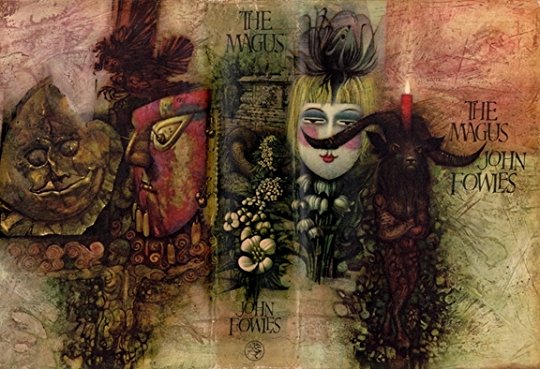
The Magus cover

I read The Collector by Fowles first. If you’ve not, I’m definitely going to spoil things and your journey is your journey and maybe you don’t care about endings but maybe just this once, for this, give yourself the gift of Mystery. Anyway, any book worth reading is worth reading twice.

Magus tarot cardFowles is…I’m not sure what he is w/r/t religion. We’ll say he’s atheist until someone tells us different but please never tell me things because I am far too handsome at this point to learn. And yet, he’s deeply interested in concepts of free will and fate, of determination and destiny. Can they be reconciled? Should they? What if I finished this post in nothing but rhetoricals?

In The Collector, a man named Frederick abducts a woman named Miranda so if you were saving The Collector because it sounded like a cozy Charing Cross Road-type novel it is almost entirely the opposite except the room Miranda is kept in actually sounds pretty nice. She is ineffably beautiful to Frederick, whom she calls Ferdinand, because Fowles has read Shakespeare and wants you to know it. (He wrote it when he was 37, which is a little long in the tooth to be preening for praise with your allusions and et cetera but also notice how seamlessly I worked in a reference to Dante yes I am 46.) (Having made my jab at Fowles I want to go on record as saying the book is upsettingly perfect and you should read it and if you haven’t and you’re reading this then how dare you ignore my Very Good Advice.) While Miranda certainly despises Ferdinand for the kidnapping — as well she should — she also despises collectors in general. She sees art, in all its forms, whether manufactured or the art of nature, as communal, no more yours to do with as you want as it would be hers. Collectors keep things hidden away, or grandly allow what should be humbly proffered.

The-Collector

The main character of The Magus (I have no idea how to pronounce the title of the book, by they way, and neither do you, so don’t get those typing fingers ready to tell me. My friend Steve says it’s may-gus, which I hate. Someone else said it’s may-jus. I say maa-jus both because it doesn’t sound like maggot at all and because if it’s the plural of magi, then it should sound like magi and don’t you dare tell me how to pronounce magi either. Really: I am simply too attractive to know one more thing that I didn’t already start with) is a man named Nick and you can come to your own conclusions about him as a human being, because you were granted the gift of discernment by Hashem Himself, but if it is at all positive then I’ll need to rescind your gift because that’s my purpose on Mother Gaia. He’s entitled, much like Ferdinand in The Collector in the way both want to own women’s bodies. Though Nick is less kidnappy, that’s honestly damning him with faint praise. Nick falls under the spell of a man named Maurice (pronounced the French way, moor-reese) Conchis (with a soft, rather than hard, ch so it sounds like conscious which is clever but I only figured it out when I was saying his name aloud to my friend Steve on the 25th day of August in the Year of Our Lord, 20 and 18). Conchis lays out elaborate mind games for Nick, and Nick, when not being physically abusive to women, spends his time trying to peek behind the curtain.

It may be that, reading the books this close together highlights things that aren’t really highlightable, that I’m seeing connections where there maybe wouldn’t generally be.

I’m struck by the similarities between Miranda in The Collector and Nicholas in The Magus: both are in environments tightly controlled by someone else — Frederick and Conchis respectively. Both resist the opportunity to participate in the mystery before them. Both suffer. Miranda dies in the end, and Nicholas’s fate is still unknown to me and a man at Bible Study this morning was well on his way to spoiling the whole thing for me until I shushed him, but politely, because we’re Baptists, and shushing is next to holiness.

There’s an element of Flannery O’Connor* to this reading — the idea that there is something important and transformative in Miranda’s captivity — but I think it’s there. She is on the way to understanding herself and her relationships, with her family and the older artist with whom she had had an unsatisfying affair, and it’s the situation — her abduction and confinement — that is encouraging her self-reflection, which is something she had not done much of before. I mean, was she going to be magically let go if she had stayed and found herself fully actualized? Dude’s a kidnapper, so probably not. But then, maybe the answer key to this philosophical test says that if she truly understood herself and her decisions and her past, she would stay with Frederick regardless. But that also means that we’d have to see him, at the end, looking for another acolyte rather than another victim. Tomayto/tomahto.

[* I am going to write two Flannery O’Connor-based short stories. The first will be called “Flannery O’Connor’s Grand Day Out” and it will star my husband, Zach, who will take O’Connor on a pilgrimage of hedonism. The other will be called “Flannery O’Connor as Calvinist” and it will be short vignettes of domestic life where the protagonist dies in the end after either having a wonderful time at the party, or murdered while not thinking about how unworthy he is of God.]

20171115_212123
Zach, drinking fondue chocolate through a makeshift straw. I love him so goddamned much you guys.

Nicholas also fights against the mystery, and wants to be in control. Fowles is working back and forth between arguments for free will and arguments for destiny. This is encapsulated in that marvelous passage delivered by Conchis about 100 pages into the novel, and which I quoted above:

“I was here and this house was here, you and I and this evening were here, and they had always been here.”

This is echoed in other places throughout the book — most recently in the section I just finished where Nick and Alison are hiking the mountain. Nick feels, for a moment, as if he was always supposed to be on that particular mountain with this particular woman. He’s also hella horny and they fuck after swimming in a small lake and the thing about that is: it’s really none of my business.

Flannery O’Connor says, “All human nature vigorously resists grace because grace changes us and the change is painful.” Miranda is transformed, in the end, in her death. Will Nick be as gracious to the mystery?

Don’t tell me.

Categories
Belief Finding God Mental Health New Testament Old Testament Seeking Seeking, Finding

“I battled the Holy Ghost once on the laundry porch”

Truth is a Gentlemen’s Agreement between two people, neither of whom are gentlemen, neither interested in honesty. Instead, these people are simply polite fictions dressed up in spats and a pince-nez, only half-listening because the other half of their attention is focused on how much damage can be caused by what is being shared.

My mom is 73 this year, pocked with Alzheimer’s, haunted by ghosts and it can be tough to suss out from her various descriptions how many are phantoms of the mind, how many are figments of her imagination, and how many, if any, are visitors from some past Other Side. If they have a message for her, it must be frustrating. She won’t remember it. “Well, your brother Michael’s dead,” she explained to me. This was after she and I had talked on the phone earlier that day.

I’m going to tell a story about her, and it’s a Gentlemen’s Agreement story where we’re going to agree, thee and me, that I am telling you the truth.

Deal?

* * * * *

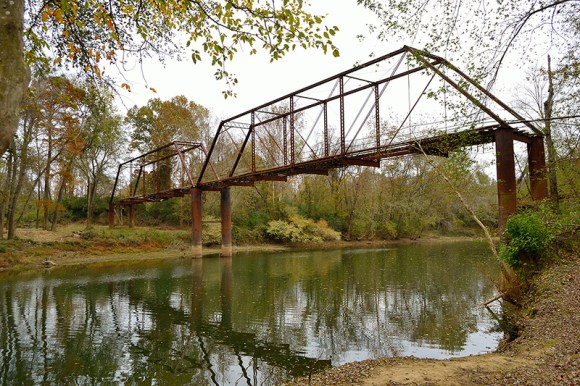
My mom was born in 1945 in Leola, Arkansas, and you’re right, you probably have never heard of it. As of 2010 it had a population of 501. It’s known, if it’s known, and it’s not known, so I’m only using an idiom, for Cox Creek Lake, created in 1964 by damming a tributary of the Saline River. According to my mom, an uncle molested her in that river, holding her afloat with one hand and threatening to drown her.
Haskell

That sounds terrible, I remember telling her, and she said, “Eventually. I didn’t know how to understand it.” She was six.

* * * * *

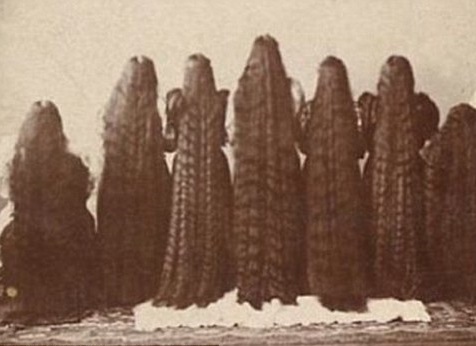
My maternal grandparents were (are?) (no, were, they’re both dead) a man named Edward Clinton Kelly and a woman named Flossie Laverne Badgett. He was Irish, with seven sisters who lived in a rundown house on the outskirts of Leola, which is already on the outskirts of Malvern, itself an outskirt of Little Rock. It’s like sinking into the Saline River. The sisters refused both indoor plumbing (“not safe”) and electricity, even when the electric company came through to wire every house with incandescence. They lived simply, by candlelight and oil, firelight and the sun. Come evening, the house would curl itself catlike into the darker undergrowth that surrounded it.

I asked my mom once why the sisters didn’t have electricity. “It’s so the Devil wouldn’t be able to see them at night,” she explained. “But what if he brought his own light?” I asked. “He doesn’t have his own light. He lost that when he fell to earth.” Now he preys on us here, in this world, she continued, always looking into windows to see who had a light, like we did. “That’s how he finds you. The sooner you turn the light off at night, the sooner you won’t be visited by the Devil in your bedroom.” I was six.
article-2416873-1BBDBB94000005DC-907_634x361

* * * * *

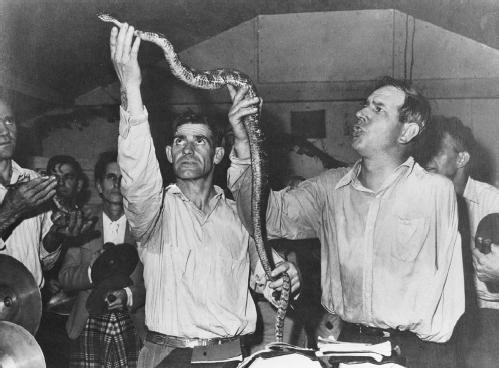
My mom grew up Southern Baptist because it was Arkansas and everyone in Arkansas was either Southern Baptist or dead. Her grandmother was a Pentecostal named Chloe Badgett. Her church didn’t meet always in a building. It met by the Saline River often throughout the summer, baptising members and non-members, each dunk as sweet as the one that came right before. It was as if they were aspersoria, hoping to fill themselves to the cap with duckweed and Christ’s power.

(My Uncle Thurston told me, when I was 11, about a dam built on the Saline River, in 1964, the one that ultimately created Cox Creek Lake. I was too young to notice any wink in an adult’s eye; never knew lies could be funny. “There are catfish at the bottom of that dam big enough to swaller a man,” he said, gravely, and I have been terrified of water ever since and yet one must be baptized, I guess, if one is to be truly saved. Washed clean of sin, held down by enormous catfish until I drown.)

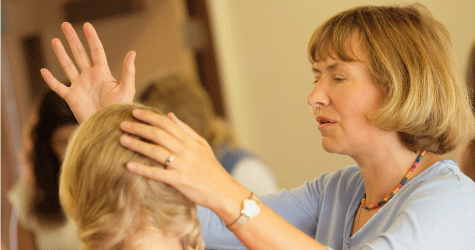
These Pentecostals also handled serpents and drank — or, rather, sipped — poison, based on the Good News revealed in Mark 16:17-18,

And these signs will accompany those who believe: in my name they will cast out demons; they will speak in new tongues; they will pick up serpents with their hands; and if they drink any deadly poison, it will not hurt them; they will lay their hands on the sick, and they will recover.
geuu_01_img0158

I asked my mom if she ever saw Great Grandma Badgett cast out a demon. I was fascinated with the idea. Would you see it ricochet out of the soul of the possessed? Would some furry, cloven-hoofed monster crawl out of the throat and scuttle crablike across the floor? “No,” mama said, “she never cast out demons.” Grandma Laverne, who was still alive then, nodded. “She could have, but she ain’t.” I think Grandma Laverne was in her own kitchen at the time, grinding up ice for iced tea. “I did battle the Holy Ghost on the laundry porch once,” she said. Mama looked at me and then past.

* * * * *

When my mom was born, my grandma was 29 and my grandfather was 70. This’ll be more important in a second only just now I’m going to correct the record.

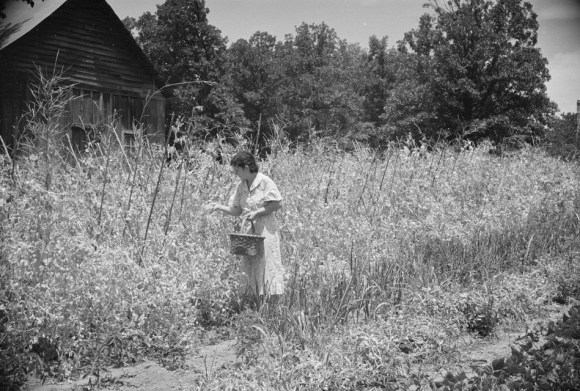
For years, when I’ve told this story, about my mom, and religion, and why my brother and I didn’t have much of it growing up, in my version of this Gentlemen’s Agreement my grandpa was in his mid-80s when my mom was born, and my grandma was in her mid-20s. While doing only the barest of research for this piece, I learned a bunch of other dates, like that Grandma Laverne was born in 1916, that her husband, Edward, with the weird sisters, was born in 1875. I had thought he came here from Ireland, but according to Ancestry.com he was from Arkansas. His father, however, was Irish, and those Kellys became farmers here, or sharecroppers, rather, and carpenter assistants. I also learned that my grandfather was married before, to a woman named Lizzie, who died the year after Laverne and Edward had their first child, a son named Hubert.
Rehabilitation-client-picking-English-peas-on-farm-near-Batesville-Arkansas-e1409454179239

Family stories aren’t ever for true. They’re for instruction, or comfort, or explanation. What does it mean to know anything anyway? There’s what’s true, and what works, and we aim for the middle, or we don’t aim at all.

* * * * *

Because my grandfather was 70 when my mom was born, and because Great Grandma Badgett had been ordered by God to handle serpents, drink poison, cast out demons (even though she ain’t’ed yet), and heal the sick, she decided that my mom must be a product of the Devil, that it wasn’t the Holy Ghost her daughter battled on the laundry porch. In her heart, 70 was too old for a natural child to be born. There was something unnatural about my mom.
Laying-on-of-Hands

“Did you ever feel unnatural?” I remember asking her. Most stories about her past were slurred to me late on school nights, when she’d have too many cans of Coors and no one else to talk to. That’s how I learned about the river molestation. Or the first of her three marriages. I learned that I wasn’t a wanted child, and that she had tried a bunch of ways to abort me without, you know, aborting me. She would tell me, “Michael, when you boys are out of the house I will kill myself. I won’t be needed any more.” And I believed her, because we’re supposed to believe our parents. And now, mid-70s, she doesn’t remember this plan at all because she doesn’t remember anything. A little girl cries sometimes in the bushes, she says, outside her bedroom.

“Did you ever feel unnatural?” I ask, and she says, “No. I knew I was, but I never felt I was.” How did you know? I asked her. “Because Grandma Badgett told me,” mama said. “She talks directly to God.” Isn’t she dead now, though, I ask? “It would take more than death to keep her quiet,” mama said, and she shuddered.

* * * * *

My Great Grandma Badgett tried to kill my mom the summer my mom was three. There was a large cauldron for boiling blood when the hogs were slaughtered, I’m told for puddings and sausage and if it turns out that none of the Ireland stuff is true then I will have dodged a bullet because Irish food sounds terrible. Great Grandma Badgett filled it with water, built up a fire, and read from the Book of Acts and the Book of Revelations. (This part is the Gentlemen’s Agreement; I don’t know what she read from the Bible or if she read from the Bible. The rest is true, if also gentlemanly agreeable.)

Great Grandma Badgett’s plan was to boil the Devil out of mama. He could not be cast out or frightened by snakes. Poison and the laying on of hands was no good, either. The smell of meat, mama would say, is pleasing to the Lord. “That must be where she got it.” Sometimes when she talks about it, she is talking about it to explain forgiveness: What if the Devil had been responsible for her birth? What if Great Grandma Badgett was all that stood between the righteous and unrighteous. The Bible itself is filled with iron-willed women; couldn’t there be room for one named Chloe?

l_pl1_37653_fnt_tr_t87-12

Other times, though — and, actually, most times — what I’m hearing is a survivor who didn’t make it. Jean-Paul Sartre wrote a short story, “The Wall,” in 1939. Several men are condemned to death, to be killed by firing squad. What Sartre wants to explore is when do we die? There is an easy answer: when something kills us. And then there’s the uncomfortable answer, which is: any time at all.

I believe mama died in that pot. I believed any sense of care and safety and protection and love were plunged out of her. I think she was three, and afraid, and in thrall to a woman who was also far too young for the task she assigned herself, and also, too, afraid.

* * * * *

What happens next changes. She’s never told me the same story twice. So I’ll tell my Gentleman’s version, and that will have to do.

* * * * *

The mailman, on his daily route, passed by and saw a woman in her early 50s struggling with a child not yet not a toddler. He saw the older woman pick the child up, and saw that woman carry that child, kicking and crying, to a pot, suspended over a fire, by chains. He saw all this and he…did nothing. He tipped his cap towards Great Grandma Badgett, and my mom watched him leave.

Where Grandma Laverne was in all of this is never clear. Sometimes mama says she had gone to town for supplies. Sometimes, she’s just sort of not there, until she is, until she comes home and sees her own mother trying to boil her own granddaughter to death.

I want to the story to end heroically — Grandma Laverne tells Great Grandma Badgett, in no uncertain terms, that she’s to take her hands off of her daughter, and to leave that house, and to never return. I want this to resurrect my mom from the death I imagined for her at age three. I want my mom to only feel love and know safety after this.

* * * * *

I want.