Categories
Belief God New Testament Old Testament Seeking The Bible, KJV The Bible, NIV

“I Guess I’ll Read My Bible Elsewhere”

A few weeks ago, at the Meeting House, Zach was breathing too loudly while he was sitting in quiet contemplation for the still small voice of God. A woman in front of us, panicked but also terrible, kept turning around. Zach’s eyes were closed, because, again, as I said, he was sitting in quiet contemplation for the still small voice of God that comes from within. His breathing shouldn’t have been a prob– I’m getting ahead of myself, or at least away from the story I want to tell.

tenor (1)

So, a few weeks ago, at the Meeting House, Zach was breathing too loudly and this woman was losing her mind. Zach finally opened his eyes for a moment — I think someone was giving a testimony — and the woman began to artlessly sign at him not because she was deaf or hard of hearing, or even that she thought Zach was, but because the strict letter of the law in a Quaker Meeting House is silence, unless you’re moved to speak. She was following the letter by silently, yet animatedly, gesturing for him to not exhale.

Zach didn’t know what she was going on about.

“What’s she going on about?” he asked me. I maintained eye contact with the woman in front of him, our itinerant signer, and said, in a normal speaking voice not whispered for a Meeting: “She hates that you’re breathing.”

giphy

My religious background — what little there is — and my social background — what even littler — are sort of Southern Baptist. My mom is from Arkansas and has, even in the dark thick of Alzheimer’s, the full recipe for the best fried chicken you’ll ever eat, as well as a passive-aggressive spin for everything. She once said a baby was as cute as it could be — and that wasn’t a compliment. Another time, describing a relative’s two-year-old: “I could love her more if I saw less of her.” Visiting my house — actually, the first time she visited a house I was living in — she walked in, looked at the clutter (that looked tidy to me), ran her finger across the top of a dusty bookcase, and said, “Y’all must be so busy.

I paint this picture because what I desperately wanted to do during the time of the meeting where we hold people who need healing in the light, is to stand and say, “I’d like to hold Laura, sitting in front of me, in the light. Her ears are giving her fits like to ruin her life. Sensitive to breathing, you see.”

But I didn’t. Because I was raised right*.

[* I was not.]

Earlier this week, after Meeting, I went up to that day’s Friendly Ear. (It all gets sort of Gileadish, what with its Friendly Ear and Gilead’s Under His Eye, but may the Lord open, they are totally different.) I wanted to find out if there was a group of local Quakers who read the Bible together. And then it all got sort of escalated?

I’ll quote from some email exchanges, but leave names out.

First, I’ll try to describe the in-person interaction:
godot

Mike: I was wondering if there was some sort of group that meets together to read the Bible here?

Ear: Oh. I. Erm. I.

Mike: I have a directory — should I just look there?

She decides I need to speak with this other person, who is on the Religious Education Committee. It takes some time to find her. Some said she had already left. Some said she was by the punch. She did turn up, but from where remains an ineffable mystery unless you ask her directly, then you’d know.

Ineffable Mystery: Hi, I hear I’m being looked for!

Ear: Yes. This young man is interested in Bible study.

Ineffable Mystery: Oh. I. Erm.

Ear: That’s what I said!

Ineffable Mystery: That’s not really something we have. We have a lovely library, and a book group. Is that what you mean?

Mike: No, I mean, those are great, but I’m interested in a weekly group of some number of people who get together and read the Bible.

Ineffable Mystery: So you have experience teaching the Bible?

Mike: No — and that’s not what I am looking for. This is really more like a book group, but for the Bible.

Ear: Oh, we have a book group! Maybe you didn’t know about that?

Mike: I don’t want to read The Kite Runner is the thing. I just want to read the Bible. With other Quakers. Together.

Ineffable Mystery: Well, I don’t know if that’s something I would be into or not.

Ear: Yeah, it’s not something we do. We have a different relationship with the Bible.

Ineffable Mystery: Yeah.

Mike: [channeling his mother, Patricia Kelly] Okay. Well, it sounds like my church isn’t the place to read the Bible and I’ll figure something else out.

— FIN —

So, to the emails. First, the Ear wrote me:

giphy (2)

I have been thinking about your question of having a reading group on the Bible partly because I think Ineffable Mystery and I gave you a pretty inadequate response. [Several] things have occurred to me since:

1. Although many Quakers are extremely knowledgeable about the Bible and would appreciate having the opportunity to reflect on passages together, there may not be many of them [here]. On the other hand, there may be some who would be delighted to know of your interest and a new group may form. To that end, if you would send me a brief description of what you have in mind, I would be happy to forward it to everyone…asking them to be in touch with you.*

[* This is literally all I wanted from the very beginning. Just that. Ask others! Some may, some may not!]

2. I mentioned the Spiritual Formation program at the rise of Meeting and this is a program in which small groups within the Meeting get together twice a month to share reflections on spiritual readings, which certainly could include the Bible.* You may wish to become a part of that program.

[* My heart sank here, dear reader, when I thought, “Fuck. I bet they read The Alchemist.”]

I replied with my bona fides and a bit more about what I was interested in accomplishing.

giphy (1)

Friendly Ear! This email was so wonderful! Thank you. I felt bewildered (through my own fault) when I left our conversation last Sunday. This email really helped. I’m also just generally socially awkward; however, I’m also stunningly handsome. God doesn’t give with both hands. (I KID.)

A bit about me: I have been coming to Meetings for about 2 months now. I am new to Quakerism, and new, really, to religion. But everyone has been so warm and welcoming; I really feel I made the right choice.

My day job is in Regulatory Financial Compliance: I make sure banks and creditors and collection agencies stay on the right side of the law. I love it because it involves knowing the rules and explaining them — two things of which I am inordinately fond.

My passion, though, is in literature. I read an upsetting amount. I have been lucky enough to have run the library’s Classics in Context program for the past 12 years. It is one of the more popular reading groups offered by the library, and I get to read with some incredibly intelligent people. I have never left a book discussion with any of my assumptions about the book intact.

I have also been privileged to be invited to lecture to a variety of audiences, primarily on 19th century history, culture, and literature. I have lectured to the Victorian Society of North American, Washington D.C. chapter; The Gay & Lesbian Alliance; Oasis Lifelong Learning; and for Bethesda Live & Learn. Where I am most interested is in how people perform certain actions. I call it performative morality and actual morality when I’m talking about how the Victorians acted towards, say, the poor.

What I am hoping for is one of these two options:

1) An already-existing Bible group who read the Bible from a Quaker perspective, but with room for personal readings people may come with. (It sounds like this doesn’t exist.)

2) A need for one, and I could facilitate it.

My interest is not at all in saying, “This is what this passage means,” or posing in any way like an expert. I’m as confused by the Bible as anyone else — and that’s what is so intriguing to me about this project. It’s a chance for me to hear many other interpretations, among people, other Quakers, whom I love and respect.

This can all be done entirely free. And it would mean a lot to me as a new member to use the Quaker space as a spiritual home.

I’m available for any questions or follow-ups you may have.

This didn’t get me any closer to where I wanted to be.

giphy (3)

Dear Mike,

I just found this excellent bibliography of Quaker-oriented Bible study books and courses:

https://www.nyym.org/content/quaker-resources-the-bible

I would be glad to talk further with you about your thoughts about this.

I replied:

giphy (1)

Thank you so much! I will read through these.

In case this wasn’t clear: it’s not that I’m confused about the Bible and looking for experts. I thought that a group of like-minded people, reading a book like the Bible and other texts*, might enrich each other with their personal thoughts and reactions.

[* I’ll be honest here: I threw in that “other texts” nonsense because I thought they’d be more interested/receptive if they thought I’d bring in some Eckankar, a religion I know about only because a straight boy I was obsessed with named Johnny was an Eckist so I’d like my Comparative Religions doctorate now please and thank you.]

If a Bible reading group doesn’t feel at all like a good fit, that is fine! I don’t need special accommodations; I just like reading and sharing ideas and the Bible has some common currency among us.

I wasn’t supposed to send the above email. I had met with my therapist yesterday (Tift Pelias, if you’re in the market; tell him Mike sent you!), and talked about how my go-to strategy is to react, rather than respond, when I’m feeling aggrieved. React is sort of following your body’s lead, which isn’t a problem necessarily when your mind and your body are functioning as a team. My brain and body function as a buddy cop movie with none of the fun stuff included and the cops hate each other. When I react, it’s almost always based on bad, biased information. Responding, however, is taking your reaction, and a moment, and sitting with both. Ask if what you’re feeling is true, or if it’s just convenient. (Sometimes anger is a convenient feeling or me because it justifies my bad mood and terrible behavior.)

So, I was going to start practicing responding over reacting and I was going to write out my email response, quoted above, put it aside, read it to Zach (this is key; he keeps me in check), and then discuss how I’m feeling and if the message I’m sending is the message I meant. I was going to start that; but then I hit send rather than close and I’ve been saying, “It was by mistake,” and I may even say that that is the truth — but I’m new to not being an asshole so it very well may have been that it was That Mike who said, “Fuck it.”

So, it was perfect when the last email I received before I decided to disengage until a later date, said this:

Hi, Mike – here is an article that describes “A Quaker Approach to the Bible.” You might find it interesting.

https://universalistfriends.org/cadbury-1.html

I DO NOT WANT A QUAKER APPROACH TO THE BIBLE. I DO NOT WANT ANY APPROACH TO THE BIBLE. I ONLY WANTED A GROUP OF PEOPLE WITH A COMMON SPIRITUAL BELIEF TO COME TOGETHER ON THE REGULAR AND SAY, “Hey, guys, that story about the binding of Isaac. Man. What do you make of that?”

THAT’S WHAT I WANTED.

When I was reading a biography of Gerard Manley Hopkins (bonus poem by that guy at the end of all this), the biographer mentioned, several times, that Hopkins could not be an Anglican at all — he hungered, too much, for the actual body and blood of Christ. (“Food for the journey,” I read, once. A woman’s husband was in hospice and she made sure he received the Host every day and I find that such a beautiful and profoundly transforming story.) In Anglicanism, it’s all metaphorical. For Catholicism, which Hopkins was inexorably drawn towards, it’s literal. (Flannery O’Connor on Mary McCarthy and the Eucharist: “Mrs. Broadwater [Mary McCarthy’s married name] said when she was a child and received the Host, she thought of it as the Holy Ghost, He being the ‘most portable’ person of the Trinity; now she thought of it as a symbol and implied that it was a pretty good one. I then said, in a very shaky voice, ‘Well, if it’s a symbol, to hell with it.’ That was all the defense I was capable of but I realize now that this is all I will ever be able to say about it, outside of a story, except that it is the center of existence for me; all the rest of life is expendable.”)

flannery-oconnor

My hunger isn’t for the Host at all. Catholicism is, for me, best understood as a mystery that I am glad exists, but have no interest in engaging. But my hunger is for the Bible, and the Quakers are VERY weird about it.

Some of that might be where the Bible sits within Quakerism, which is shakily, and off to the side. Quakers see the Bible as an interesting document of God’s revelations from a specific time and place; they do not see it at all as an item that bears any more weight than today’s revelations experienced during a Quaker Meeting. In fact, primacy of the Bible can be seen to undermine today’s revelations from God.

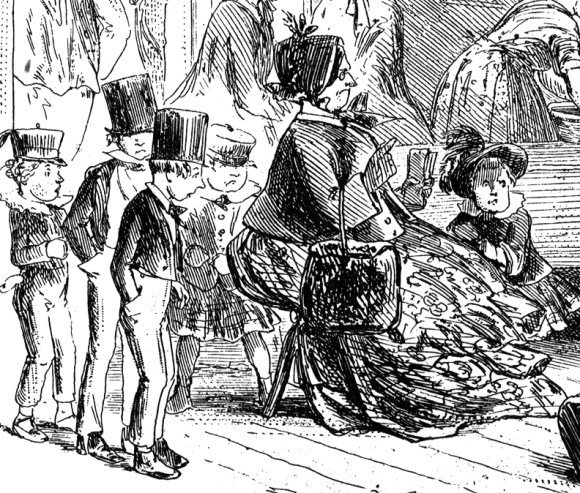
But I have yet to hear, at a Quaker Meeting, anything so lovely as “Therefore I have uttered what I did not understand, things too wonderful for me, which I did not know” (Job 42:3). It’s mostly well-meaning white people wanting to perform responsibility. Several meetings, someone will stand up and either announce their intention of going to the border to help with the family issue, or someone will stand up and say, “My heart is breaking because I know I can do good at the border for those families, but I do not have the resources to get there.” This all smacks a little of Mrs Jellyby, obsessed with an obscure African tribe, rather than proferring help to those in London or even, God forbid, her own children. The help we want to give — the showy, busy, selfless work — is rarely the help that is needed. And the help that is needed is often boring, with no glamour to it.
6e
“Mrs Jellyby was looking far away into Africa.” — C. Dickens

So, what is to be done? I don’t know. I want to continue my spiritual journey towards/with God; however, I am worried that maybe the Quakers aren’t the home for me that I want. Which puts me in the wonderfully awkward position of visiting a local Baptist church this Sunday. I know they read the Bible there.


Pied Beauty — Gerard Manley Hopkins

Glory be to God for dappled things—
   For skies of couple-colour as a brinded cow;
       For rose-moles all in stipple upon trout that swim;
Fresh-firecoal chestnut-falls; finches’ wings;
   Landscape plotted and pieced—fold, fallow, and plough;
       And all trades, their gear and tackle and trim.

All things counter, original, spare, strange;
   Whatever is fickle, freckled (who knows how?)
      With swift, slow; sweet, sour; adazzle, dim;
He fathers-forth whose beauty is past change:
                                     Praise Him.

timthumb
Gerard Manley Hopkins, 1844 – 1889
Categories
Belief Finding God Seeking

“Your Belief Undoes Your Disbelief”

After years of no real belief at all, one late fall I felt called to be a Catholic.

Belief is a slippery thing to write about — it can feel instructional, when you’re really just trying to work things out; or self-congratulatory, when you are actually trying to interrogate what it is you believe. Putting your belief(s) in writing can also feel final: It’s in words because now it’s true.

I am not a Catholic. That belief wasn’t true. But I am now a Christian, which, weirdly, feels less certain than when I thought I was Catholic. Everything is a swirl of confusion, and a wrong step or a sharp exhale might collapse, well, all of it.

The call to Catholicism went like this: I had felt, for some time, that I was missing something — some kind of comfort and peace. I was also working on some essays about saints and martyrs, pieces that weren’t really an exploration of my faith, but more just an exercise in memoir couched in stigmata and holy foreskins. I found myself both baffled and moved by these people — these saints and martyrs — so filled with belief and certainty that death came as a welcomed reward.

Francis De Sales
Saint Francis De Sales

My husband was raised Catholic, his childhood church just up the road from us. (He’s now a Won Buddhist.) I didn’t know how to talk to him about these new thoughts I was entertaining — that I needed the comfort of Catholicism, the ritual of incense smoke and wine, liturgy and bread. I didn’t know how to talk about that because I wasn’t actually sure it was what I really needed. I would feel a warm fullness in my heart when I thought about mass (in the abstract; I, to this day, have no real experience with mass), and I began vetting different saints to hire as my Personal Spiritual Guide (probably Francis De Sales, Bishop of Geneva in the late 16th century and patron saint of writers), but I never fully felt that click — the click Brick describes in Cat on a Hot Tin Roof — “The click I get in my head when I’ve had enough of this stuff to make me peaceful.”

catonahottinroof2
Brick: It’s like a switch, clickin’ off in my head. Turns the hot light off and the cool one on, and all of a sudden there’s peace. (Paul Newman in Cat on a Hot Tin Roof, 1958.)

So I was left with this empty feeling, a need for some connection, both spiritual as well as to a community of similar-minded believers. (I went to one catechism class at the Catholic church where F. Scott Fitzgerald is buried and felt immediately alienated from God. There was no room for doubt. Every question had an answer, rather than an opportunity for further reflection. One woman said, “It’s important to remember that we do not worship the Virgin Mary. A lot of people think we do, but we don’t.” She made this clear to us in a room with no less than eight statues of the blessed mother. To leave the church, you have to walk by a giant statue of Mary. Another statue of Mary gleams whitely outside of the church.) I was at a place in my life where I was ready to believe — where my belief unraveled my disbelief — I just didn’t know where to go.

Belief itself is very personal, much like the house rules for Monopoly are different from family to family. What I most needed was a home where not just my belief, but my doubts and questions were equally welcome. I also needed it to not be Unitarian Universalist because I’m not interested in praying to no one in particular. I didn’t want something divorced from spirituality. Zach and I went to a Unitarian Christmas service one year and it was irritating from start to finish. “Are they ever going to talk about why Christmas is important?” I whispered to Zach. He looked at my with pity and then told me to shush.

2000px-Quaker_star-T.svg

So where am I now? I turned to the Quakers — the Religious Society of Friends. (Another time I’ll write about how I put a lot of energy into exploring Santeria. Just know, for now, that I am a Very White Person who speaks zero Spanish beyond phrases that clearly mark me out as illiterate.) It’s church for introverts in a sense. I belong to an unprogrammed sect, which means we have no minister, no assigned readings from the Bible, no choir. We sit in silence for an hour, waiting for the still small voice of God to whisper words of revelation to us. I augment this with my own trek through the Bible, and with my questions, and few answers.

This site is a space for me to work on/through/with questions I have, answers I’m considering, and revelations that come to me. Nothing I write is an explanation, or even an instruction, on how to be a Person of Faith. I am mostly, and narrowly, only describing myself, and my thoughts, which you may read and agree with, or you may read and remain unconvinced. You will know, and be comforted, or you will not, and maybe still be comforted.

“As the African says:
This is my tale which I have told,
if it be sweet, if it be not sweet,
take somewhere else and let some return to me.
This story ends with me still rowing.”

— Anne Sexton, “Rowing


Title Source: “Admonitions to a Special Person” by Anne Sexton

Categories
Finding God Introductions Seeking

The Journey Begins


I am very close to finding God.

Categories
Blog

“From what I heard, and kind of put together…”: Casting JonBenet

This is best read by those who have already seen the documentary, but it’s your one wild and precious life, so gey gezunt. It’s just, so much of the power of this movie comes from not knowing what you’re about to see at all — going in with your own expectations, anticipating what a true crime investigation of a six-year-old’s murder is going to give you, and then gradually having that stripped away.

There are no official experts interviewed for Casting JonBenet. No crime scene footage. No photos of JonBenet herself, hair piled marshmallow-high. Instead, over the course of 80 minutes, we watch actors auditioning for roles in a JonBenet Ramsey-based project.

When we die and are taken to whatever our reward is going to be, we will be told three things: Every good act we’ve ever done, that we have always been loved, and that Burke Ramsey murdered JonBenet. Until then, though, this case remains frustratingly unsolved. Any answer is as good as any other. All theories are in play. “Do you know who killed JonBenet Ramsey?” one of the little girls auditioning for that role saucily asks, an impish grin on her face, maybe because someone put her up to the question, and children want to please.

2017_castingJonBenet_Netfix-920x584

“I’m normally typecast as the loving mother, and then also as…a bitch,” one of the actresses auditioning for the role of Patsy Ramsey tells the camera. She looks like Maya Rudolph playing a Very Specific kind of white woman, maybe Miranda from Sex and the City. Another says, “Usually mom, or the friend, is what I’ve played.” One woman, who brought her own Mrs Colorado pageant photos, says, “Both of us–” meaning she and Patsy Ramsey “–are not the really thin girls. We’re a little bit heavier.”

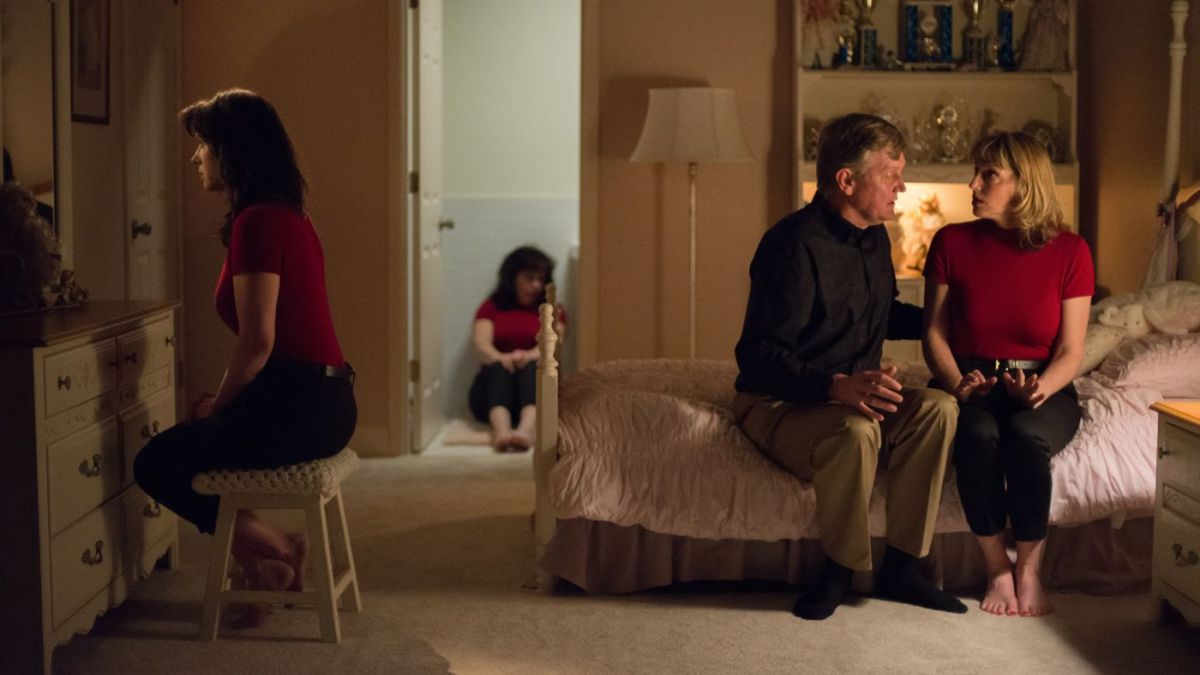
Some of the women have Patsy’s dark hair, but just as many don’t. Many wear the traditional Patsy Ramsey garb of a short-sleeved red sweater, but one woman auditions in a navy blazer with a blue collared shirt, unbuttoned to show a pearl necklace. “I noticed that you had some of the other women who are auditioning for Patsy wearing the red top, but for me, it’s the pearls that make who Patsy was.” She might be the closest, physically, to what Patsy Ramsey looked like. But she could also easily play Ina Garten in a TV movie.

071_CJB_SG_00351

Casting JonBenet isn’t interested in answering any questions, and certainly not questions about the death of JonBenet. Instead, it’s interested in how others answer that question, and exploring, very gently, how they came to that conclusion. The documentary doesn’t concern itself with presenting the truth — because it knows it can’t. Instead, it wants to explore the nature of truth, and how our individual ideas of the truth lead us to conclusions that may not necessarily be correct. There’s this idea we have created, where we think that if we have enough pieces of the truth, they will fit together like a puzzle into a Grand Explanation. But they don’t, because they can’t, because there is no Grand Explanation to anything, no puzzle to put together.

“And what it cited, that I think incited so much rage in me was that the stressors that Patsy was under — one of them being the holidays, and another being her impending 40th birthday. And I’ll be 39 next month.”

There’s an interesting gendered approach to how the actors who are auditioning for John Ramsey describe him, and how the actresses for Patsy describe her. The women are protective of Patsy, while not totally exonerating her; if anything, they hammer Patsy for her narcissism, ironically on camera, because they are actors, and the only other more narcissistic profession out there is close-up magician. There’s an “if” haunting the women’s points: If Patsy killed her daughter, it was an accident, either from exhaustion or deep insecurity. “She’d gotten too old,” one woman explains. Another recounts an article she had recently read about the case, explicitly naming Patsy as the murderer: “And what it cited, that I think incited so much rage in me was that the stressors that Patsy was under — one of them being the holidays, and another being her impending 40th birthday. And I’ll be 39 next month.” The men see John Ramsey as incredibly competent, and both praise and envy his business successes. “I don’t believe he was involved in any way,” a man who looks like Kris Kristofferson says, but doesn’t explain why. Another man says, “The more manic side of this situation seemed to come from Patsy’s side,” and that may have to do. We’ve always gendered mental illness while recognizing its trans properties. I’m Mike Bevel, and I’m manic depressive, better known as bipolar, and generally attributed to women. Men just get to be tortured geniuses and lose two wives to suicide via stove. (RIP, Ted Hughes.)

Actors are always themselves, which is a formless state of being, but seek to inhabit other people. They empty themselves to fill themselves with the Presence of the person they’re portraying. They need to find their way into another life, usually via empathy. In a way, actors see themselves as the frame into which all the puzzle pieces of a person’s life fit. Casting JonBenet is interested in this framing — and sees not just actors, but humans, as mechanisms for processing information via our own experiences and empathy. We watch this happen on screen, when a woman starts out with, “Why? She had no motive,” explaining Patsy to the filmmakers and to herself. But then her explanation shifts: “I’m frustrated as a parent. I’m frustrated with my kids. There’s no motive to kill them. There’s no motive to do that.” Patsy couldn’t have done it because she couldn’t have done it. She is like Patsy, and Patsy is like her, and we’ve all been frustrated, so frustration can’t be the answer.

But there’s still a dead six-year-old.

MV5BMTZkZGRiMmItYzgxOC00YzljLWE4NTQtZDJjMzRmMzVlNDI1XkEyXkFqcGdeQXVyMTEzNzczMA@@._V1_

Another woman explains Patsy’s involvement this way: “More than anything I think it was the ransom note that was written, that handwriting experts said she most likely wrote. I found that pretty interesting because I’ve had my handwriting analyzed. And it was fascinating, because I wasn’t there. It was an ex-boyfriend who showed this handwriting expert a birthday card that I gave him. But this expert could actually tell that I had had a trauma to my right ankle. And sure enough I had reconstructive surgery on my right ankle.”

We want to understand why terrible things happen — be satisfied with the outcome. But this is very different. We confuse satisfaction with understanding, assuming that what feels right about any situation must be true. One woman feels she has gained insight into Patsy by getting as close as she could to Patsy’s earrings. There’s a look of satisfaction on her face.

Casting-JonBenet-876642

Later in the documentary, the actors are shown rehearsing the press conference. “You know, they were never really too close,” an actor who looks like a version of Matt LeBlanc who has received bad news explains to his acting partner and to the camera. “Like, they weren’t like this [puts his arm around “Patsy”] or, I mean, but I might just angle in.” There’s a long pause while the Ana Gasteyer-looking woman really thinks about the Patsyness of her own psyche, and then the pause is longer still, until finally, “I don’t think I would angle in.”

So, again, the brilliance of the documentary is that it’s not just the actors who are seeking to be cast in a JonBenet-themed project. We do it too. We do it each time we work through a series of someone else’s unfortunate events. “I would have done x, y, or z.” Or, “Why would anyone do such a thing?” Or, “Both of us are not the really thin girls.” The Gospel of Thomas says, “If you bring forth what is within you, what you bring forth will save you. If you do not bring forth what is within you, what you do not bring forth will destroy you.” And bring forth we do, often, seeking satisfaction more than understanding; confusing truth with a puzzle that we think we’ve solved.

Categories
Blog

“Your Belief Undoes Your Disbelief”

As we talked about several months ago, my shrink suddenly explained that he actually wasn’t taking my insurance at the moment and I found myself sort of cast adrift, therapeutically, until I realized that my barber, David, could see ghosts and told me a very complicated story about a little girl who haunted this house he once lived in with someone I think was an ex, but maybe not. I do know that the little ghost girl made a glass spin in mid-air before crashing it to the ground and that sounds like a fight a couple would have, but that’s just me using my romantic intuition.

Coincidentally I had explained to my doctor that I was Very Sad All the Time and what could we do about it that wasn’t losing weight and she said, “Who suggested losing weight to treat depression?” and I said, “I like you.” She put me on an anti-depressant (Zoloft) and guys, listen: it’s been SO MUCH BETTER. It’s not that I don’t feel sad any more; of course I feel sad sometimes. But I don’t dwell on the sadness, prolonging it as an additional way of punishing myself for being a frail human being in the hands of an angry God.

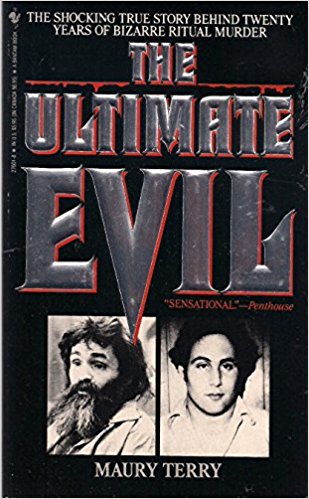
51PL02vbAbL._SX307_BO1,204,203,200_But I still see my barber, who has become an integral part of my mental health maintenance. Like, last Wednesday he says, “What are you reading?” because the book I have is one of those fat paperbacks that were more popular in the 1980s than I think they are now, but this book would DEFINITELY be sold in any of your better grocery stores in the books/magazine section if it were published today. It’s called Ultimate Evil (“Mr Bevel,” Jeff said, and just looked generally disappointed in my current methods of Self Care) and it’s about how the Son of Sam case is probably connected to a splinter Satanic cult from The Process Church on account of some VERY clever code-breaking the author, Maury Terry, now dead, figured out. (We’ll just say the “evidence” proffered means Will Shortz is probably part of the SoS conspiracy.) None of it is super convincing, but it passes the time and I explained all of this to David, my barber, who has amazing teeth and doesn’t make me feel self-conscious about sweating, and he said, “I believe evil forces like that are organized in the world; someone put a curse on me once,” and I said, “You need to start at the beginning with this.”

So this is the story he told me, and it went like this: When he was working in a bank in Atlanta, he said, he had really good luck, all the time. “Or, maybe, not great luck, but I didn’t have a lot of bad luck,” he explained. But then, one day, at lunch, he tells a co-worker, Maria, who was from the Philippines, that things hadn’t been going great for him of late. “Everything just sort of started going wrong, everywhere,” he explained to me, and also said to Maria. Maria said, “Listen, after work I’ll read your cards. We’ll figure this out.” And David explained that there are a lot of good psychics that come out of the Philippines, “because they’re Catholics, but open-minded,” he said, and I made a note of that because I love learning about other cultures from white people. So, after work, they go to Maria’s car (“Wait, she did a tarot reading for you in her car?” and David said, “We couldn’t use the break room because Maria got written up once for that.”) and she lays out a tarot spread and she gasps as she overturns each card. “Do you remember what cards came up?” and I thought to myself, while David answered, “If he says that the Death card came up then that seems pretty too on-the-nose and something anyone would say who claimed to have had a tarot reading about a curse,” but David said he didn’t remember the cards well at all that came up, just that Maria gasped a lot, and at the end she said, “David, someone has put a hex on you.”

“Did you know what a hex was?” I asked him. He did. This was after the little ghost girl who spun glasses, and he had read up on a lot of things (“Next time, ask me to tell you about The Rothschilds,” he said, and I made a note of it, because of course I will), so he knew about hexes and curses and charm bags and this lady made him buy some candles and do some other things that he wasn’t comfortable talking about in the salon (“I’m out of here soon, but I want it to be on my terms and not, you know, because of charm talk”) but he did all of the steps, and oh, it also involved a piece of paper that I think he said he still has (Note to Self: Before asking about the Rothschilds, ask about that slip of paper and see if he’ll show it to you) and anyway, it all worked. The charm bag and the piece of paper and the stuff he won’t talk about in a salon, it all did what it was claimed to do, which is to reverse the curse/hex that had been placed on him.

Do you know who placed the hex?, I asked, and he said, “Yes, I do.” How did you know it was her, I asked him. “She’d sit in the bomb shelter of the bank in the dark and smoke cigarettes,” he said.

Where I’m going with all this is: I’m in a tough place often, with stories of this kind: I believe the people, because the greatest gift we can give someone is our belief; I don’t always believe their stories, however? Does that make sense? Like, I’m sure my barber believed SOMETHING happened to him, and I’m sure he also believed that he was able to end what was happening via a counter-spell; but I’m also not entirely sure that a chain-smoking weirdo in a bomb shelter is capable of hexing anyone?

Special person,
if I were you I’d pay no attention
to admonitions from me,
made somewhat out of your words
and somewhat out of mine.
A collaboration.
I do not believe a word I have said,
except some, except I think of you like a young tree
with pasted-on leaves and know you’ll root
and the real green thing will come.

— “Admonitions to a Special Person,” Anne Sexton