Categories
Belief Bible Study Genesis God Old Testament Seeking

Evil

Roxanne asked about evil. I’ll tell you now, at the beginning, to save you time if you thought I was going to be able to answer this question: I don’t know how to answer this question. I don’t know what to do about evil.

I’ll start with this poem by Duane Michals, “I Am Much Nicer Than God.”

“It was last Thursday, when I heard that Dennis had finally died, that I realized I was much nicer than God. I would never have let him suffer all those months as he did. I would never have invented cancer in the first place. Nor would I permit children to fall asleep hungry, or old people to cry alone. But if it is true, that I with my petty vanity and selfishness are much nicer than God, then I am in despair. I do not have enough compassion and love to protect. Somewhere there must be more love.”

Evil really isn’t that difficult of a concept to wrap your arms around. We innately know what evil is. Evil is something terrible that happens that leaves you powerless. Of course, sometimes it’s something like an earthquake, or a brushfire, and the earthquake and the brushfire themselves aren’t evil. Sometimes it’s an illness like cancer, or HIV/AIDS, but cancer and AIDS themselves aren’t evil. Evil is cruelty and violence, and it is sometimes disguised as caring and love. We experience the effects of evil; maybe evil is like wind: unseen but felt, always around us and we only notice when we’re blown off course.

God, however, of course, created earthquakes. And brushfires. And cancer. And AIDS. And humans, who exacerbate the problems while also being the victim.

Are people evil? We sure want them to be. We want an explanation for bad behavior, that an evil person did an evil thing because evil is in the world. And sometimes, I guess, that’s true. The problem is, the more we learn about the brain, the more we start to see how little control we actually have over our actions. Where I am with evil: there is a lot of bad in the world, most of it caused by humans, and evil is a way of labeling it, but it’s not a useful designation, because we use it like packing peanuts to couch our discomfort. Calling something evil and then blaming God for not fixing it has not worked as an effective counter to evil or as a deterrent to belief in the Divine.

But why does God allow evil? That’s a question any religion that claims a benevolent, omniscient, omnipotent, and omnipresent deity has to answer. That seems to be an especially Christian p.o.v. God has faults and makes mistakes in the Hebrew Bible ::all the time::, and it doesn’t undercut his standing as the chosen god of the Israelites. (Though there is an interesting development, characterwise, with God in the Hebrew Bible: there seems to be some room for polytheism at the beginning; God references other deities*. He then becomes the most powerful of all the deities. And ::then:: he becomes the ONLY deity. Christianity works some polytheism back into the mix with the trinity concept, which may not have been Christianity’s smartest move, but it was in part to create an answer to the question: Is Noah/Abraham/Moses saved, not having had a Christ-experience? John gives us the answer: yes, because “In the beginning was the Word, and the Word was with God, and the Word was God.” I have been chastened by my pastor for my current thoughts on John so I’ll say no more until I’ve read this book of commentary on it.) Christianity wants a benevolent God to have all the Os — omniscience, omnipotence, omnipresence — but also wants there to be sin. And we get the sin problem because now we have to introduce the concept of Free Will. That makes evil ::our:: problem, not God’s problem, and is a really shitty way to think about evil and God if you ask me.

(* Genesis 1:16 is an interesting place to talk real quick-like about translation and editorializing. It’s a curious little passage; here it is in the NRSV edition: “God made the two great lights—the greater light to rule the day and the lesser light to rule the night—and the stars.” It’s identical in the King James, and essentially identical in the earlier 1599 Geneva translation. The Hebrew translation is also very straight-forward — we don’t have any contextual issues where a Hebrew word has been poorly translated. But the phrasing. “The greater light to rule the day and the lesser light to rule the night.” Why not just say “The sun to rule the day and the moon to rule the night.” And it’s because the names for the sun and the moon at the time this text is written down were also the names of Mesopotamian deities. If you’re world-building as a solo entity, you can’t very well say that God created Utu (sun deity) and Nanna (moon deity), so we’re left with this awkward Hebrew work-around that has stayed with us through the current day.)

(Me again: there is an arm of evangelical Christianity that sees the “lesser light” as referring to Satan and I either have a lot to say about this or nothing to say about this we’ll see.)

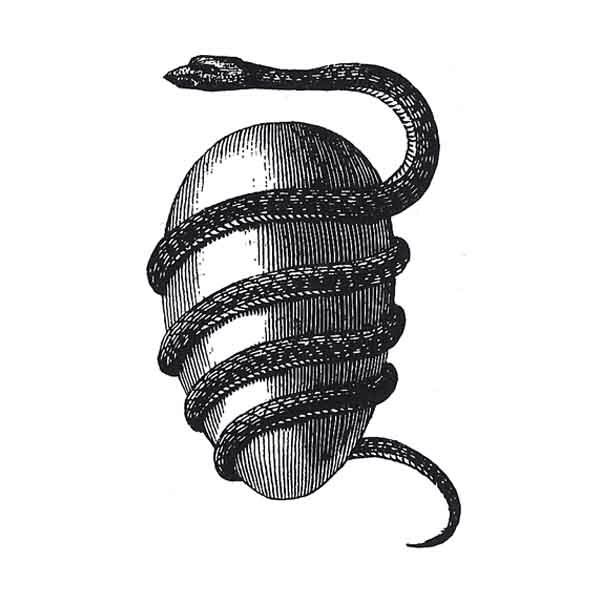
Theologically speaking, God is at least aware that evil is a force in the world, whether he created evil or not. In Genesis 2:9, we learn that God has created both a tree of life (which grants immortality), and a tree of the knowledge of good and evil. And that good/evil tree is created ::before:: God has created Adam. So man didn’t bring evil into the world, because evil must already exist if it can be detected via fruit.

Later, God worries about the new state of the humans he’s created. Gen. 3:22: “See, the man has become like one of us, knowing good and evil; and now, he might reach out his hand and take also from the tree of life, and eat, and live forever.” The Gnostics will argue that the serpent doesn’t lie to Eve, but that God does. Because Eve and Adam do not die after eating the fruit. Certain Christian sects will say, “They died spiritually in that moment,” or “They lost the chance at immortality.” But immortality doesn’t seem to be part of God’s initial plan for humanity, anyway, since he’s also forbidden eating from the fruit of the tree of life. So evil exists — maybe even independently of God — and God sees knowing the difference between the two to be a terrible burden that he hopes to protect his new humans from.

(It’s also useful to consider that the Jewish tradition of creation is not “out of nothing” or “ex nihilo.” God brings order to chaos, not creation out of nothing, in Genesis 1. Christianity — specifically the early Church fathers — is the one arguing for Creation Ex Nihilo because I guess no one had anything better to do in the early 100s?)

But I do think evil is ::our:: problem. And I think God — the full complement of whatever that experience is — is such a profound mystery that as humans we may never understand the point of any of what we are doing here. We’re born, we live our days as best we can, sometimes doing good, sometimes doing evil, sometimes happy, sometimes broken entirely, and we die, and: [something even if it’s nothing happens]. I love this Tolstoy quote from War & Peace: “You will die and it will all be over. You will die and find out everything or cease asking.”

I don’t think there will ever be a human definition of evil that will make sense — and certainly, and ironically, religion can’t answer the question because we don’t understand the question, fully, even though I said evil itself isn’t all that difficult of a concept to wrap one’s arms around. Since we know that evil isn’t something God is willing/able/allowed to fix, we’re left on our own. Evil exists because humans exist, and our job that we should assign to ourselves is to bear witness to evil and call it out when we see it, and to do what we can for those who are suffering.

(Donald Trump is absolutely evil. As are his children, even Tiffany, and Mitch McConnell. Ellen is evil. Dick Cheney, too. George W. Bush is evil but we have decided he’s cute because Michelle Obama hugged him once. Capitalism is evil. Orthodoxy that seeks to control/gatekeep is evil. Obviously Hitler.)

Categories
Bible Study Flannery O'Connor Old Testament

Donkeys & Dongs: Ezekiel 23:20-21 in Context

I asked my friends on Facebook if they had any questions regarding the Bible that a very inexperienced Christian might do his best to answer. (To be clear, I am the Very Inexperienced Christian.)

My friend John asked — probably jokingly — “What about that lady that liked the big horse dongs?” And I decided to call John’s bluff. We’re going to talk about donkey dongs and horse jizz til the break of dawn.

We have to do a little bit of level setting before we jump all the way into Ezekiel 23:20-21.

The Bible Christians use today — that you can buy in any Barnes & Noble or Cracker Barrel — is not a book per se. It’s a collection of texts, some Jewish (the Tanakh, or Old Testament, as Christians refer to it, which is actually kinda anti-Semitic, because the Torah/Tanakh are still very vital religious documents), some Christian (The New Testament, but probably better referred to as the Christian Bible), that were compiled during the Council of Rome ~382 CE.

The two halves of the Bible — the Jewish half and the Christian half — were written at different times and for very different audiences, with vastly different intents and purposes. The Tanakh is a book of history and rules for the Israelites, with examples of what goes wrong when you stray from the path. The Christian Bible is about Jesus as the fulfillment of messianic prophecy. The Christian Bible relies a lot on the Tanakh, using passages from the Hebrew Bible to justify their conclusions about who Jesus is.

To grossly oversimplify, the Hebrew Bible chronicles God’s election of the Israelites as His chosen people, and how the Israelites essentially hate every minute of it. (When Moses leads the Israelites out of Egypt from slavery, and into the desert, we get this great passage in Exodus 14:11 — “They said to Moses, ‘Was it because there were no graves in Egypt that you have taken us away to die in the wilderness?'” Comedy has always been dominated by Jews.)

Which brings us to the Book of Ezekiel.

Christianity’s insistence on the Bible being The ::Holy:: Bible, inerrant and entirely righteous, causes a certain flavor of Christians a lot of problems. Christians find themselves having to Cirque du Soleil into complex impossible shapes to read the erotic ::out:: of the Song of Solomon, for instance. And, in the case of Ezekiel 23:20, it’s just embarrassing for them:

“There she lusted after her lovers, whose genitals were like those of donkeys and whose emission was like that of horses.
So you longed for the lewdness of your youth, when in Egypt your bosom was caressed and your young breasts fondled.”

The first and most important thing to make very clear here is that the prophet Ezekiel, who is speaking these words, is speaking in metaphor and simile. Which is not to say that never in the history of ever was there a woman who lusted after donkey-dicked dudes who jizzed buckets — let’s call her Meghan — but which is to say that Ezekiel is trying to make the loudest point possible about how the Israelites are absolutely doing the wrong thing.

(By the way, the average horse produces about 100cc of ejaculate, though some draft breeds can gush up to 400cc and that’s just some extra information for you because I know how much you crave knowledge. Oh, and donkey penis size? A lady never tells.)

(It’s about a foot and a half swear to GOD.)

In Ezekiel 23, Ezekiel is railing against the cities of Samaria and Jerusalem. Most Hebrew Bible prophets dedicate a lot of their yelling time to Yelling About Idolatry. In this case, Ezekiel is very frustrated that Israelite women are lusting after Egyptian men. He’s also frustrated with the willingness of Israelites, in general, to forgo the worship of Hashem/Gd/YHWH. In Exodus, Moses leaves the Israelites alone for a hot minute (40 days), and when he came back he found the Israelites worshiping a golden calf.

Prophets are loud, angry, often dirty, and, in today’s language, which we shouldn’t use because it shames mental illness, mad. They used coarse and vulgar language and symbols because they were desperate to get the Word of God to the people, who seemed hell bent on doing their own thing.

I’ll leave you with this, from Flannery O’Connor, whom some, like me, might consider a modern prophet:

“The novelist with Christian concerns will find in modern life distortions which are repugnant to him, and his problem will be to make these appear as distortions to an audience which is used to seeing them as natural; and he may well be forced to take ever more violent means to get his vision across to this hostile audience. When you can assume that your audience holds the same beliefs you do, you can relax a little and use more normal ways of talking to it; when you have to assume that it does not, then you have to make your vision apparent by shock — to the hard of hearing you shout, and for the almost blind you draw large and startling figures.”

Categories
Bible Study New Testament Old Testament Tanakh

Satan & Scripture

This momentary president’s son said a dumb thing on Twitter: “Likelihood of Nancy Pelosi praying for Trump is about the same as the likelihood of Satan running around quoting the Scriptures.” And this got both Theology and Theology-Adjacent twitter worked up because Junior displays an unsurprising unfamiliarity with any part of the Bible — Hebrew or Christian.

One response that really interested me was this: “The Serpent quotes Scripture in Genesis 3, so he doesn’t even have to wait that long.”

I am MADLY in love with this tweet because there are several kinds of grappling we get to do. In brief:

1) Is the serpent Satan?

2) Is the serpent quoting scripture, or just quoting God?

3) Is Satan evil?

So let’s get started.

1) Is the Serpent Satan?

Maybe! But that’s not always how the serpent in the story was understood. For the early Israelites, there would be no connection of Serpent/Satan. Genesis is written–roughly; dating the Bible is tough am I right ladies?–somewhere between 900-700 BCE.

There are some scholars who connect the serpent in Genesis with the Hebrew word/concept יֵצֶר הַרַע (yetzer hara) — which is sort of man’s innate inclination to do evil. Most importantly, the serpent in Genesis is a Jewish idea that is appropriated by Christians. Christians believe that man’s inclination to do evil is a side-effect. Early Jews realized that people are just sometimes terrible.

The serpent as a personification of Satan is a Christian invention, and the idea behind Original Sin. But this is really only true for orthodox Christianity. The Gnostics–whom I love dearly–saw the serpent as a deliverer of Wisdom, connecting it with Sophia (σοφία).

(The Gnostics are very complicated about God, and Jesus, and some developed this idea that the trinity is God, Jesus, and Sophia (wisdom) rather than the Holy Spirit — and that Wisdom is the wife of God.)

2) Is the Serpent Quoting Scripture?

This has nothing to do, really, with theology, and more to do with how we read a text. I’m of the mind that the serpent is ::not:: quoting scripture in Genesis 3, because in the moment the serpent is speaking, scripture doesn’t exist yet.

(Oh, by the way, for #2 we’re going with the orthodox Christian idea that the serpent is synonymous with Satan.)

In the New Testament/Christian Bible, however, Satan definitely quotes scripture, specifically in places like Matt 4:6, where Satan is quoting from Psalm 91:11-12. But it’s interesting to think about the evolution of Satan as a character in the Bible.

3) Is Satan Evil?

For the Jews, “satan” is more of a job title. The sâtan’s (ha-satan) job is to be an adversary to test humans. The satan’s big scene is in Job, where he is under God’s employ. It’s generally agreed that Job is the oldest piece of writing in the Hebrew Bible.

It’s usually dated to the 2nd millennium BCE — so by the time we get to the Gospels, written in the 1st century CE, ha-satan has gone through a pretty extensive evolution. By the time Christians are writing their gospels, ha-satan has become Satan, and is the source of evil and the primary antagonist of God. Elaine Pagels’s book, “The Origins of Satan,” is an incredibly useful book if any of this interested you at all.

And that’s it for today.

Categories
Bible Study New Testament

Servants & Deacons

(much much MUCH credit to my pastor and friend, Jill McCrory)

In Mark, the first miracle Jesus performs is an exorcism (Mk 1:21-28). It’s a super unsettling scene; the demon, invading the synagogue where Jesus is preaching, speaks through the possessed man and asks “What have you to do with ::us::?” (“Us” in this case being “demons.”)

And this is a theme throughout Mark — the first to recognize Jesus for who he is are not the people in the synagogue, or even the disciples, it’s the demons.

(I do not believe in demons, btw. But if you have a demon story of course I want to hear it.)

The second miracle Jesus performs in Mark is healing Peter’s mother-in-law. And that’s really the point of this post, this healing. I just open with the demon thing because Mark’s gospel is haunted by demons throughout and I’m fascinated by that. Again, if you have a demon story you MUST share it with me.

The healing of Peter’s mother-in-law is at Mk 1:29-31. Depending on your edition–NIV, NRSV, KJV, The Message–you’ll have a different translated verb.

NIV: “she began to wait on them”
NRSV: “she began to serve them”
KJV: “she ministered unto them”
Mess: “she was up fixing dinner for them.”

In my study Bible — an NIV with lines in the margins for note-taking — I wrote, “Of course she did,” because I read “serve” in the same sense that The Message Bible presents it and I’m still bitter about the treatment of Martha in the Book of Luke. #JUSTICEFORMARTHA

But if we look at the Greek — which is the language Mark is written in — the verb used is διάκονος, which is where we get the word “deacon.” And this can change the entire sense of what this passage might mean, and what role Peter’s mother-in-law had in Jesus’s ministry.

If we take off our Patriarchy Lenses and just look at the words, it just might could be that Peter’s mother-in-law isn’t “fixing dinner for them” or “serving” them. The King James version might get us closer to what is really happening: she ministers to them — as a deacon.

If we let ourselves read this passage in this light, Peter’s mother-in-law becomes another disciple of Jesus — becomes someone whose service isn’t domestic, but spiritual.

Later, in the New Testament, (but ironically much earlier, chronologically; Paul’s writings are the earliest writings in the New Testament, even though they come after the Gospels and Acts) in Paul’s Epistle to the Romans, we read of another deacon, a woman named Phoebe. (Rom 16:1-2)

The same Greek is used–διάκονος. Here it is in those same 4 editions.

NIV/NRSV: “I commend to you our sister Phoebe, a deacon”
KJV: “I commend unto you Phebe our sister, which is a servant of the church”
Mess: “Be sure to welcome our friend Phoebe…a key representative”

The Greek in Romans is translated as an active member of the church — not a woman who serves dinner. And the Greek in Mark is often translated as a hostess, not a woman who can also preach the good news.

I prefer the Greek of Paul. Peter’s mother-in-law is an active disciple of Jesus. Galatians 3:28: “There is neither Jew nor Gentile, neither slave nor free, nor is there male and female, for you are all one in Christ Jesus.”

Categories
1 Thessalonians Baptist Belief God New Testament Seeking

The Good Parts: 1 Thessalonians

But we were gentle among you.

1 Thess 2:7

For you yourselves have been taught by God to love one another; and indeed you do love all the brothers and sisters throughout Macedonia. But we urge you, beloved, to do so more and more.

1 Thess 4:9-10

So then let us not die as others do, but let us keep awake and be sober.

1 Thess 5:6

Rejoice always, pray without ceasing, give thanks in all circumstances; for this is the will of God in Christ Jesus.

1 Thess 5:16

Test everything; hold fast to what is good; abstain from every form of evil.

1 Thess 5:21

May the God of Peace himself sanctify you entirely; and may your spirit and soul and body be kept sound and blameless.

1 Thess 5:23