you say “more?” and he says “yes” and then you say “even more?” and he says “yes” and you say “i have no more left” and he says “yes” and you say “but i cannot stop?” and he says
yes
you say “more?” and he says “yes” and then you say “even more?” and he says “yes” and you say “i have no more left” and he says “yes” and you say “but i cannot stop?” and he says
yes
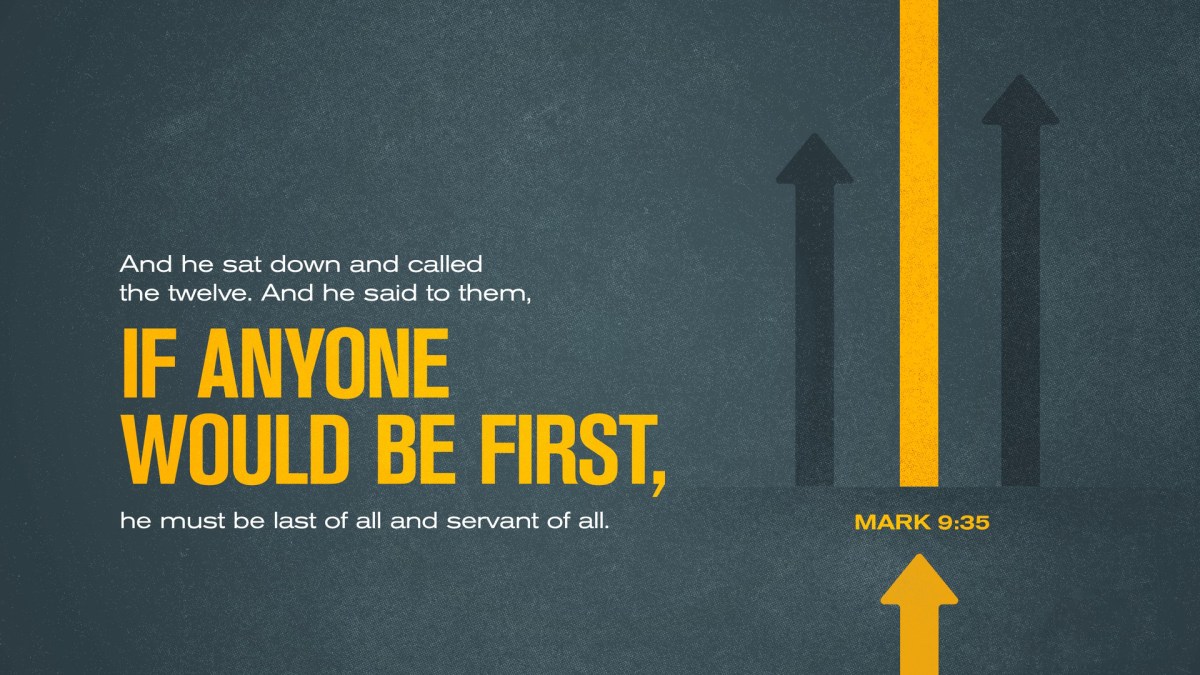
I asked my pastor last night, an amazing woman named Jill McCrory of Twinbrook Baptist, what her most radical belief was w/r/t God and the Bible. She said, “Universal Salvation. We’re all saved. All of us.”
I said something similar a couple of days ago — that I don’t believe in sin, or I don’t believe in sin used as a weight against which we’re measured. And I wanted to write a bit more about that, because so often I better understand my own thinking when I’m ironing it out in print. So.
* * * * *
We are all saved. We were actually born already saved. All of us. Even the worst person you can imagine. Even that worst person. (Where I’m still working is: how necessary was Christ’s crucifixion? Is that the mechanism of salvation? Or can I rely fully on the idea of a loving God not hating any of his creation so much that he would send them to a place of permanent and utter torment? I mean, as I’m further and further into this parenthetical, I think I’m leaning more towards the “Loving God” side of the equation over the “Christ Died for Me” version.)
Sin isn’t something God keeps an account of; it’s something we commit against ourselves and each other. In M. Scott Peck’s People of the Lie, he shares a shattering anecdote about a patient he was treating in private practice.
“What did you get for Christmas?”
“Nothing much.”
“Your parents must have given you something. What did they give you?”
“A gun.”
“A gun?” I repeated stupidly.
“Yes.”
“What kind of gun?”
“A twenty-two.”
“A twenty-two pistol?”
“No, a twenty-two rifle.”
There was a moment of silence. I felt as if I had lost my bearings. I wanted to stop the interview. I wanted to go home. Finally I pushed myself to say what had to be said. “I understand that it was with a twenty-two rifle that your brother killed himself.”
“Yes.”
“Was that what you asked for for Christmas?”
“No.”
“What did you ask for?”
“A tennis racket.”
“But you got the gun instead?”
“Yes.”
“How did you feel, getting the same kind of gun that your brother had?”
“It wasn’t the same kind of gun.”
I began to feel better. Maybe I was just confused. “I’m sorry,” I said. “I thought they were the same kind of gun.”
“It wasn’t the same kind of gun,” Bobby replied. “It was the gun.”
“The gun?”
“Yes.”
“You mean it was your brother’s gun?” I wanted to go home very badly now.
“Yes.”
“You mean your parents gave you your brother’s gun for Christmas, the one he shot himself with?”
“Yes.”
* * * * *
 Sin and evil are human creations. They break our spirit, break our heart, break our will — but they do not deny us any of the love of God. My belief is, God is utterly incomprehensible except for two things: he only wants to give love, and he only wants to receive love in return. I think, when we meet God in Heaven, wherever Heaven happens to be, some of us are going to be overjoyed, and some of us are going to be embarrassed or even hurt a little, at first, that people whom we were awful to, because we thought we were better Christians than they were, or better people than they were, are there, in God’s glory. We’re all a little like Mrs Turpin in Flannery O’Connor’s short story, “Revelation”:
At last she lifted her head. There was only a purple streak in the sky, cutting through a field of crimson and leading, like an extension of the highway, into the descending dusk. She raised her hands from the side of the pen in a gesture hieratic and profound. A visionary light settled in her eyes. She saw the streak as a vast swinging bridge extending upward from the earth through a field of living fire. Upon it a vast horde of souls were tumbling toward heaven. There were whole companies of white trash, clean for the first time in their lives, and bands of black niggers in white robes, and battalions of freaks and lunatics shouting and clapping and leaping like frogs. And bringing up the end of the procession was a tribe of people whom she recognized at once as those who , like herself and Claud, had always had a little of everything and the given wit to use it right. She leaned forward to observe them closer. They were marching behind the others with great dignity, accountable as they had always been for good order and common sense and respectable behavior. They, alone were on key. Yet she could see by their shocked and altered faces even their virtues were being burned away. She lowered hands and gripped the rail of the hog pen, her eyes small but fixed unblinkingly on what lay ahead. In a moment the vision faded but she remained where she was.
Ruby Turpin’s revelation is what Hell is, but it’s not forever. It lasts as long as we fight against loving everyone, against lovingkindness. So, Universal Love and Universal Salvation are where I feel God’s presence the most.
* * * * *

A woman named Susan is binding a Bible for me, with my favorite quote about grace from Flannery O’Connor: “All human nature vigorously resists grace because grace changes us and the change is painful.” I asked her what her most radical theological belief is, and she says, “Oh boy, I’m not sure I even have a radical theological belief. Perhaps it is more of a hope. I sure do hope that all of the babies that have been aborted are with Jesus. My belief is that they are – same for those who have miscarried. I’m believing my grandchild who never saw the light of day on this earth is in heaven with Jesus. That gives me comfort.”
I want to say to Susan, “Your grandchild is with Jesus. And all the babies, too. And all the women who died from botched abortions because they weren’t legal and safe. And all the fathers who couldn’t get it together to be present. And all the children who ignored their parents. And all the parents who hurt their children. Everyone gets to be in the Kindgom of Heaven. The last, first; the first, last.”
All of us.
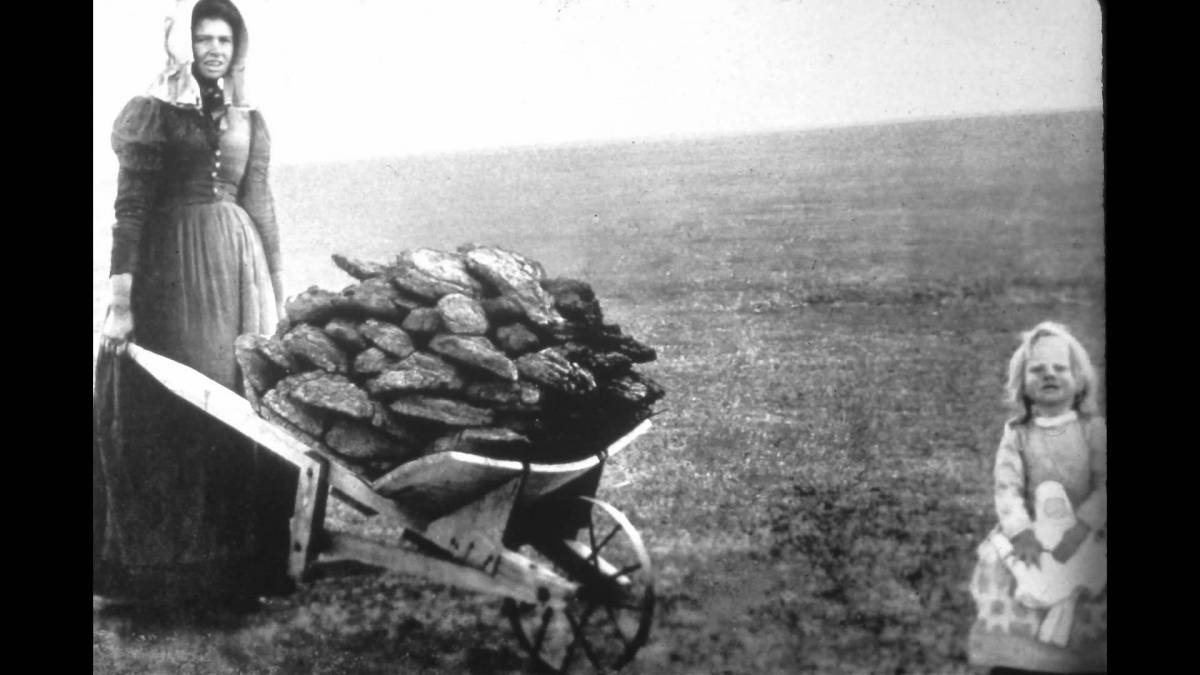
Who were the homestead wives?
Who were the gold rush brides?
Does anybody know?
Do their works survive their yellow fever lives in the pages they wrote?
The land was free, yet it cost their lives.— “Gold Rush Brides,” 10,000 Maniacs
A lovely woman whom I don’t remember meeting emails me periodically to check in on my faith. She’s Catholic, and named Margaret, so I probably met her at the one (1) catechism class I attended before I realized with the deep sweetness of unerring certainty that I was Not a Catholic.
We started emailing because I asked her not to email me any more. She organizes Dorothy Day Dinners (I imagine I’ll write about Day at some point in the future. I find her fetishization of the poor to be…worth writing about) and had sent an email to a group asking for people to contribute ingredients. It’s stone-soupy, if you will, if stone soup is a reference you’re familiar with.
I wrote to Margaret in early August, saying, “Please take me off your email list. I am so glad of the work you’re doing, and admire everyone. But after a lot of searching, I feel that my spiritual home is with the Quakers.”
So, as it turns out, my spiritual home is not with the Quakers, but that’s not the point of this story.
Margaret wrote back, “I have a sense of loss in reading that you are leaving our Communion and wonder if you would honor me with some details about what we are missing that you find attractive with the Quakers.”
So I did.
Margaret:
When I came to the Church, it was at a time where I finally was able to stay out of my own way about faith and God. Before, I worried that I was being intellectually disingenuous; I had always identified as an atheist, and thought that made me smarter than everyone who was a believer.
Of course, then God comes along and quietly reminds me that I’m not smarter than anyone at all. I’m just loud. 🙂
I knew I needed a spiritual home. I really thought it was going to be Catholicism. But I think there is so much culture there — being Catholic is more than just going to Mass. And I didn’t feel Catholicism in my heart at all.
Growing up in a faith tradition is easier than converting; and I feel maybe one should convert only if one cannot find what she needs in her own “home.” And I was starting out too late in the evening, as it was, to be an effective Catholic; I would have felt very behind all the time, and my disbelief would be heavy.
I found the Quakers because my husband said, “What about that?” He’s a Won Buddhist, a Korean-form of belief. (He’s not Korean, by the way.) His conversion was also circuitous. He had gone to a Quaker school in North Carolina (Guilford), which, by virtue of being a contemplative religion, made stretching into Eastern traditions less jarring, I’d guess. I went to my first meeting, and was sort of overwhelmed with peace and love. I could start there, from the beginning; whereas, while everyone was lovely and welcoming to me when I came to my one (and only) catechism class, I didn’t feel like I was starting from a place of love. I felt like I was starting only from a place of struggle.
I now identify as a Quaker with a sense of Flannery O’Connor about myself, and an appreciation of Gerard Manley Hopkins. So I’m not completely hidden from Catholicism.
Again, I can’t stress enough how much I now do not identify as a Quaker, though I admire them greatly. Our breakup was not the never-speak-to-me-or-my-good-strong-sons-again type. I just need more religion in my religion than unprogrammed Quakerism provides. I need the Bible. I need God and Jesus. I need pews and awkward hymns and a sermon because, as it turns out, I really need structure. I didn’t grow up feeling necessarily safe and secure; when I feel like things are too come-what-come-may my anxiety spikes and I’m left chewing the skin around my fingers and counting my steps to soothe myself.
My friend Steve, through a teacher he had, explained to me once that one is probably best served within the religious tradition in which they were raised. Those cultural groundings are important. It’s not a necessity — clearly, as Zach is incredibly content and thriving in Buddhism. But, as I learn more about myself and my relationship to faith, it is a necessity to me.
I later sent Margaret an email with a link to an essay I wrote. I titled it “of possible interest” and she very graciously said, “I probably will not be able to check in on your web site but things change and I may find time to do so in the future.” I love Margaret very much, and her honesty. I probably wouldn’t have time to read my own writing, too, but would lie to me and say, “I can’t wait to read this tonight.” But I’m trying not to be like that. Margaret went on to write, “My ex-husband’s health is declining and very soon I am going to need to give more of my time to him.” She also said, “Today, I am going to try and get through the heat, cook and can spaghetti sauce and make an offering of my day to God.” And she closed by asking for prayers for her and her family.
(The thesis of this post, by the way — suffering — we’re getting to it. I promise.)
A few weeks ago I completed hospice training. As part of my religious focus, on myself and the world, this felt like something I could give that also needed giving. Right now, it makes me feel useful. My hope is that it will make me humble. There’s something self-serving in announcing, “I PROVIDE HOSPICE CARE.” And it’s there because we’re humans, with human feelings and emotions. Even Christ let slip he was the Son of God every now and again, and he was both wholly human and wholly divine.
“You sound dead-set on turning your stove on today, so I won’t counsel against it. I baked cookies on Sunday and thanked God for air conditioning,” I wrote her back, among a bunch of other things, including how now, at 40, I’m better able to hear the Still Small Voice of God. When I was younger — in my 20s — I expected, or, rather, demanded, that God speak to me in a Giant Booming Voice. And when He didn’t, I told myself, ‘Well, that proves it. He doesn’t exist.’ But none of us are smart in our 20s. Now, in my 40s, I hear God in the still small voice from 1 Kings. I think about the Parable of the Mustard Seed, and how a very small faith, if well-tended, can provide safety and shelter. It is incredibly humbling. And such a great rejoinder to Twenty-Year-Old Mike, who didn’t know how to listen.
Margaret explained the stove thing to me:
The stove thing is because my garden had produced a nice crop of tomatoes and I must “do” something with them and not let them spoil. I often think, at this moment each year, about the pioneer women, or even early 20th c. women who slaved over a wood heat stove to can. They died young but at least I have made it to 70 and have fans. If I make the heat today a prayer, it is called the prayer of the body. What I mean is this: I pray aloud or silently and this is pleasing to God. If I offer my whole day to God, my prayers, works, joys and suffering, and I unite myself to His passion and death, then suffering the heat of the day IS a prayer.
And we’re where I need us to be, now. Thee and me, we are all caught up. Because I want to think about religious suffering for a few more words.
I want to make this clear at the start: my religious beliefs and practices are very much mine. They’re influenced by what I’ve read, what I’ve heard, whom I’ve met, and what feels right to me, which is ever changing as I’m influenced by the aforementioned three other things. (“I’m new in town…” — John Mulaney) I’m sure this is true for a lot of my brothers and sisters in Christ. The idea of God requiring suffering from me is so foreign, so unutterably alien, that I am actively compelled away from the idea of lovingkindness when considering it. Faith that values suffering is a faith that I don’t wish to have. It is a faith that is alien to me. It’s a faith, nonetheless; it’s just not mine own, mine own, mine own.
Within my faith practice, suffering is something I commit against myself. When I push against the mystery of God, when I give in to harmful/uncaring thoughts against my self (cf Cheri Huber, e.g.), I cause suffering. I can also cause others to suffer, too, which is reflected back on to me like rubber and glue. There is no good in suffering, as far as I can see. And Christ, of all people, certainly does not need my suffering to weigh the love I have for Him.
But it’s Margaret’s, and not mine to take from her, or disavow to her.
“Ok, I begin,” she ends.
My hazard wouldn’t be yours, not ever;
But every doom, like a hazelnut, comes down
To its own worm. So I am rocking here
Like any granny with her apron over her head
Saying, lordy me. It’s my trouble.
There’s nothing to be learned this way.
If I heard a girl crying help
I would go to save her;
But you hardly ever hear those words.
Dear children, you must try to say
Something when you are in need.
Don’t confuse hunger with greed;
And don’t wait until you are dead.
–Ruth Stone, Topography and Other Poems
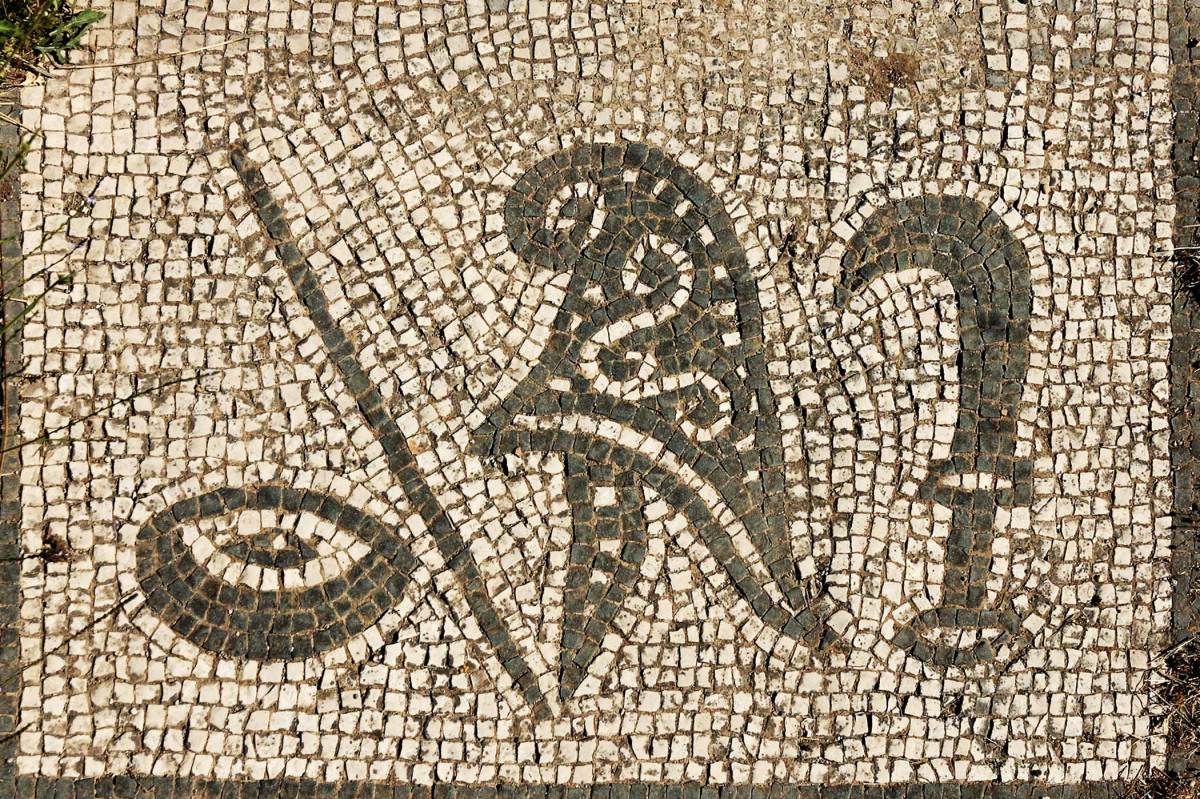
“I was here and this house was here, you and I and this evening were here, and they had always been here.”
— John Fowles, The Magus
I am halfway through my second try at The Magus. Assume that until I tell you otherwise I’m still in media res, and do not spoil the end. I’m halfway through The Magus; I’m technically nel mezzo del cammin di nostra vita; but I’m at the beginning of what feels like a spiritual journey — but a journey I’ve started before, with little success. One worries one starts too late in the evening to return home before dark; but maybe one isn’t supposed to return home, and maybe one shouldn’t mind the night.
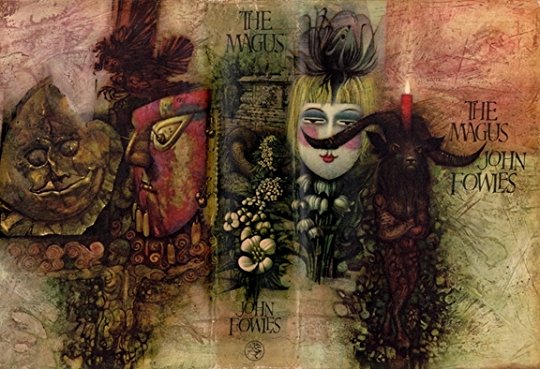
I read The Collector by Fowles first. If you’ve not, I’m definitely going to spoil things and your journey is your journey and maybe you don’t care about endings but maybe just this once, for this, give yourself the gift of Mystery. Anyway, any book worth reading is worth reading twice.
 Fowles is…I’m not sure what he is w/r/t religion. We’ll say he’s atheist until someone tells us different but please never tell me things because I am far too handsome at this point to learn. And yet, he’s deeply interested in concepts of free will and fate, of determination and destiny. Can they be reconciled? Should they? What if I finished this post in nothing but rhetoricals?
In The Collector, a man named Frederick abducts a woman named Miranda so if you were saving The Collector because it sounded like a cozy Charing Cross Road-type novel it is almost entirely the opposite except the room Miranda is kept in actually sounds pretty nice. She is ineffably beautiful to Frederick, whom she calls Ferdinand, because Fowles has read Shakespeare and wants you to know it. (He wrote it when he was 37, which is a little long in the tooth to be preening for praise with your allusions and et cetera but also notice how seamlessly I worked in a reference to Dante yes I am 46.) (Having made my jab at Fowles I want to go on record as saying the book is upsettingly perfect and you should read it and if you haven’t and you’re reading this then how dare you ignore my Very Good Advice.) While Miranda certainly despises Ferdinand for the kidnapping — as well she should — she also despises collectors in general. She sees art, in all its forms, whether manufactured or the art of nature, as communal, no more yours to do with as you want as it would be hers. Collectors keep things hidden away, or grandly allow what should be humbly proffered.
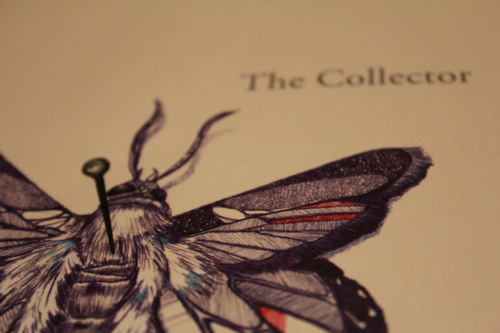
The main character of The Magus (I have no idea how to pronounce the title of the book, by they way, and neither do you, so don’t get those typing fingers ready to tell me. My friend Steve says it’s may-gus, which I hate. Someone else said it’s may-jus. I say maa-jus both because it doesn’t sound like maggot at all and because if it’s the plural of magi, then it should sound like magi and don’t you dare tell me how to pronounce magi either. Really: I am simply too attractive to know one more thing that I didn’t already start with) is a man named Nick and you can come to your own conclusions about him as a human being, because you were granted the gift of discernment by Hashem Himself, but if it is at all positive then I’ll need to rescind your gift because that’s my purpose on Mother Gaia. He’s entitled, much like Ferdinand in The Collector in the way both want to own women’s bodies. Though Nick is less kidnappy, that’s honestly damning him with faint praise. Nick falls under the spell of a man named Maurice (pronounced the French way, moor-reese) Conchis (with a soft, rather than hard, ch so it sounds like conscious which is clever but I only figured it out when I was saying his name aloud to my friend Steve on the 25th day of August in the Year of Our Lord, 20 and 18). Conchis lays out elaborate mind games for Nick, and Nick, when not being physically abusive to women, spends his time trying to peek behind the curtain.
It may be that, reading the books this close together highlights things that aren’t really highlightable, that I’m seeing connections where there maybe wouldn’t generally be.
I’m struck by the similarities between Miranda in The Collector and Nicholas in The Magus: both are in environments tightly controlled by someone else — Frederick and Conchis respectively. Both resist the opportunity to participate in the mystery before them. Both suffer. Miranda dies in the end, and Nicholas’s fate is still unknown to me and a man at Bible Study this morning was well on his way to spoiling the whole thing for me until I shushed him, but politely, because we’re Baptists, and shushing is next to holiness.
There’s an element of Flannery O’Connor* to this reading — the idea that there is something important and transformative in Miranda’s captivity — but I think it’s there. She is on the way to understanding herself and her relationships, with her family and the older artist with whom she had had an unsatisfying affair, and it’s the situation — her abduction and confinement — that is encouraging her self-reflection, which is something she had not done much of before. I mean, was she going to be magically let go if she had stayed and found herself fully actualized? Dude’s a kidnapper, so probably not. But then, maybe the answer key to this philosophical test says that if she truly understood herself and her decisions and her past, she would stay with Frederick regardless. But that also means that we’d have to see him, at the end, looking for another acolyte rather than another victim. Tomayto/tomahto.
[* I am going to write two Flannery O’Connor-based short stories. The first will be called “Flannery O’Connor’s Grand Day Out” and it will star my husband, Zach, who will take O’Connor on a pilgrimage of hedonism. The other will be called “Flannery O’Connor as Calvinist” and it will be short vignettes of domestic life where the protagonist dies in the end after either having a wonderful time at the party, or murdered while not thinking about how unworthy he is of God.]

Nicholas also fights against the mystery, and wants to be in control. Fowles is working back and forth between arguments for free will and arguments for destiny. This is encapsulated in that marvelous passage delivered by Conchis about 100 pages into the novel, and which I quoted above:
“I was here and this house was here, you and I and this evening were here, and they had always been here.”
This is echoed in other places throughout the book — most recently in the section I just finished where Nick and Alison are hiking the mountain. Nick feels, for a moment, as if he was always supposed to be on that particular mountain with this particular woman. He’s also hella horny and they fuck after swimming in a small lake and the thing about that is: it’s really none of my business.
Flannery O’Connor says, “All human nature vigorously resists grace because grace changes us and the change is painful.” Miranda is transformed, in the end, in her death. Will Nick be as gracious to the mystery?
Don’t tell me.
 How to Read: with Mike Bevel