Categories
Baptist Finding Gnostics God Introductions Seeking Seeking, Finding

Some Things What I Believe

When I tell you that I am a Gnostic Baptist, it’s not a lasting label. I haven’t been anything long enough to safely (and sagely) say, “THIS I BELIEVE,” with any sort of lasting conviction.

In a back-and-forth with my friend Steve, after calling myself a Gnostic Baptist, he wrote, “Gnostic Baptist suits your eccentricity. Would that mean the same thing as Know-it-all Fundamentalist?” And it a little bit hurt my feelings because it sounded dismissive, or that I had been caught in some sort of Divine Contradiction. Any time I feel challenged, I tend to respond negatively. I tried, though, this time, to be matter-of-fact:

(I can handle a little ribbing about my conversion. But I’d prefer it not to be entirely dismissive? My being a Christian is as weird to me as it must be to you, but I’m working on not rising to defensiveness and, ironically, I’m asking for you not to help me practice so much.)

* * * * *

As I’m prepping for my Wolf Hall lecture series, I’ve been thinking a lot about historical claims and what is “true” in history. I revere Dame Hilary Mantel above all other writers in the known/unknown universe, and I agree wholeheartedly with her stance: Historians tell us what we have — a book, a letter, a speech, a brooch — but that’s about all they can definitively tell us. They can’t always tell us why we have it. We’re all liars. We lie in letters, we lie in our diaries, we lie to each other. Any sort of looking back is done with an agenda more than with any hold on the slippery truth.

I’m still working on how to describe myself, religiously, if I’m ever asked. I haven’t broadcast this New Mike very widely. (I’ve stopped posting to social media. I found that I was using Facebook as a means of emotional gratification, so that I had, in a sense, trained myself to go to Facebook to feel good about myself and that seemed…unhealthy.)

Zach has been wonderfully supportive. He just wanted me to feel spiritually connected/whole in the way he does, and had no care at all how I got there. (He did reveal to me, later, that there were some anxiety attacks when he thought I was going Catholic, only because of his own experience with that church.) He’s also been really good at asking questions that help me better define things.

* * * * *

I thought I’d share some of my beliefs here:

  • I call myself a Gnostic Baptist because I’m pretty against orthodoxy. Were they kooks? Sure. They all were. But I like the communal practice that gnostics encouraged. I like that there is some heavy leaning on Eastern traditions. (One part of gnostic belief: the resurrection simply referred to Jesus’s experience of enlightenment, and that we all can be resurrected as each of us, in our own way, reaches enlightenment.)
  • I don’t believe in sin. Or, rather, I think we can sin against ourselves and each other by causing harm, but I don’t think God keeps any sort of score card that he balances when we die. I believe salvation is already guaranteed (and didn’t require Christ’s crucifixion; but more on that in another bullet), so our job on earth is really to care for each other. We do this not because if we care enough, or more than someone else, we will end up in a better part of the afterllife. We do it because it eases our own sense of suffering to do good for ourselves or someone else.
  • I don’t think Christ was crucified for us to be saved. I think he was executed for practicing radical politics that centered all the “others” rather than the status quo. (When I see you next week I’ll tell you about an EXHAUSTING Quaker Bible study I went to. I tried to explain my idea about sin and the crucifixion, and I tried to explain how I don’t believe sin exists. “No, sin exists,” I was told by a Very Young Woman who performs her faith more than she seems to live it. By the way, I was told a lot of things, but listened to rarely; it was as if two Wikipedias had trapped me in a Starbucks in Adelphi, Maryland, and I alone was there to hear too much. “It is translated as ‘missing the mark,’ like in archery.” And I said, “You can’t believe that Christ died because we kept not hitting the target in archery, right?” And she said, “That’s not what I said at all.”)
  • I think God is just an aspect of some sort of divine experience in which we all participate. My beliefs are no more correct — or wrong — than any other belief. It’s all ways of trying to understand and grapple with the ineffable. All beliefs are valid, but not all beliefs work for all people. I’m not a Catholic. I’m definitely not a Quaker. I like my radical Baptist pastor a lot.
  • I think the Bible shows a deity that is learning how to be a deity. Is learning how to love and be loved.
Categories
Baptist Finding God New Testament Seeking Twinbrook Baptist

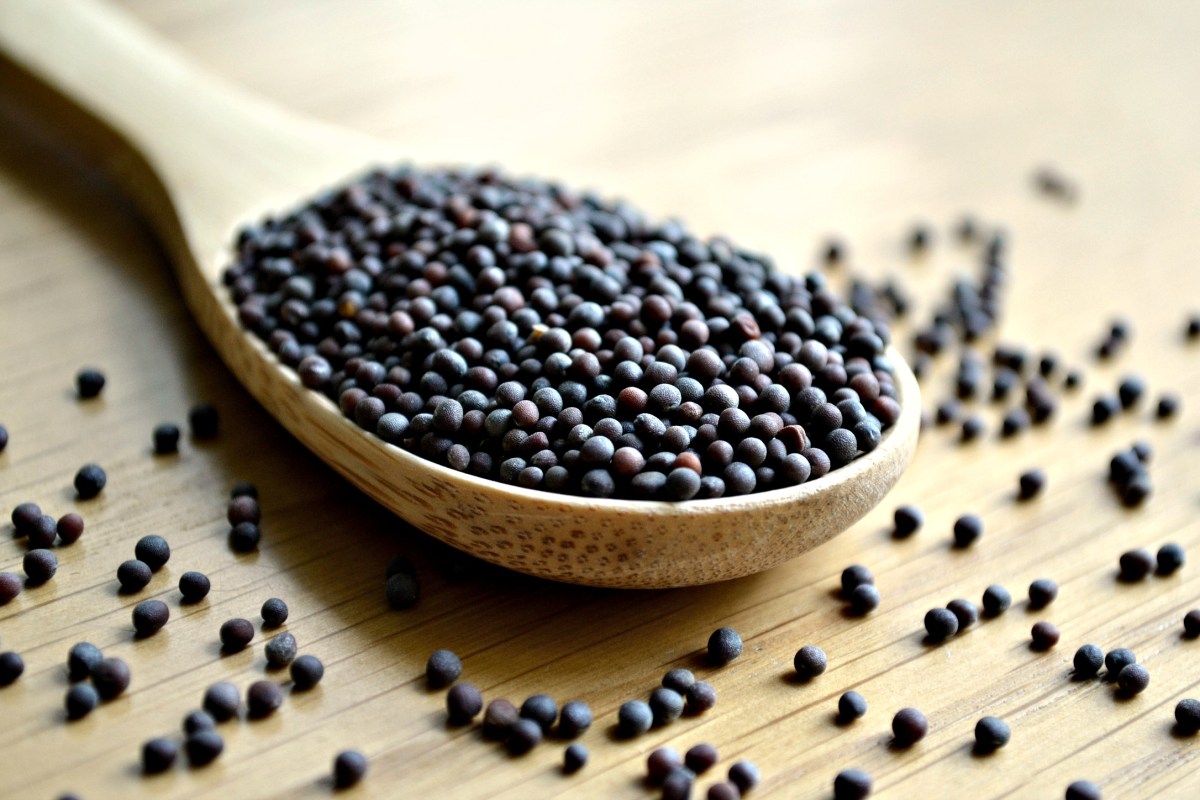
Mustard Seeds (26 August 2018)

Again he said, “What shall we say the kingdom of God is like, or what parable shall we use to describe it? It is like a mustard seed, which is the smallest of all seeds on earth. Yet when planted, it grows and becomes the largest of all garden plants, with such big branches that the birds can perch in its shade.”

— Mark 4:30-32

Zach is the one who found the Baptist church for me. I wanted more religion in my religion than the Quakers were able to offer, though I respect them greatly (but quietly). “The pastor is a woman,” he said, and that alone would maybe have been enough for me to give it a go — but she’s a queer(ish) woman who preaches a radical theology of unfettered acceptance. I didn’t want a quiet room echoing only our own good will. I wanted a loud roar of agreement.

God isn’t in the wind, or the earthquake, the fire, or the loud roar of agreement — I know that. But I know where God is, and I know what my heart needs, and these can be in agreement, and anyway it’s mine own, mine own, mine own.

* * * * *

The day before I visited Twinbrook Baptist, I talked to my mom on the phone. She is 73 years old, thick in the muddle of Alzheimer’s. She mostly knows who I am; it’s the when I am that gives her trouble. Sometimes my brother and I are little kids to her, but actual, not in the way all parents always see this own offspring as children. Sometimes I’ve died. She was rarely kind to me, not necessarily out of any sense of malice; instead, out of a sense of just not knowing how. Her life provided few, if any, clear models of lovingkindness.

So the day before I visited Twinbrook Baptist, I talked to my mom, about how much my brother and I sound alike. About how some cat treats a friend sent gave Little Baby Fosco horrible diarrhea. (She laughed hard and long at that.) How beautiful the weather had been — so nice that for two days I was able to keep the windows open in the house. “Which helped,” I explained, “with the cat having diarrhea everywhere.” She laughed even harder. My mom, now in the dimness of her memory, has the sense of humor of a 14-year-old boy.

At the end of the call, when we were saying goodbye, she said, “I wish you’d come out and visit soon.” And then she said, “I hope you have a beautiful life.” And it wrecked me.

* * * * *

Mustard seeds are small, stubborn, and selfish — which are also words one could use to describe me, as long as you also whisper “petty” under your breath, too. In the Parable of the Mustard Seed, we’re told that faith as small as this can, if tended, if noticed and cared for, can provide shelter. My mother, saying, “Have a beautiful life,” when that isn’t the story I have ever told myself, or others, about my mother’s love for me, was a shattering and obliterating piece of love and forgiveness — given and asked for — when I wasn’t sure I deserved it at all.

Depending on how you work your faith — if you have it, if you don’t, if you believe in Divine Guidance, or if you’re happy with the serendipity of chance — I’ve room for all of it. But I do think I was meant to be at that church on that day for that sermon. My own faith is easily as small as a mustard seed.

* * * * *

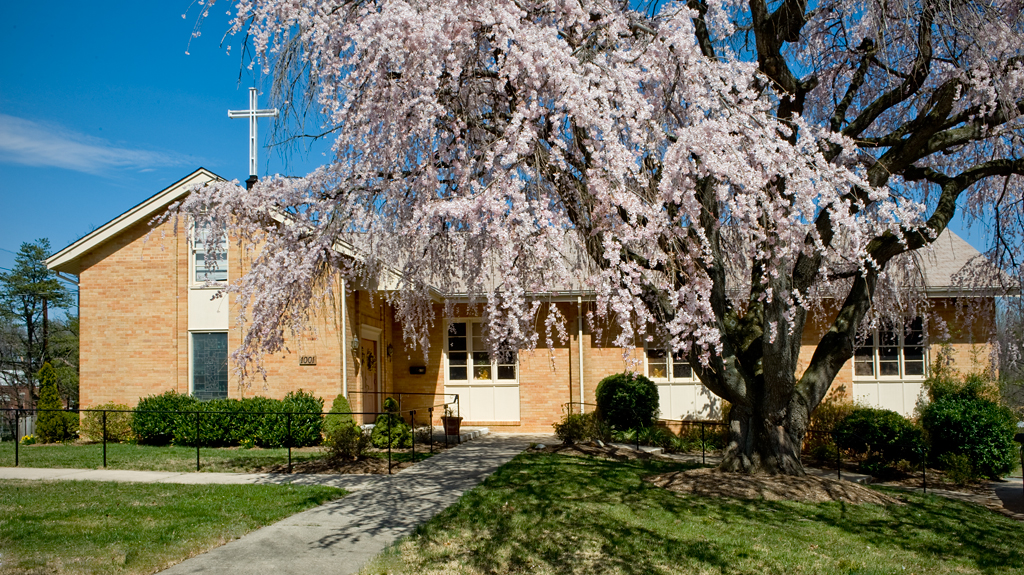
I began this current iteration of a Spiritual Journey back in late October/early November of 2017, when I reached out to a Catholic church near me, because I thought I was being called to that form of worship. (I was not.) I flirted, briefly (and embarrassingly), with Santeria, because I wanted form and ritual without having to also swallow a lot of what felt like popish nonsense to me. (I am sorry, Catholics who are fellow travelers on this journey, too. I don’t feel it’s as much nonsense now as it is just Not for Me.) I tried Quakers, which felt, if not entirely right, right enough at the time to get me used to the idea of regular church attendance. And then, in a Baptist church not 10 minutes from my house by bike, Pastor Jill shared the Parable of the Mustard Seed, and I felt my own mustard seed crack in my soul.

Pastor Jill connected mustard seeds and faith to the news that Twinbrook Baptist would be closing for good at the end of the year. (Try as hard as she could, the Old Guard parishioners were not interested in growing and developing within Christ; but, instead, wanted what was comfortable and affirming to what they already believed.) And then she shared that the proceeds from the sale of the church/land — some $1.3 million — would all be distributed to other affirming and like-minded churches, as well as social service endeavors. None would be kept by the church. In its dying, the church sends seeds and runners out into the world to grow goodness and wholeness as much as it can.

* * * * *

My faith isn’t large enough yet to harbor birds (but our house does, and it brings me joy and the cats something to look at that isn’t each other or the ghost that I am sure haunts the upstairs); but it’s growing.

Categories
A Church in Four Months Baptist Twinbrook Baptist

A Church in Four Months

My church is dying. By the end of this year, it will close forever.

As a new parishioner, and newly (re)Baptist, I’ve started taking notes of each sermon given by the incredible Pastor Jill McCrory, with the idea of writing essays for each one.

My church is dying at the same time I’ve completed hospice training, which is grimly synchronous and also a gorgeous way for me to put my training into practice. In the first essay for this series I’ll talk more about the afterlife of the church; what is being planned with the proceeds from the sale of the church is a part of what convinced me that this is the best place for me to be, right now, in these final four months.

We’ll start with the Parable of the Mustard Seed. And we’ll end by not ending.

  1. Mustard Seeds (26 August 2018)
  2. Vineyard Workers (2 September 2018)