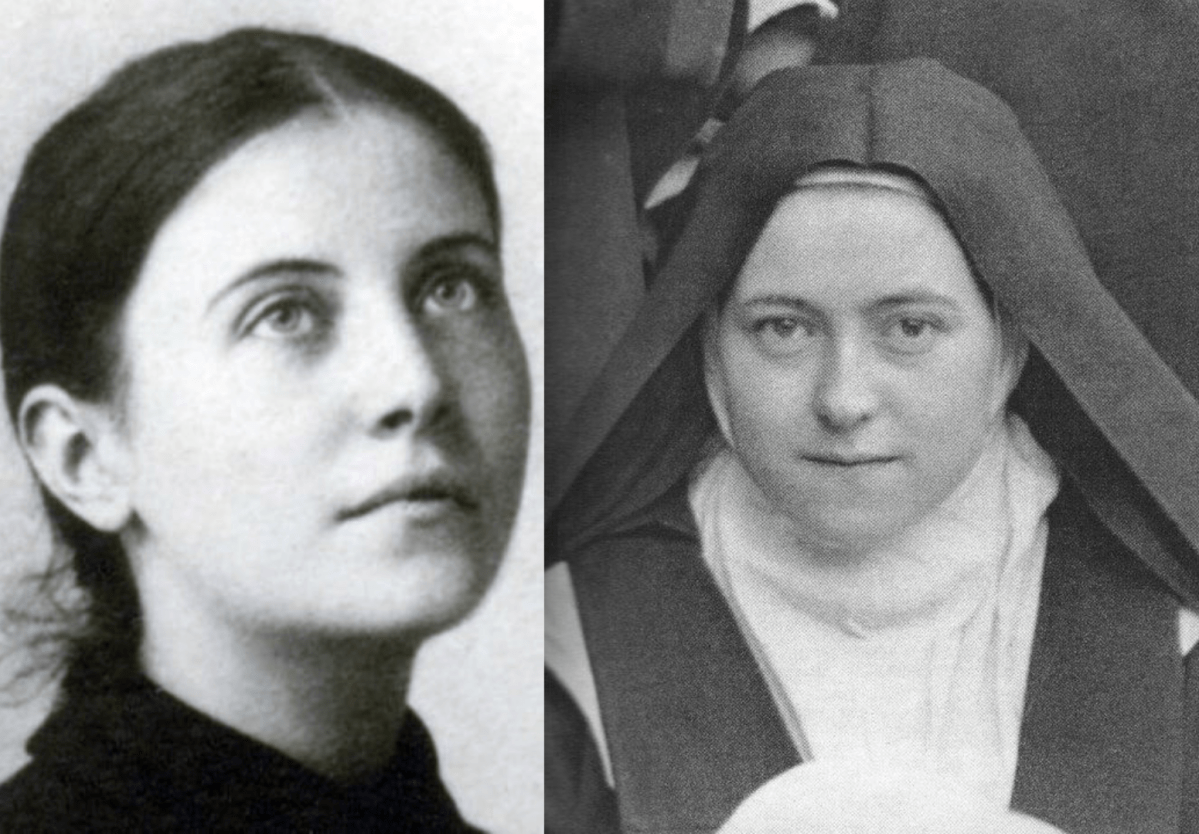
In a collection of reviews by Hilary Mantel (the best writer in the history of all languages, spoken, unspoken, yet to be spoken, never to be spoken), this passage is really worth our time, especially in relation to the ways in which we do and don’t believe.
[Background: She’s reviewing a biography of Gemma Galgani, a woman made a saint in 1940. (Mantel also considers a bio of Thérèse de Lisieux.) It’s an alchemical process, this refining and transmuting of the soul until all it can be is the golden nature of God at work in the world. And, as happens with alchemy, there’s violence to the material; saints flock to mortification as lambs to slaughter. (“Eustochia of Messina stretched her arms on a DIY rack she had constructed…St Angela of Foligno drank water contaminated by the putrefying flesh of a leper.”)]
At the heart of Bell and Mazzoni’s endeavour is an understanding that a phenomenon may retain spiritual value, even after its biological and psychological roots have been uncovered. To describe the physical basis of an experience is not to negate the experience, as William James pointed out long ago. But now that neuroscience has such excellent tools for envisaging and describing the brain, we are tempted to accept descriptions of physiological processes as a complete account of experience. We then go further, and make value judgments about certain experiences, and deny their value if they don’t fit a consensus; we medicate the mysterious, and in relieving suffering, take its meaning away.
“The Hair Shirt Sisterhood,” London Review of Books (4 March 2004)
The question of meaning in suffering naturally springs to mind; through a glass compassionately, the question may even feel necessary. We don’t want to see someone suffering needlessly, and we especially don’t want to see someone suffering for something we’ve cataloged as nonsense. We don’t see our own values as subjective when we feel we have the additional authority of, say, science, or data, behind it.
I think this sentence in the passage quoted above is especially useful: “[A] phenomenon may retain spiritual value, even after its biological and psychological roots have been uncovered.“
For this next trick, I’m going to relate dementia with demonic possession. Now, we’ve never met before, right?
A “controversial” therapy for people with dementia is acceptance. (“Controversial” because there are some professionals who feel it’s unethical to lie, especially to someone whom we’ve categorized as vulnerable, in any situation; that truth somehow has a moral component to it that necessitates its primacy.) Rather than challenging someone about their experience — they tell you that they went to a wedding today; you know that they’ve never left the house — you accept the experience. “I bet it was a beautiful ceremony,” you might say. “What did you eat? What did the groom wear? Were they cheap or did they spring for an open bar?” The truth, in this case, doesn’t matter. It’s the belief that matters. And besides, that wedding is as true for the person with dementia as the fact that they’ve not left the house at all is true for you.
Which is why exorcisms actually (sometimes) work? We won’t get into whether or not a literal demon was expelled from a human body. But if your frame of reference and your system of belief includes the chance for evil spirits to inhabit a person, working with them to not believe that is not your job and robs the person of their experience of the world. It doesn’t have to be your experience for it to be valid. And it doesn’t have to be true to be believed. So exorcisms ::do:: bring relief to some people. (And medical surgeries can backfire and people are allergic to all matter of serums, treatments, unguents, and the like. There’s no treatment with a 100 percent success rate except abstinence.)
Exorcisms also will spectacularly not work*. Those tend to be the cases that make it into various media with their accompanying criminal charges. In Germany, in 1976, Anneliese Michel’s parents and priest were charged with negligent homicide when Michel died under exorcismic care. The state alleged Michel died of malnutrition and dehydration, sanctioned by her parents and priests. Her parents and priest averred that her symptoms were demonically caused, and that because of the lengthy exorcism, she died free of possession. The prosecution relied on Michel’s diagnosis of epilepsy and accompanying mental illness. The defense introduced tapes of the exorcisms where demonic voices can be heard among the rites and screams.
[* In the 21st century, exorcisms in Sri Lanka, America, New Zealand, and Romania, among a host of others, ended with the death of the possessed person. And while that is interesting, if you’re interested, it is also worth paying attention to the fact that women, more than men, die during these rites that span religious practices and beliefs. Men, more than women, use demonic possession as a defense in criminal trials and explanations for their actions.]
In America, the number of preventable deaths of hospitalized patients range from 22 thousand at the low end, to as high as 250 thousand. (A doctor named Benjamin Rodwin challenges the high numbers in a 2020 paper, “Rate of Preventable Mortality in Hospitalized Patients: a Systematic Review and Meta-analysis.“) Numbers for preventable deaths of possessed people are not tracked in any systemic way, though one would imagine those with an interest in medical data would put the number at 100 per cent. Exorcisms, unlike hospital visits, rarely leave a paper trail, however, so a true analysis of these data is unlikely.
But medical care in hospitals remains popular, even with the risk of death and infection. Similarly, exorcism remains popular with believers because, for the most part, exorcisms work. How they work is, of course, where differences will crystalize. And we find ourselves back where we started, with the word “truth” sitting uneasily next to “belief,” which has taken its shoes off and is eating something obnoxious. Truth has no value in these questions, because these aren’t questions of truth, and both sides are very sure that what they’re doing is truthful. What does have value is the belief, and what we’re left with is the question of a person’s dignity, a person’s autonomy, and a person’s right to believe seven impossible things before breakfast.
Each of us lives within a context equal parts our own making, and forced on us. It is impossible even to definitively declare what is self-directed and what is the only avenue left because of social circumstance. Middle and upper class women in the 19th century fainted with an alarming frequency not necessarily because their corsets were too tight, or the air was bad, or their diet too rich (though all those things could absolutely be true). Fainting and illness was a means of controlling their own narrative. Unpleasant conversation, unpleasant news, unpleasant circumstances offered wonderful opportunity for a swoon in a puddle of whalebone and crinoline. (Working class women and dairy maids fainted far less because who would do they work if they did? Illness is a vacation afforded only to the well-to-do.) Men writing in the early to mid 20th century were so worried about the appearance of emasculation — so many men had gone to war and died heroes, or gone to war and returned heroes — that they overperformed masculinity to the point where Norman Mailer confused a knife with his penis and stabbed his wife. Twice. Even if there is something that exists called “better behavior,” it would be a challenge to enforce without significant changes to the underlying social conditions and pressures. As the philosopher Abigail Thorn says, even if one performed better behavior perfectly, one would still be performing it within a context that privileges one type of experience and expression over another. And when an individual exists within contexts that are not of their creation, what authority do we have to tell them that what they are doing is wrong?
Gemma Galgani dissolved into religious ecstasy with a regularity that allowed her sister to bring friends home to watch. She bled from her hands and feet and her aunt complained about the stains. The context that made sense to her was one of religious suffering; this is what she knew her purpose to be. Priests tend the flock, saints protect them, and religious ecstatics “drink pus from cancerous sores” (as Catherine of Siena did), lick the floor in cross-shaped scrapes of the tongue until it bled (Bartolomea Capitanio), or die of starvation to satiate the poor (Margaret of Cortona — and before you judge Meg, consider the effectiveness of any number of programs designed to feed the hungry). Within their own context and within their own words, they were not coerced into these actions, except coerced by a deep love for God. “Many Theresas have been born who found for themselves no epic life wherein there was a constant unfolding of far-resonant action,” George Eliot writes in Middlemarch. If one does find an epic life for oneself, who has the authority to deny that calling?
The religious context rubs a blister against the rational context, and the rational context thinks only of its blister, and how to treat it. It doesn’t matter which is true; it should matter which is believed.
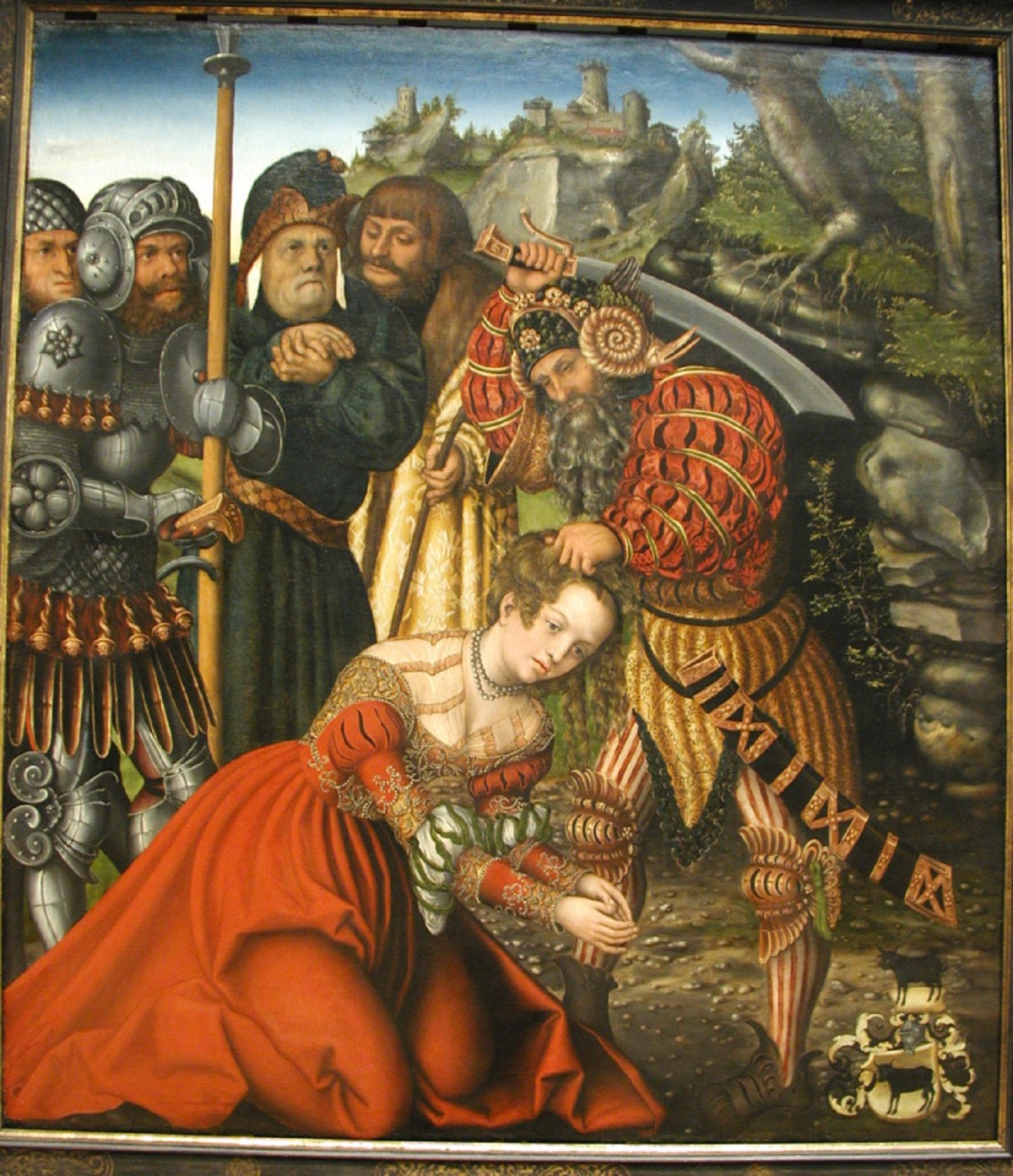


 Dioscorus had kept Barbara rapunzeled away in a tower with two windows, but she added a third, because she loved the Trinity. He tried to kill her, once, in the tower, after she had professed her Christian devotion, but she was magicked away by her prayers to a mountain gorge, surprising two shepards and their flock.
 How to Read: with Mike Bevel