Categories
Belief God Old Testament

Genesis 1:6-8 | What Does it Mean to Be Good?

God said:
Let there be a dome amid the waters,
And let it separate waters from waters!
God made the dome
And separated the waters that were below the dome from the waters that were above the dome.
It was so.
God called the dome: Heaven!

— Everett Fox, The Five Books of Moses

What does it mean to find something good? I hadn’t even really thought about that question at all until I realized there are three places where God isn’t pleased. Not angry, necessarily, but not announcing that “it was good” either.

On the first day (Gen 1:3-5), when God separates the light from the darkness — (by the way, I am sure that there are a frillion midrash stories from old rabbis that have made this point; I also can’t be sure that I came up with this point all on my own; it’s possible I read it somewhere and it germinated in the back of my conscious) — that doesn’t get a corresponding “and it was good.” There’s an “it was good” for the creation of light (Gen 1:4), but no “it was good” for separating.

On the second day, God separates waters from waters, and this is also not labeled as “good.” Here, we get a perfunctory “it was so.”

On the sixth day God creates humans, separated into male and female. The humans are blessed (Gen 1:28) — but that’s not the same as being called “good,” is it? Because God sees that “the wildlife of the earth after their kind, and the herd-animals after their kind, and all crawling things of the soil after their kind” were good (Gen 1:25); humans, though, are not singled out for goodness, only a blessing. Their lives are about to become impossibly hard, with a final separation of human from garden.

I think it’s the act of separation that’s being commented on, obliquely, by shrugging a little out of the “good” light and into the “doing your best” column. Separation is not creation.

Categories
Belief God Old Testament

Genesis 1:1-2 | Something Out of Something

At the beginning of God’s creating

of the heavens and the earth,

when the earth was wild and waste,

darkness over the face of Ocean

— Everett Fox, The Five Books of Moses

Fox in a footnote says that this is an example of “God bringing order out of chaos, not creation out of nothing.” (Cf n 2, p 13)

Creation out of nothing has been a frequent argument used by atheists — or “people who exhaust me at any party” — to explain the alleged (dare I use the word) jejune philosophy and cosmology of Genesis. “How can something come from nothing?”

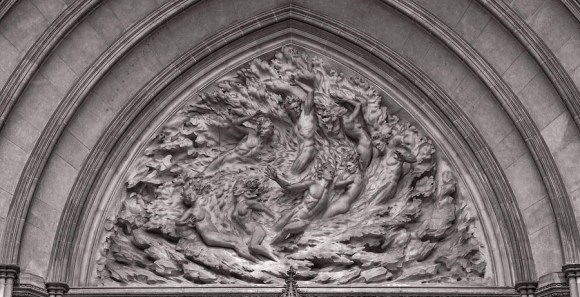
cathedral-ex-nihilo-susan-isakson.jpg

(Jejune is one of those words I read when smart people write and I think I’m using it correctly, but maybe you’ll gently correct me in the comments if I meant some other word entirely.)

This isn’t helped when theologians and Bible scholars use phrases like ex nihilio — a fancy, Latinate (?) way of saying “out of nothing” — to describe what the Bible itself doesn’t say. This isn’t creation out of nothing, and we might misread the Bible if we think of creation in this way.

It can be a translation issue, too. Fox’s translation gives us an earth that exists, but is an unorganized wild waste. The King James, New Revised Standard Version, and the New International version all use some form of the phrase “formless and void” (or “empty” or “without form”). And it’s those translations that have fed this orthodox idea of creation ex nihilio.

(“Orthodox” is a key idea here. Just because something is orthodox doesn’t make it immediately suspect, just like radical readings of the Bible also have value. I’m using “orthodox” in more of a “received wisdom” way; but the Bible is for reading and interpreting.)

But we have a chance to read this passage differently. It’s order out of chaos. I almost want to say that order out of chaos represents a moral universe; however, when we get to Eve’s temptation (Gen 3:1-6), I think something else is being said about aesthetics and morality, and order out of chaos has the objective trappings of aesthetics. Order isn’t necessarily moral.

We’re left, though, with creation out of something: out of the wild and waste. Out of Ocean*. Out of whatever darkness is. We have to be willing to read with new eyes.

[* Fox notes (n 2, p 13) that Ocean, capitalized, could refer to a “divine image” of the primeval waters. It’s also useful to note that when god separates waters so that land and water are separated, he calls them seas, rather than Ocean, because he does not want to recognize/invoke another deity. This is also why the Bible uses the clumsy designation “greater light” and “lesser light” rather than Sun and Moon. Those words, in Hebrew, are the names of deities, and the Bible wants to impart a monotheistic vision.]

Categories
A Church in Four Months Baptist Belief God New Testament The Bible, KJV The Bible, NIV

The Vineyard Workers (2 September 2018)

The Parable of the Workers in the Vineyard (Matthew 20:1-16)
“For the kingdom of heaven is like a landowner who went out early in the morning to hire workers for his vineyard. 2 He agreed to pay them a denarius for the day and sent them into his vineyard.

3 “About nine in the morning he went out and saw others standing in the marketplace doing nothing. 4 He told them, ‘You also go and work in my vineyard, and I will pay you whatever is right.’ 5 So they went.

“He went out again about noon and about three in the afternoon and did the same thing. 6 About five in the afternoon he went out and found still others standing around. He asked them, ‘Why have you been standing here all day long doing nothing?’

7 “‘Because no one has hired us,’ they answered.

“He said to them, ‘You also go and work in my vineyard.’

8 “When evening came, the owner of the vineyard said to his foreman, ‘Call the workers and pay them their wages, beginning with the last ones hired and going on to the first.’

9 “The workers who were hired about five in the afternoon came and each received a denarius. 10 So when those came who were hired first, they expected to receive more. But each one of them also received a denarius. 11 When they received it, they began to grumble against the landowner. 12 ‘These who were hired last worked only one hour,’ they said, ‘and you have made them equal to us who have borne the burden of the work and the heat of the day.’

13 “But he answered one of them, ‘I am not being unfair to you, friend. Didn’t you agree to work for a denarius? 14 Take your pay and go. I want to give the one who was hired last the same as I gave you. 15 Don’t I have the right to do what I want with my own money? Or are you envious because I am generous?’

16 “So the last will be first, and the first will be last.”

Matthew is the only one who tells this story. There aren’t enough demons in it for Mark; Luke, the tax collector, could never wrap his head around the message; and if anyone ever figures out what John is saying every moment that he says it please never tell me my heart thrills for mystery.

* * * * *

This Parable of the Vineyard Workers invites us to imagine being paid the same wage for one hour’s worth of work as someone working eight hours. (It also invites us to really pay attention to contracts.) Matthew’s radical message, delivered by Jesus, is that the reward is the same for the person who has made a life-long profession of love for God as it is for the person who has only made an hour’s worth of profession. It is radical communism. And it’s upsetting.

(Pastor Jill brought the parable up to modern times, relating about an early job experience where, as a young professional with no family and no calls on her time, she was able to work long hours. She learned, however, that a colleague performing the same job function as Pastor Jill, who was also a single mother, with two kids who needed ferrying to school and then to whatever kids do after school, was paid the same amount for fewer hours. And what never occurred to Pastor Jill, or even to the people who promoted her for her performed extra work, is that unaccounted labor a single parent has to provide. All labor should be compensated.)

I think the parable wants us to get comfortable with the fact that Jesus spends most of his limited time on earth concerned — and getting others to be as concerned — with how we love our neighbor, rather than with, “Am I getting into heaven? Have I done enough? Is there a chance I could be found wanting?”

You cannot be found wanting. Heaven is already guaranteed. If we wipe all that accounting off the recknoning board, we’re left wondering, “Then why do any good works? Why should I care about what happens to anyone else within my sphere of even limited influence?” And you do it because not doing good (never mind if you are good) will cause you suffering. You can say, “Mike.” You don’t have to believe what I believe. “You do not have to walk on your knees for a hundred miles through the desert repenting.” But you should do goodness and give lovingkindness because it is good for your soul. Because not only is it decreasing your own suffering, it is decreasing the suffering of another human being. Because Jesus tells us to love our neighbor as he has loved us.

* * * * *

053_edit
Peter Singer

The utilitarian philosopher Peter Singer argues that $30k a year is actually sufficient for anyone to live on; we just happen to be in a paradigm where millionaires control a lot of our well-being. Everything over $30k should be donated to social service networks and given directly to the poor.

This is a terrifying prospect for many to grasp. It puts us all at the same risk for needing assistance from time to time. But why is that seen as a weakness? Why isn’t our need a gift for those who have? Why are we unwilling to be humble and accept grace and charity? Why do we only feel as if we can give if we have extra, when what is expected is that we’ll give because it is needed. Think of any canned food drive you’ve ever participated in and consider what you donated. It was likely food you yourself weren’t all that crazy about eating. Was that an act of charity? They’ve likely been hungry longer than you’ve been hungry. How will you work out this moral calculus?

* * * * *

Whirling_Dervishes_courtesy_The_Dialog_Institute_web_t670
Whirling Dervishes

There’s a poem, attributed to Rumi, who is the Abraham Lincoln of Sufi mystics in that too many things get tagged with his name when he may or may not have actually said it. (He’s like Jesus and Paul in that way, too.)

Come, come
whoerver you are
wanderer
worshippper
lover of leaving
it doesn’t matter!
Ours is not a caravan of despair.
Come, even if you have broken your vows a thousand times.
Come.
Come yet again.
Come.

That’s what the Parable of the Vineyard Workers is teaching us: even if we have broken our vows a thousand times, we are as worthy and deserving of God’s love the thousand-and-first time as we were at the beginning. Even yet again.

Categories
Belief Finding God Old Testament Seeking

When Your Cat May Also Be God

20170122_224258_001

you say “more?” and he says “yes” and then you say “even more?” and he says “yes” and you say “i have no more left” and he says “yes” and you say “but i cannot stop?” and he says

yes

Categories
Baptist Belief Finding God New Testament Old Testament Seeking

Universal Salvation, Universal Love

I asked my pastor last night, an amazing woman named Jill McCrory of Twinbrook Baptist, what her most radical belief was w/r/t God and the Bible. She said, “Universal Salvation. We’re all saved. All of us.”

I said something similar a couple of days ago — that I don’t believe in sin, or I don’t believe in sin used as a weight against which we’re measured. And I wanted to write a bit more about that, because so often I better understand my own thinking when I’m ironing it out in print. So.

* * * * *

We are all saved. We were actually born already saved. All of us. Even the worst person you can imagine. Even that worst person. (Where I’m still working is: how necessary was Christ’s crucifixion? Is that the mechanism of salvation? Or can I rely fully on the idea of a loving God not hating any of his creation so much that he would send them to a place of permanent and utter torment? I mean, as I’m further and further into this parenthetical, I think I’m leaning more towards the “Loving God” side of the equation over the “Christ Died for Me” version.)
M.-Scott-Peck

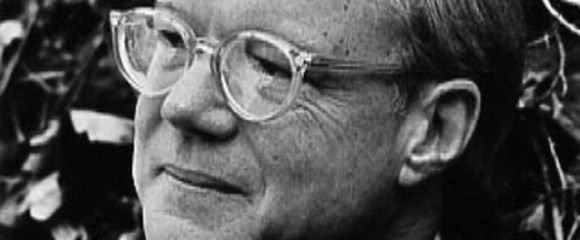
Sin isn’t something God keeps an account of; it’s something we commit against ourselves and each other. In M. Scott Peck’s People of the Lie, he shares a shattering anecdote about a patient he was treating in private practice.

“What did you get for Christmas?”

“Nothing much.”

“Your parents must have given you something. What did they give you?”

“A gun.”

“A gun?” I repeated stupidly.

“Yes.”

“What kind of gun?”

“A twenty-two.”

“A twenty-two pistol?”

“No, a twenty-two rifle.”

There was a moment of silence. I felt as if I had lost my bearings. I wanted to stop the interview. I wanted to go home. Finally I pushed myself to say what had to be said. “I understand that it was with a twenty-two rifle that your brother killed himself.”

“Yes.”

“Was that what you asked for for Christmas?”

“No.”

“What did you ask for?”

“A tennis racket.”

“But you got the gun instead?”

“Yes.”

“How did you feel, getting the same kind of gun that your brother had?”

“It wasn’t the same kind of gun.”

I began to feel better. Maybe I was just confused. “I’m sorry,” I said. “I thought they were the same kind of gun.”

“It wasn’t the same kind of gun,” Bobby replied. “It was the gun.”

“The gun?”

“Yes.”

“You mean it was your brother’s gun?” I wanted to go home very badly now.

“Yes.”

“You mean your parents gave you your brother’s gun for Christmas, the one he shot himself with?”

“Yes.”

* * * * *

hyperliteratura-flannery-o-connor-headerSin and evil are human creations. They break our spirit, break our heart, break our will  — but they do not deny us any of the love of God. My belief is, God is utterly incomprehensible except for two things: he only wants to give love, and he only wants to receive love in return. I think, when we meet God in Heaven, wherever Heaven happens to be, some of us are going to be overjoyed, and some of us are going to be embarrassed or even hurt a little, at first, that people whom we were awful to, because we thought we were better Christians than they were, or better people than they were, are there, in God’s glory. We’re all a little like Mrs Turpin in Flannery O’Connor’s short story, “Revelation”:

At last she lifted her head. There was only a purple streak in the sky, cutting through a field of crimson and leading, like an extension of the highway, into the descending dusk. She raised her hands from the side of the pen in a gesture hieratic and profound. A visionary light settled in her eyes. She saw the streak as a vast swinging bridge extending upward from the earth through a field of living fire. Upon it a vast horde of souls were tumbling toward heaven. There were whole companies of white trash, clean for the first time in their lives, and bands of black niggers in white robes, and battalions of freaks and lunatics shouting and clapping and leaping like frogs. And bringing up the end of the procession was a tribe of people whom she recognized at once as those who , like herself and Claud, had always had a little of everything and the given wit to use it right. She leaned forward to observe them closer. They were marching behind the others with great dignity, accountable as they had always been for good order and common sense and respectable behavior. They, alone were on key. Yet she could see by their shocked and altered faces even their virtues were being burned away. She lowered hands and gripped the rail of the hog pen, her eyes small but fixed unblinkingly on what lay ahead. In a moment the vision faded but she remained where she was.

Ruby Turpin’s revelation is what Hell is, but it’s not forever. It lasts as long as we fight against loving everyone, against lovingkindness. So, Universal Love and Universal Salvation are where I feel God’s presence the most.

* * * * *

icm_fullxfull.170191212_fo7g5gimg7c4gw8o8wso

A woman named Susan is binding a Bible for me, with my favorite quote about grace from Flannery O’Connor: “All human nature vigorously resists grace because grace changes us and the change is painful.” I asked her what her most radical theological belief is, and she says, “Oh boy, I’m not sure I even have a radical theological belief. Perhaps it is more of a hope. I sure do hope that all of the babies that have been aborted are with Jesus. My belief is that they are – same for those who have miscarried. I’m believing my grandchild who never saw the light of day on this earth is in heaven with Jesus. That gives me comfort.”

I want to say to Susan, “Your grandchild is with Jesus. And all the babies, too. And all the women who died from botched abortions because they weren’t legal and safe. And all the fathers who couldn’t get it together to be present. And all the children who ignored their parents. And all the parents who hurt their children. Everyone gets to be in the Kindgom of Heaven. The last, first; the first, last.”

All of us.