I missed yesterday, but one of the martyrs was Saint Jason and that took a lot out of me, emotionally. We’re peak goyische here, Saint Jason.


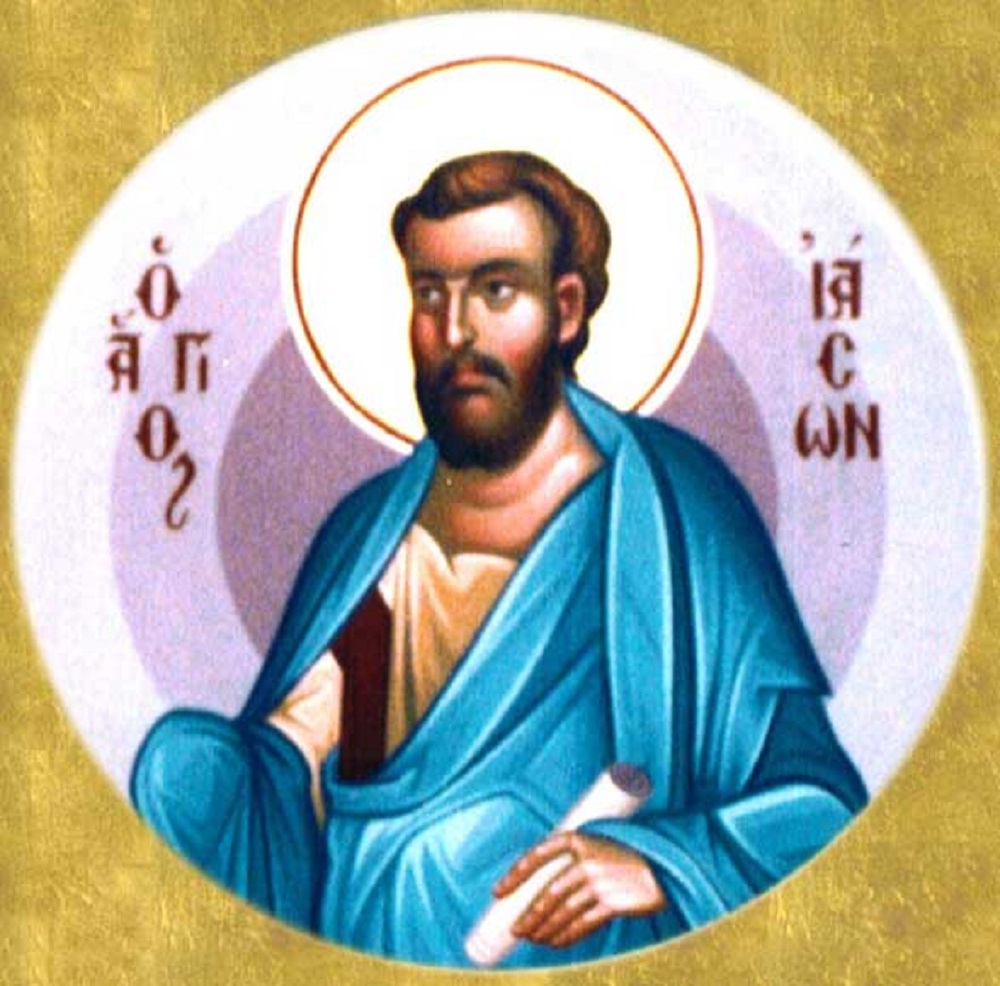
I missed yesterday, but one of the martyrs was Saint Jason and that took a lot out of me, emotionally. We’re peak goyische here, Saint Jason.

It can be tough to keep up with Bibiana’s mother’s head.
In one story, she, Dafrosa, keeps it, squarely on her shoulders, where one expects a head to be. She dies, as happens, how, we don’t know, and Bibiana buries her inside their house, next to the body of her sister, who died too. After being martyred, Bibiana is also buried in the house, next to her mother and sister, so that now the house is too full of corpses and it will be tough to sell, one would imagine, to a family interested in a finished basement.
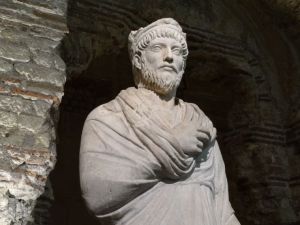
In another, however, Bibiana’s mother is beheaded after her husband is sent into exile, all over something as silly and important as Christian belief. (Julian the Apostate is behind all this buttoning and unbuttoning; in any story about Bibiana he is the one constant. He was a pagan, “but in a cool way, like, intellectually, not just a guy with runes who likes to recycle.”) Dafrosa is beheaded, and Bibiana and her sister Demetria are stripped of everything but their own hunger and their own virginity — which is more than a little at a time when virginity oh who am I kidding, virginity holds its value even up unto today.
Both Bibiana and her sister are dragged before Julian to repent of their devotion to the One True God, but they don’t. Or can’t, both are starving and can barely stand in front of the crowd. Demetria gasps out her love of Christ, and dies immediately afterwards, so no sainthood for her, since death came too easily.

It gets worse for Bibiana:
A lesbian named Rufina attempts to seduce her, moves on to beating when seduction won’t work, before finally sending her to be scourged to death by a whip with lead plummets.
(We’re told a man named Apronianus, whom Julius named governor, lost an eye, one assumes carelessly, I mean, how could it happen, save through sheer unwatching, but nevertheless and blinded in one eye it was Apronianus who began the Christian persecution, confusing them with witches, because of the power of prayer.)
Bibiana is the patron saint of hangovers.
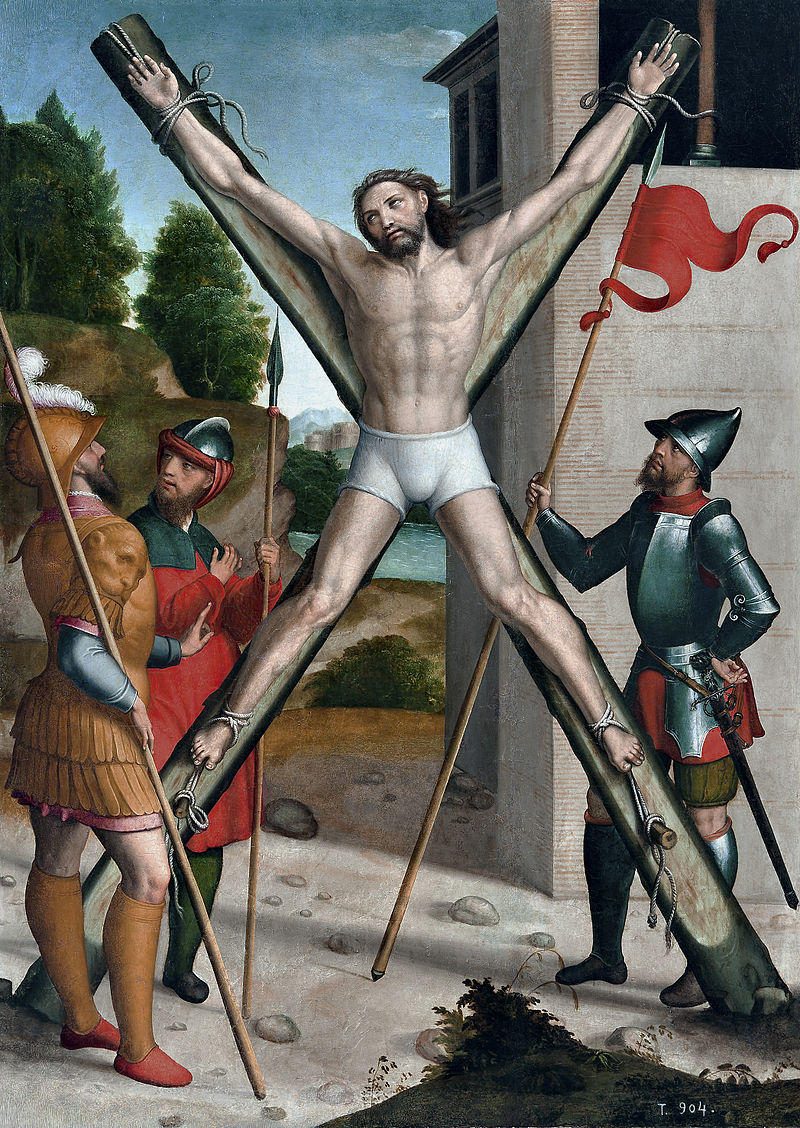
Pieces of Andrew are spread all over, like morsels of bread that guide us somewhere. Some of his bones — a pinkie, the top of his cranium — are in Greece, along with bits of the cross on which he was martyred. Some of him found their way to Italy, in the Amalfi Cathedral, after a sojourn in Constantinople. Maybe the Empress Helena had them gift wrapped before sending them off, though even more likely is that towards the end she was sick of saints’ bones rattling around the imperial treasury, croaking in the way bones do, about where they’ve been and what they’ve suffered. And Andrew suffered so much.


A man named Regulus took to sea with a kneecap, an upper arm bone, three fingers and a tooth, presumably St Andrew’s, though how could he know? Regulus dreamt once to hide Andrew’s bones, and then dreamt again to sail with them, as far West as he could go, “to the ends of the earth,” which ended up being Fife, as seemed only fitting, where he was shipwrecked, there being little else to do in Fife. The dream instructed Regulus to build a shrine to Saint Andrew, so he did.
Sometimes there are always baths, always baptisms.
The nereid Thetis dipped her son Achilles into the river Styx, but only up to his heel, but only upside down, and he was a Good Strong Son until he wasn’t.
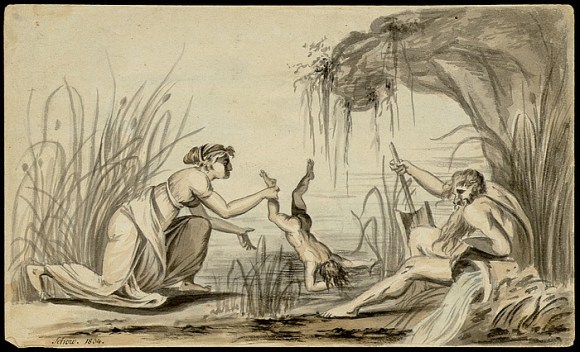
(Achilles, whom we’re not interested in, as far as this post goes, is older than he knows, and probably started as a minor river deity before he settled into the lover of Patroclus. Achilles’ name echoes Acheron, one of the five rivers in Hell, and echoes Achelous, demoted from God of All Waters to simply a river spirit, but we should think on him sometimes as we think on ozymandiously of those who withered before us.)
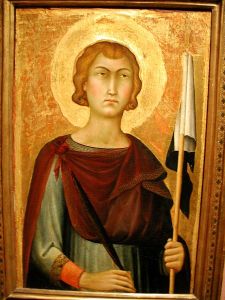 Maxima, a Roman nurse, probably a slave, but a Christian, secretly baptized her charge, Ansanus, dipping him, like bread into an eggwash, in the God-rich waters of a river, sealing God’s love and holiness within.
Ansanus, later, and heedlessly, the way all good saints do, professed his Christ’s Love so loudly in the last days of the Diocletianic persecution that there was nothing much left to do but arrest and execute him. He implicated Maxima, old Maxima, in his passionate joy and she, who cared for him so dearly, died dearly, too. She watched him scourged, skin flaking like a pastry, before being scourged herself, martyred all at once and much too completely.
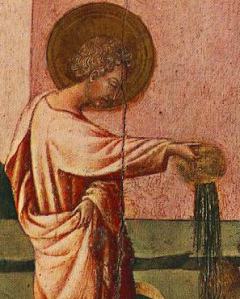 The scourging didn’t kill Ansanus, made of sterner stuff, maybe protected like a shield from the baptism, the way Achilles was shielded, until he wasn’t. Thrown in a pot of oil like a marrow bone, he survived that too, eventually meeting his savior in death’s embrace via beheading.
We think of them both, nurse and boy, on this day, their Day of Martyrdom.
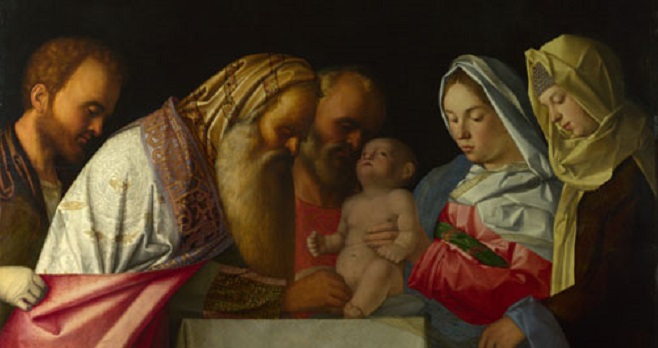
When Christ Our Savior was eight days old and already we’re in a conundrum, aren’t we, beloveds, because we’re still pestered by the word “when.” When was Christ ever eight days old, and I don’t mean this in a He Was Eternal Always and One Moment Before way, because that’s preposterous, nothing is never always is the only one true thing, it has been said, by me, but with authority, and I make a gift of it to you. But we’re still here, with “when,” because when Christ was eight days old tells us when Christ was born, which of course is Christmas, except of course, it isn’t Christmas at all, is it, it seems too convenient to be born on Christmas day, doesn’t it? Was he born some other time, in the spring? He meets his death, sometimes in March, sometimes in April, we never any of us know, for sure, it’s all so confusing, on account of the moon, but it seems we got it backwards, right? Shouldn’t we greet life with spring gladness and die in December? Wouldn’t we all if we could?
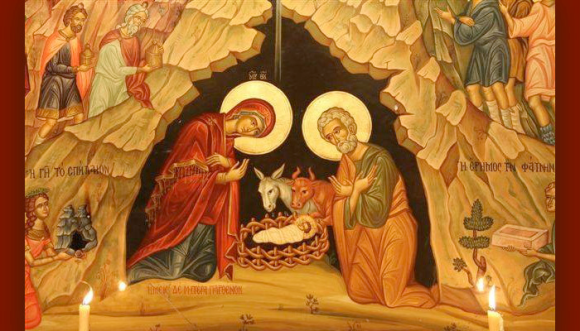
 But when Christ our Savior was eight days old, as is traditional with Jewish boys, he was circumcised, like we all were in the ‘70s, except sometimes I’m not sure, looking at myself, but rarely, nudity is shameful and I’m busy enough already, but when I do, that is, look, I seem to be somewhere in between the Jewish Elect and a Frenchman. “Ask your mom,” someone suggests, someone who doesn’t understand that a conversation about the existence or non-existence of my foreskin, with my mother, is a conversation too far and only even thinking about it makes me want to step with dignity onto a funeral pyre, singing hosannas as my discomfort burns. “He smiled the whole time,” someone whispers as I char and smoke. “So brave in his anxiety about uncomfortable things.”
When Christ Our Savior was eight days old and circumcised, we’re told, he was circumcised in a cave, which seems doubtful, because where would you send congratulatory flowers afterwards? “Your son’s risk of HIV has, anecdotally and, as it turns out, not at all correctly, gone down by between fifty and sixty percent, if he is heterosexual and fucking in Africa, which he shouldn’t, mazel tov, the Bakers.” After the circumcision, an old woman, who knows how she was invited, took the foreskin and maybe or maybe not the Holy Navel String and preserved them in a carved alabaster box, in a vial filled with spikenard oil, also called muskroot.
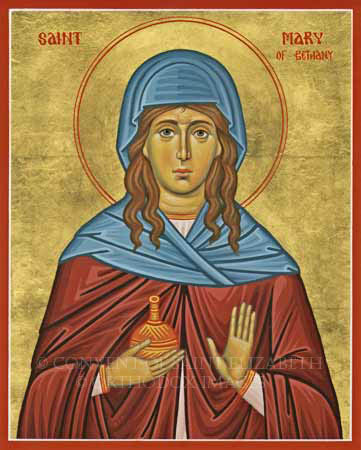 We learn, later, that Mary the Sinner – not the Magdalene, but the other Mary, they’re all Marys, except when they’re Marthas – Mary the Sinner bought the alabaster box with the oil-filled vial of Christ’s foreskin and navel string, which she then used to anoint Jesus’s own head and feet. “Feet” sometimes meant genitals, in the Bible, in the Older Testament, when Naomi told Ruth to lay at the feet of Boaz, a name we don’t hear much anymore, what with all the Calebs, Liams, and Logans in the world, but when Ruth lays at the feet, she’s laying at the dick, which is crude, of course, and I’m sorry, but I didn’t write the Bible on account of how I rarely have the time. You will say that the story of the alabaster box must refer to the Magdalene, because you are ill-informed, but still worthy of love, and I love you, but it is not and was not. It was Mary of Bethany, whose brother was Lazarus, whom we remember mostly, because he wouldn’t stay dead.
The Could He? or Couldn’t He? argument about Christ’s circumcision rages on and on, so that even while we venerate the foreskin, we are also unsure if it exists. If Jesus is perfection, wouldn’t he have arrived already circumcised? Or, if Jesus is perfection, would he have need of circumcision? Would the foreskin itself also be a part of that perfection? We can spend our days in contemplation and prayer of this particular turtleneck, and find that we’ve spent our time wholesomely and well. If he was circumcised, the foreskin, then – Christ’s foreskin, then – can be seen as the first Christian martyr, the first to shed blood for Christ himself, a paradox that is impossible to solve so we leave it shimmering to light our way.
And if he wasn’t—but that is too despairing to dwell on, isn’t it, my ducks. He had to, because we have an alabaster box. We have an oil-filled vial. We have the tangible wrinkled fruit of his body. The world is too empty, too grim, without it.
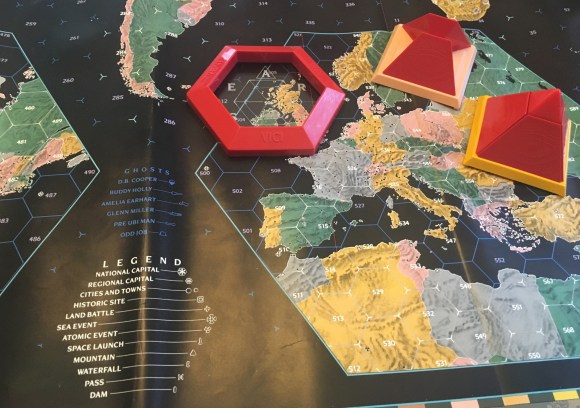
There have been many Holy Foreskins by the way, throughout history, as if the savior’s penis was mostly sleeve cut into calamari rings and I’m sorry. One was stolen, by the way, Christ’s foreskin, in the year of our lord nineteen hundred and eighty-three, from the town of Calcata, which only sounds like Calcutta, but is in Italy, not in India, as far as we know, geography being as inexact as it is. My husband favors a game called Ubi, which takes all the terrible parts of Trivial Pursuit – i.e., the questions – and combines them with a map and planchette so one is asked, in all serious, “Ubi Odd Job Offed,” and we are bored beyond sighing at this level of heterosexual nonsense because, we are told, this is a James Bond reference, and I’ve stopped feeling the need to love straight things just to blow frat boys. Sometimes the answer is “West Berlin,” a country that no longer exists.
Did Birgitta of Vadstena, who comes to us from fourteenth century Sweden, eat the foreskin? No, she did not. That was Agnes Blannbekin, whose revelations, hopes, fears, and loves were tenderly transcribed by her Franciscan confessor. “Crying and with  compassion, she began to think about the foreskin of Christ, where it may be located,” after the Resurrection. “And behold, soon she felt with the greatest sweetness on her tongue a little piece of skin alike the skin in an egg, which she swallowed. After she had swallowed it, she again felt the little skin on her tongue with sweetness as before, and again she swallowed it. And this happened to her about a hundred times.” It took me about a hundred times to understand that I didn’t really like coconut water, so we come to understanding in our own way, but in the right time.
Where was the foreskin located, after the Resurrection? Maybe it flew to heaven, this holy piece of the holiest of flesh. A seventeenth century theologian asserted, in an essay sadly lost to history, and to us, that when Christ ascended, bodily, into heaven, after the crucifixion, of course his foreskin – wherever it might be – ascended, too. Nothing of this most divine body could stay on the earth, and why should it, now that all were redeemed by the sacrifice. Not that one wants to equate the Crucifixion and Resurrection with a one-night stand, but don’t none of us want to linger longer afterwards? Don’t we all have a meeting in the morning that requires we find our shoes, make our excuses, hail a taxi, and slouch towards Bethlehem? The answer is yes even if yours is no.
Once ascended, though, where did it end up, the Holy Foreskin? Not reunited with Christ the Redeemer, Leo Allatius tells us, in his Discourse on the Foreskin of Our Lord Jesus Christ, which none of us at the point can find. Liberated from its earthly prison, the foreskin sailed swiftly through the night sky, finding the planet Saturn, father of Zeus, and holding it as a ring, as a good strong son.

 How to Read: with Mike Bevel